 Sign in with Google


Female flight attendant - All Nippon Airways Uniform
1955 ~ 1958
Top
Bottom
Accessory
Overall
Description
This uniform was the first-generation cabin crew uniform adopted during the era of All Nippon Airways’ predecessor, Japan Helicopter and Aeroplane Transport Co., Ltd. It was specially designed and issued to six cabin attendants when DC-3 aircraft were first introduced into service, carrying strong symbolic meaning of the airline’s founding period and significant historical value.
The overall design was based on the core image concept of a “trustworthy woman,” reflecting the postwar aviation industry’s emphasis on professionalism and reassurance in cabin service personnel. The uniform consisted of a blue two-piece suit paired with an open-collar shirt and a beret, clearly presenting the early aviation uniform identity that balanced discipline with approachability. It also symbolized the foundational service branding established by the company during the initial stage of its commercial aviation operations.
In terms of stylistic origin, the uniform was inspired by women’s uniforms of the U.S. Air Force, resulting in a neat silhouette with semi-military influences. The jacket followed a standard single-breasted suit-style cut with clean and streamlined lines, paired with a below-the-knee skirt to create a composed and orderly proportion. This design reinforced an image of reliability and professionalism. Compared to later aviation uniforms that gradually emphasized elegance and fashion, this period’s design leaned more toward a functional and disciplined image-oriented approach.
The color language centered on a calm and subdued blue tone, symbolizing safety, trust, and composed judgment—qualities essential for establishing a professional brand image in the emerging aviation market of the time. The white open-collar shirt served as a visual transition layer, preventing the blue suit from appearing overly heavy while adding a sense of cleanliness and freshness to the service image.
Among the accessories, the beret stands out as one of the most era-defining elements of this uniform. It not only enhanced the sense of discipline and professionalism but also reflected the broader design trend of the time, when aviation uniforms were strongly influenced by military aesthetics and Western uniform culture. Overall, although modest and standardized in appearance, this first-generation uniform successfully laid the foundation for the later image of All Nippon Airways cabin crew uniforms centered on “reliability, composure, and trustworthiness,” making it a highly representative starting point in the history of Japanese aviation uniform design.
The overall design was based on the core image concept of a “trustworthy woman,” reflecting the postwar aviation industry’s emphasis on professionalism and reassurance in cabin service personnel. The uniform consisted of a blue two-piece suit paired with an open-collar shirt and a beret, clearly presenting the early aviation uniform identity that balanced discipline with approachability. It also symbolized the foundational service branding established by the company during the initial stage of its commercial aviation operations.
In terms of stylistic origin, the uniform was inspired by women’s uniforms of the U.S. Air Force, resulting in a neat silhouette with semi-military influences. The jacket followed a standard single-breasted suit-style cut with clean and streamlined lines, paired with a below-the-knee skirt to create a composed and orderly proportion. This design reinforced an image of reliability and professionalism. Compared to later aviation uniforms that gradually emphasized elegance and fashion, this period’s design leaned more toward a functional and disciplined image-oriented approach.
The color language centered on a calm and subdued blue tone, symbolizing safety, trust, and composed judgment—qualities essential for establishing a professional brand image in the emerging aviation market of the time. The white open-collar shirt served as a visual transition layer, preventing the blue suit from appearing overly heavy while adding a sense of cleanliness and freshness to the service image.
Among the accessories, the beret stands out as one of the most era-defining elements of this uniform. It not only enhanced the sense of discipline and professionalism but also reflected the broader design trend of the time, when aviation uniforms were strongly influenced by military aesthetics and Western uniform culture. Overall, although modest and standardized in appearance, this first-generation uniform successfully laid the foundation for the later image of All Nippon Airways cabin crew uniforms centered on “reliability, composure, and trustworthiness,” making it a highly representative starting point in the history of Japanese aviation uniform design.
Uniform List
-
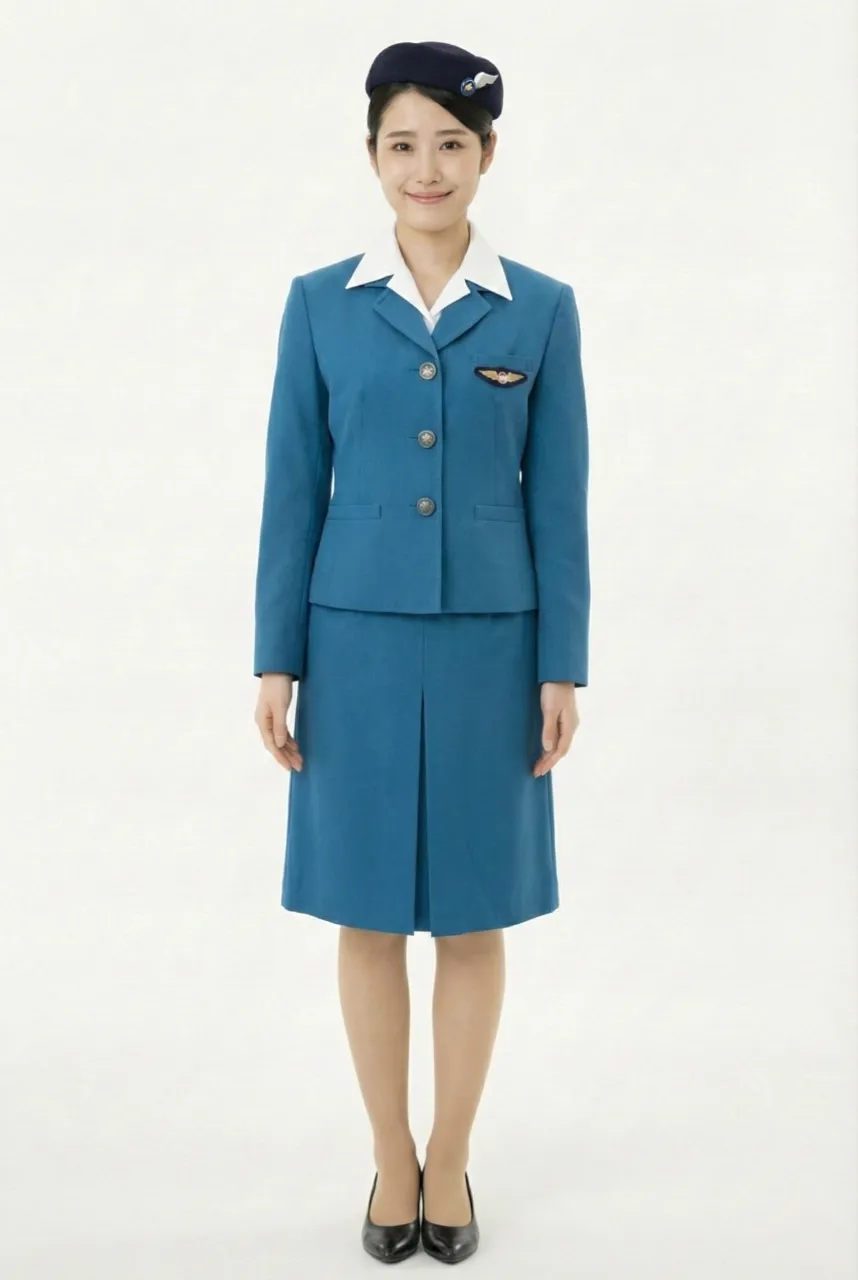
Female flight attendant
1955 ~ 1958 -
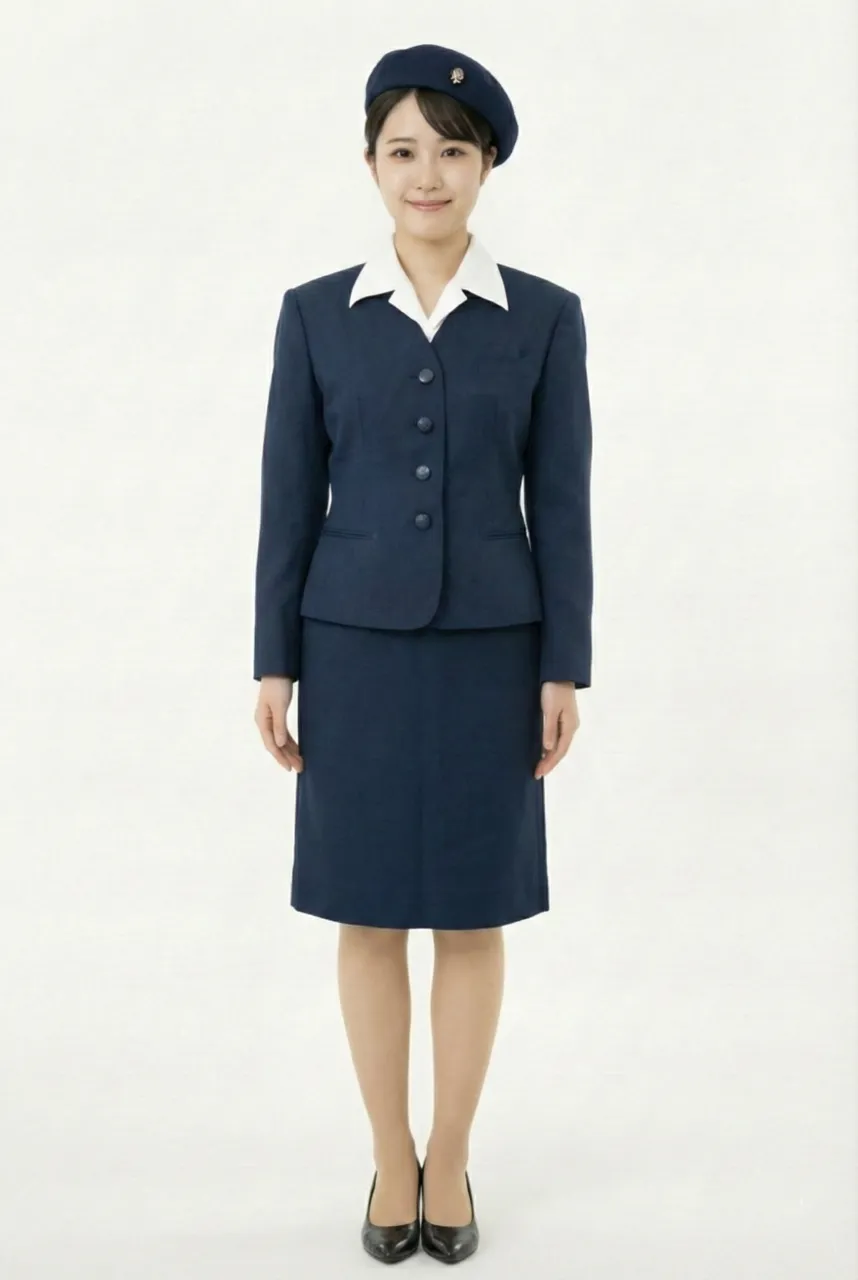
Female flight attendant
1958 ~ 1966 -
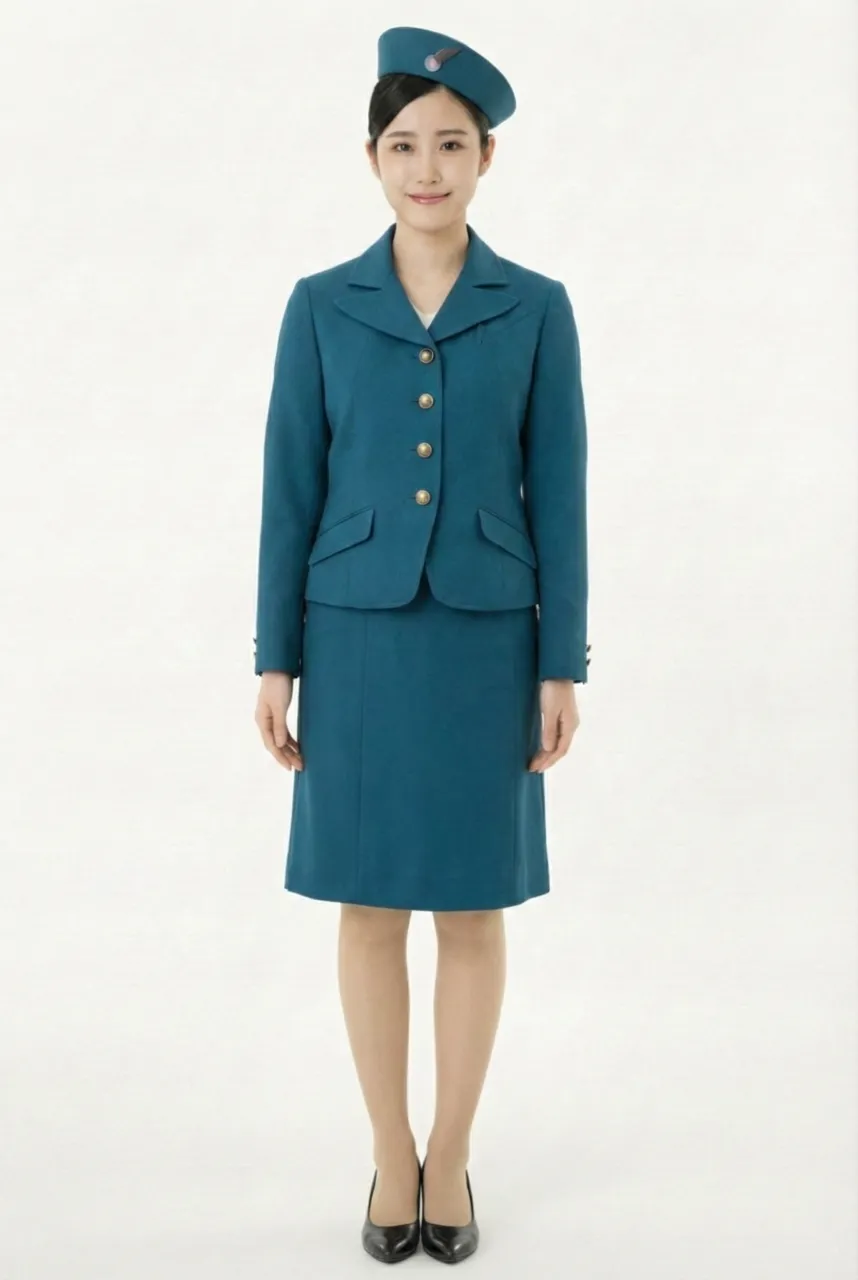
Female flight attendant
1966 ~ 1970 -
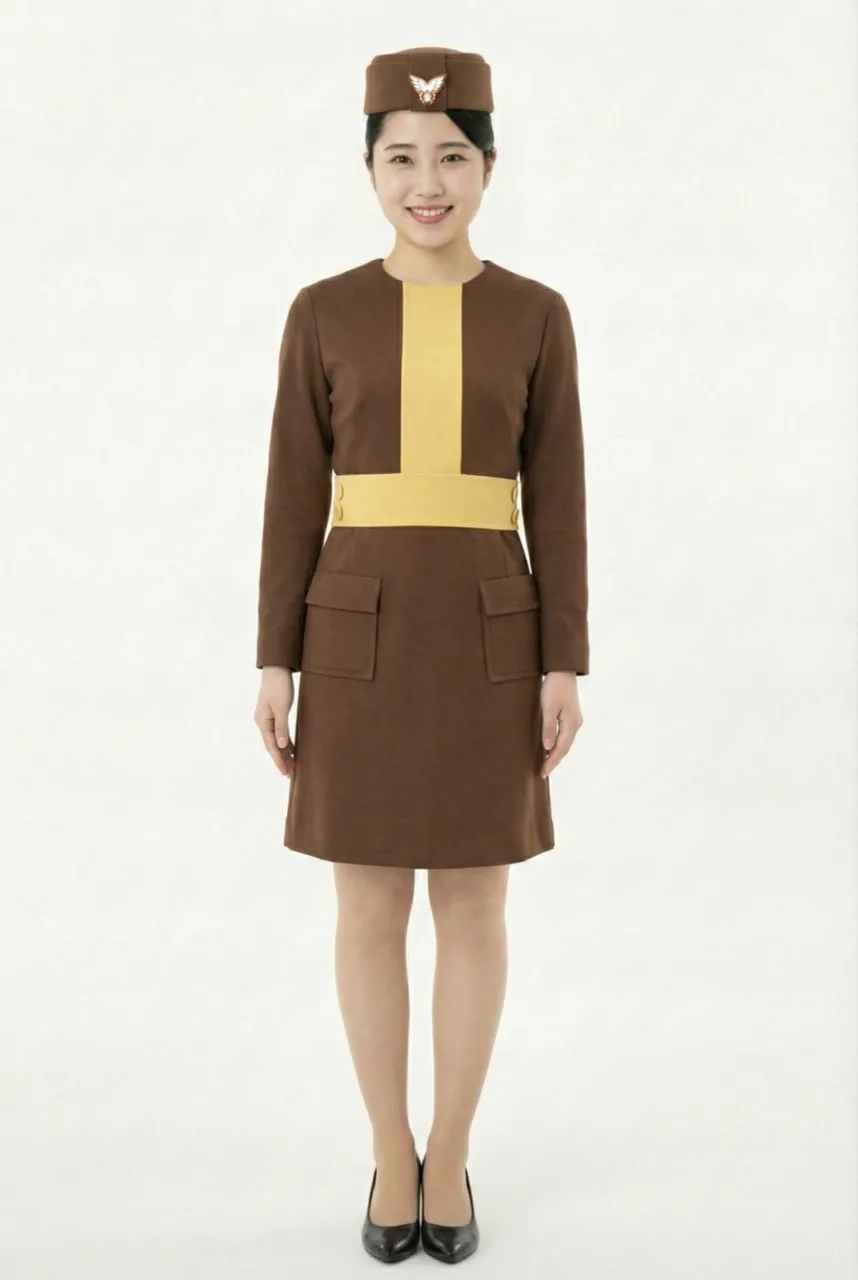
Female flight attendant
1970 ~ 1974 -
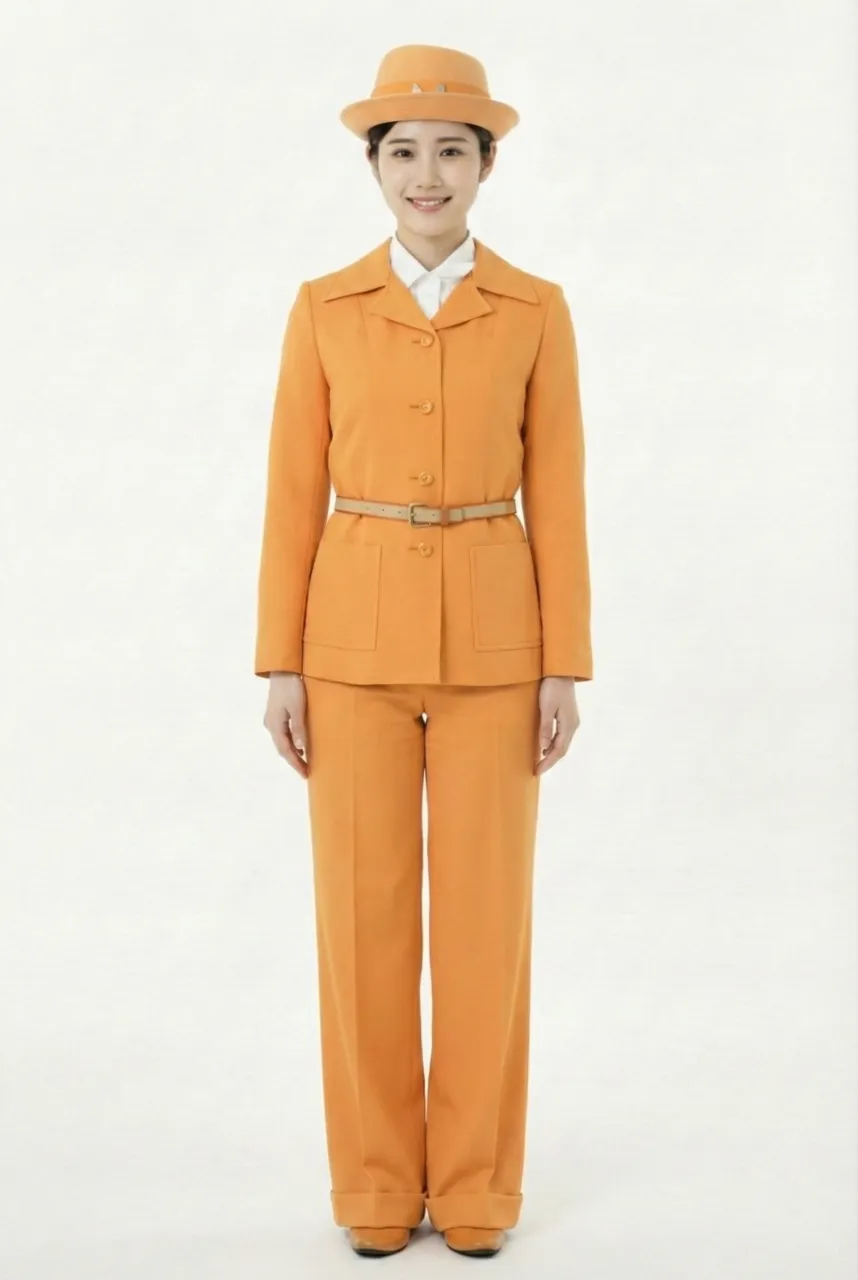
Female flight attendant
1974 ~ 1979 -
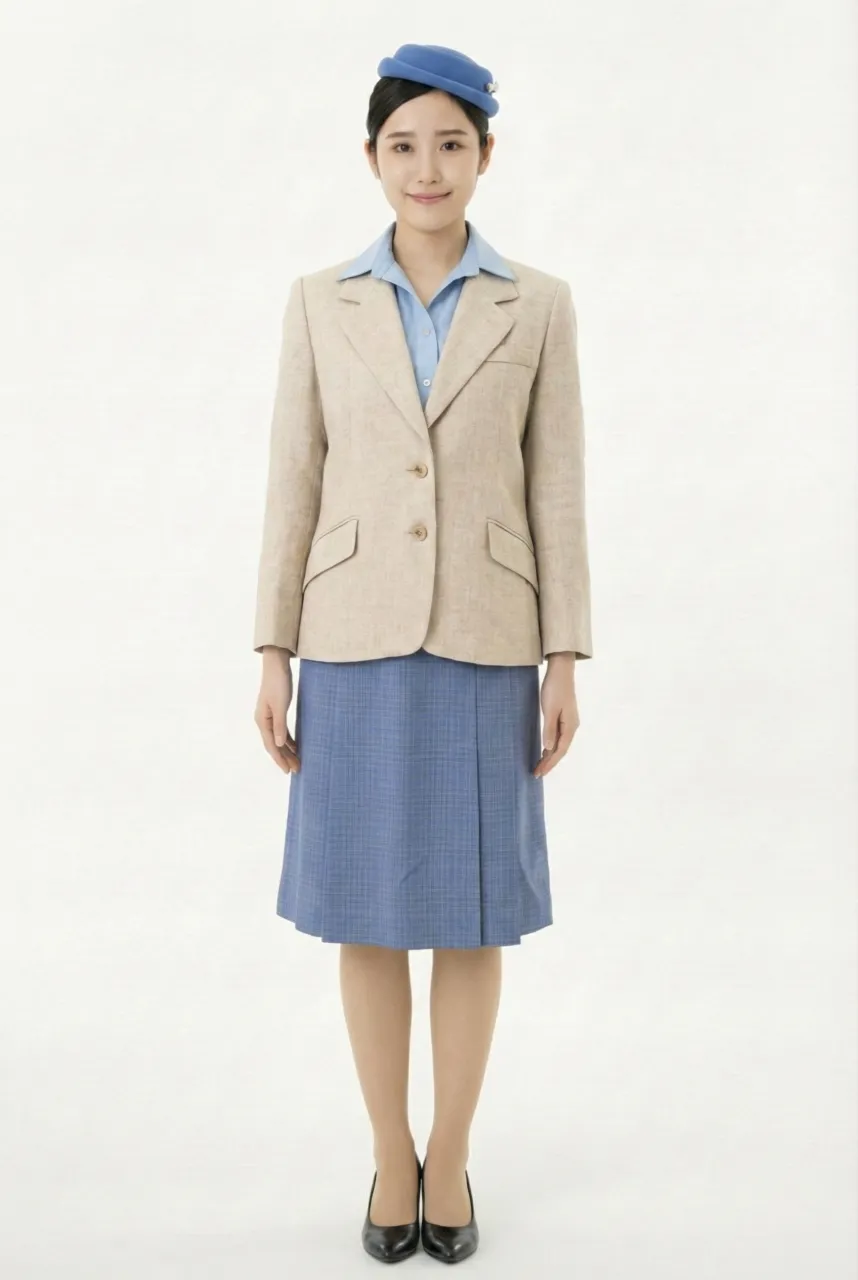
Female flight attendant
1979 ~ 1982 -
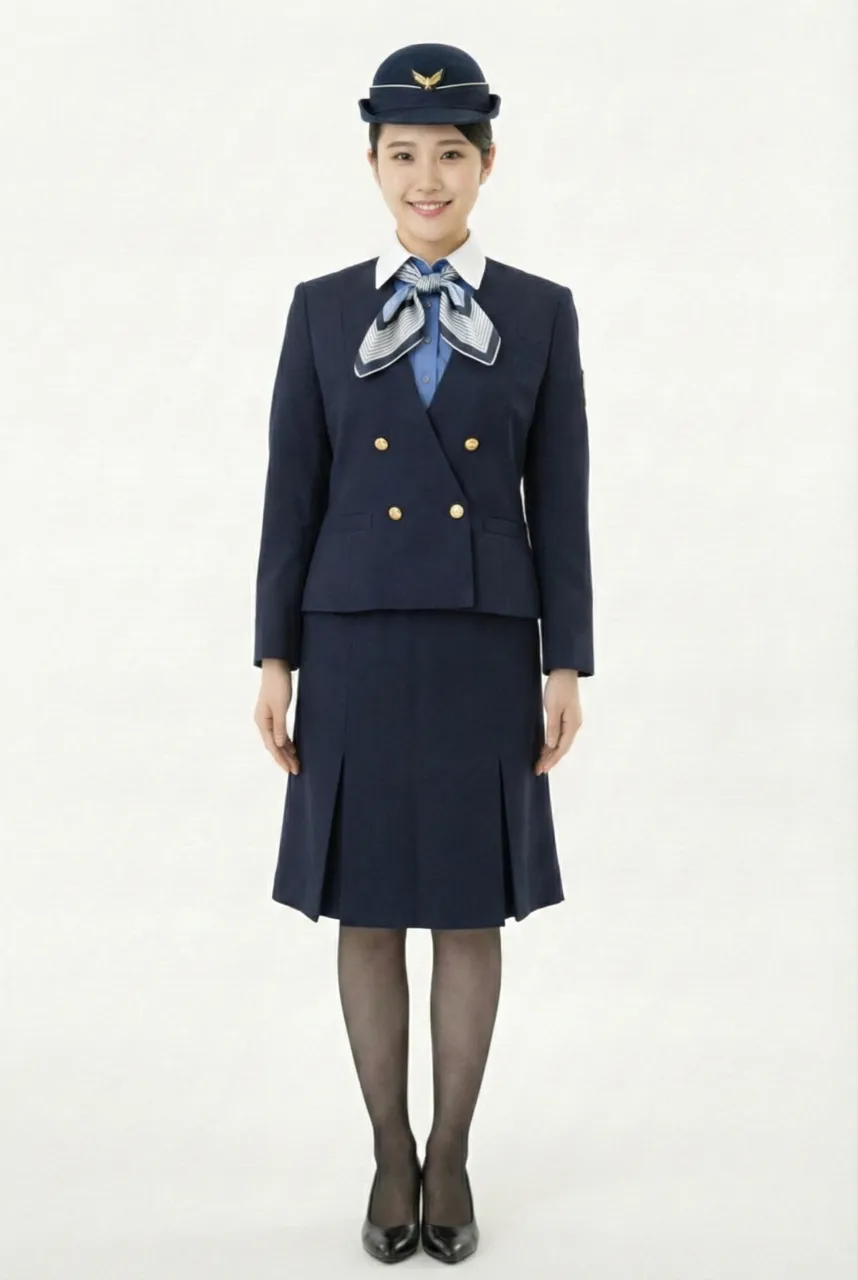
Female flight attendant
1982 ~ 1990 -
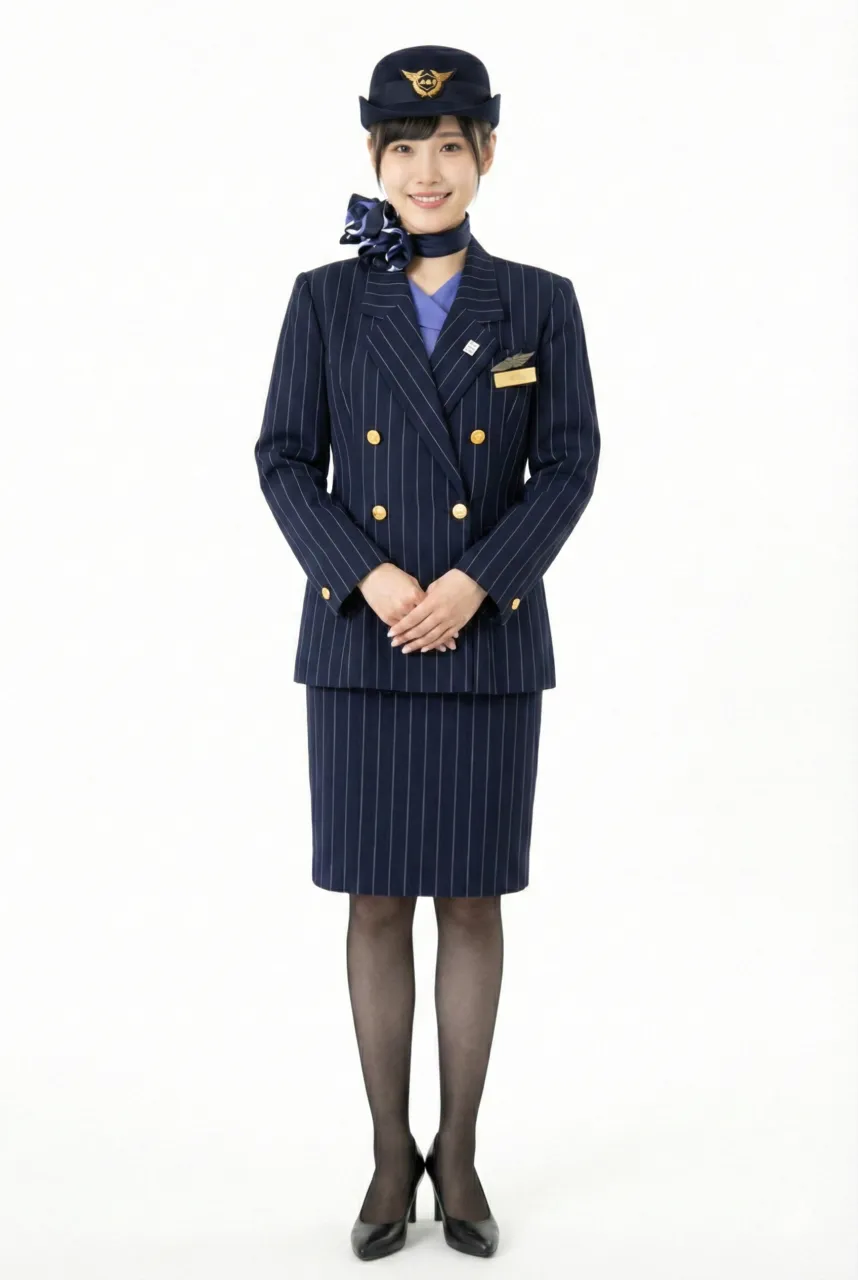
Female flight attendant
1990 ~ 2005 -
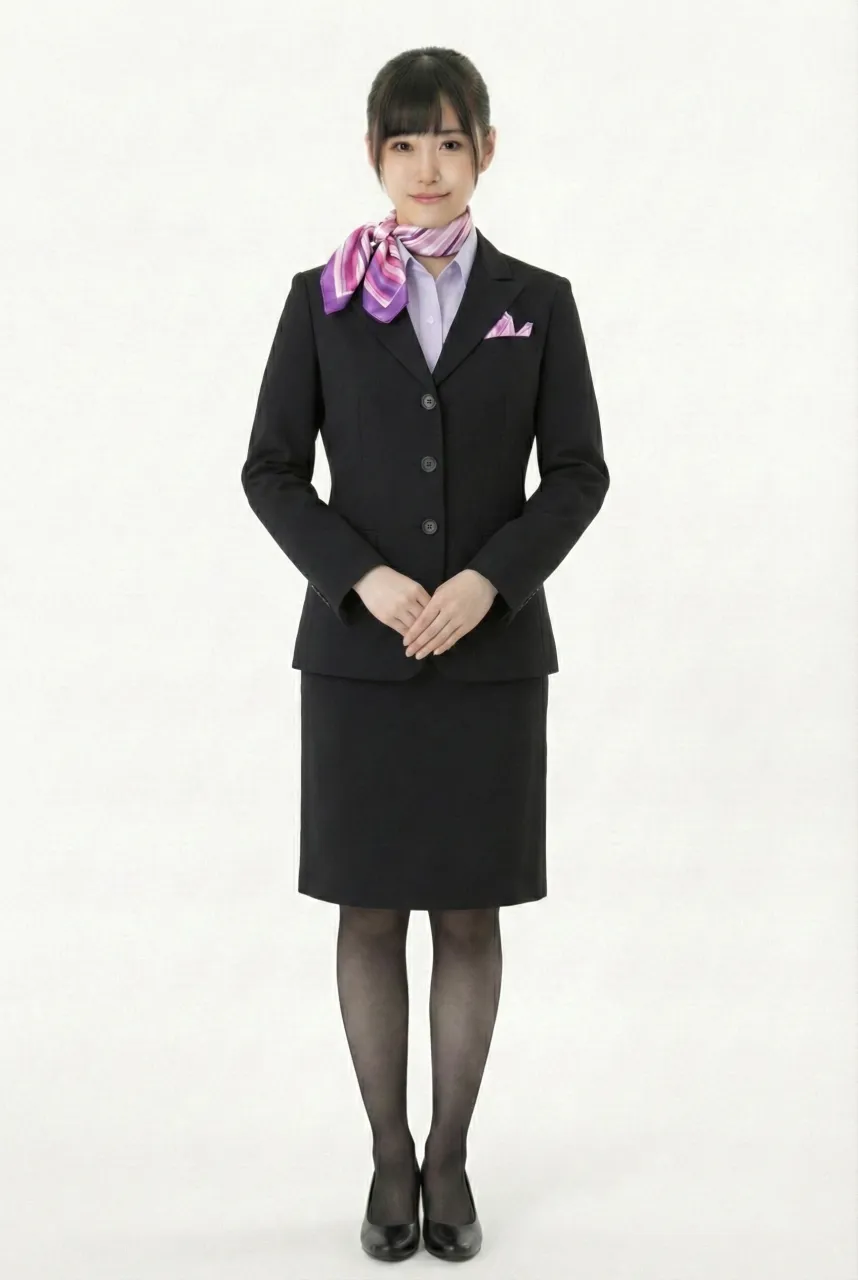
Female flight attendant
2005 ~ 2015 -
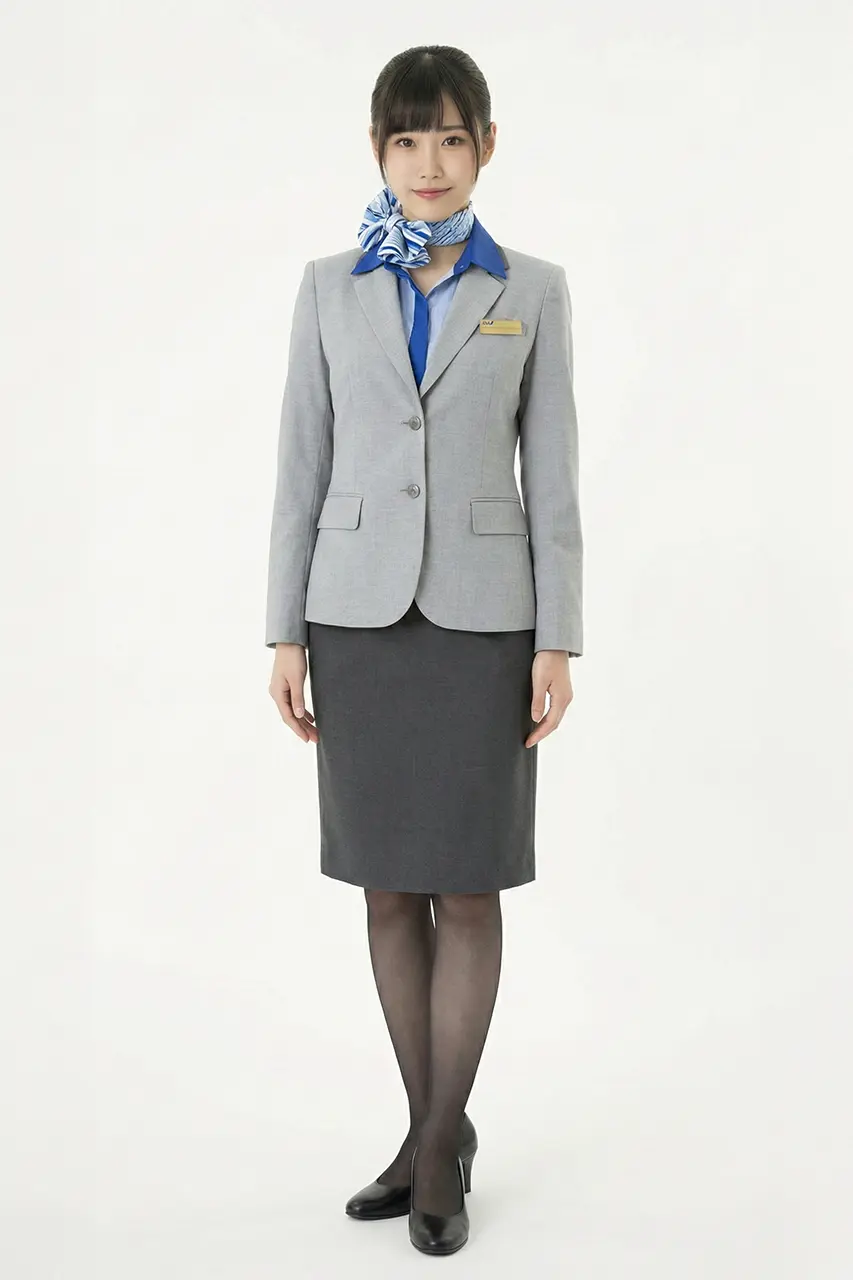
Female flight attendant
2015 ~ -
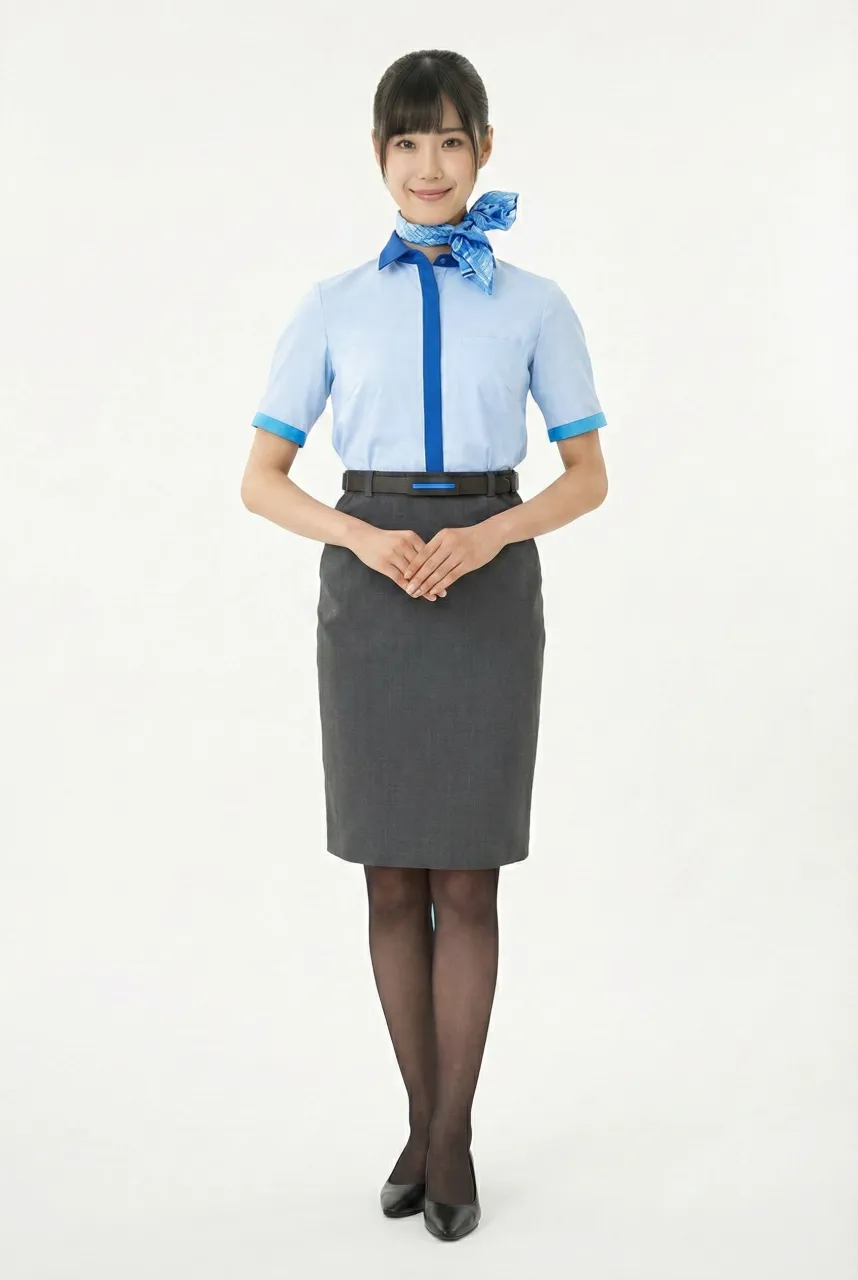
Female flight attendant
2015 ~
The images displayed in this section are AI-generated illustrations and are not official materials from the original organizations or brands. They do not represent actual uniform designs, real-life wear, or official positions. The content is for informational and organizational purposes. All brand/organization names and logos mentioned are the property of their respective owners.