 Sign in with Google


Female flight attendant - All Nippon Airways Uniform
1958 ~ 1966
Top
Bottom
Accessory
Overall
Description
This uniform belongs to the second-generation series, developed through adjustments and refinements based on the initial uniform. The primary design focus was to express an elegant and modern sense of “feminine grace,” reflecting an important shift in the airline’s early branding phase—from purely functional uniforms toward a more image-conscious design. Compared with the first-generation, which was more function-oriented, this series places greater emphasis on the cabin crew’s role as the company’s front-facing representatives, highlighting elegance and service-friendly warmth.
The overall look features a dark navy two-piece suit (ツーピース) paired with an open-collar shirt (開襟シャツ), creating a composed, clean, and professional image. The jacket adopts a simple and streamlined cut, fitted yet not tight, forming a balanced silhouette that conveys both stability and softness. The skirt was redesigned into a slimmer, more tailored narrow skirt, resulting in smoother overall lines and further emphasizing elegance and feminine characteristics—one of the key design innovations compared to the first-generation uniform.
For the upper-body design, the jacket was changed to a collarless style in order to create a softer, more feminine impression. This reduces the rigidity and authority typically associated with traditional suit lapels, making the overall visual appearance more elegant and approachable. The white open-collar shirt underneath provides a clear color contrast, enhancing cleanliness and visibility while reinforcing a bright, friendly service image alongside professionalism.
The hat is a round cap in the same color tone as the suit, accented with a simple badge detail. This continues the early aviation uniform tradition of emphasizing visual unity, allowing the overall appearance to present a highly cohesive brand image when worn as a group. The wing badge on the chest serves as a symbol of aviation professionalism, strengthening occupational identity and service authority.
In terms of color language, the dark navy base symbolizes safety, reliability, and professionalism, helping to establish a stable and trustworthy corporate image in the airline’s early years. The white shirt represents cleanliness and high service standards, creating a visual balance between rational professionalism and gentle approachability. This navy (ネイビー) suit configuration also became a classic color scheme that has been widely and consistently adopted in later airline uniform designs.
In practical wear, the jacket can be removed during summer, allowing the crew to work in just the shirt. This presents a lighter, more approachable service image while also improving comfort and practicality in high-temperature environments.
The overall look features a dark navy two-piece suit (ツーピース) paired with an open-collar shirt (開襟シャツ), creating a composed, clean, and professional image. The jacket adopts a simple and streamlined cut, fitted yet not tight, forming a balanced silhouette that conveys both stability and softness. The skirt was redesigned into a slimmer, more tailored narrow skirt, resulting in smoother overall lines and further emphasizing elegance and feminine characteristics—one of the key design innovations compared to the first-generation uniform.
For the upper-body design, the jacket was changed to a collarless style in order to create a softer, more feminine impression. This reduces the rigidity and authority typically associated with traditional suit lapels, making the overall visual appearance more elegant and approachable. The white open-collar shirt underneath provides a clear color contrast, enhancing cleanliness and visibility while reinforcing a bright, friendly service image alongside professionalism.
The hat is a round cap in the same color tone as the suit, accented with a simple badge detail. This continues the early aviation uniform tradition of emphasizing visual unity, allowing the overall appearance to present a highly cohesive brand image when worn as a group. The wing badge on the chest serves as a symbol of aviation professionalism, strengthening occupational identity and service authority.
In terms of color language, the dark navy base symbolizes safety, reliability, and professionalism, helping to establish a stable and trustworthy corporate image in the airline’s early years. The white shirt represents cleanliness and high service standards, creating a visual balance between rational professionalism and gentle approachability. This navy (ネイビー) suit configuration also became a classic color scheme that has been widely and consistently adopted in later airline uniform designs.
In practical wear, the jacket can be removed during summer, allowing the crew to work in just the shirt. This presents a lighter, more approachable service image while also improving comfort and practicality in high-temperature environments.
Uniform List
-
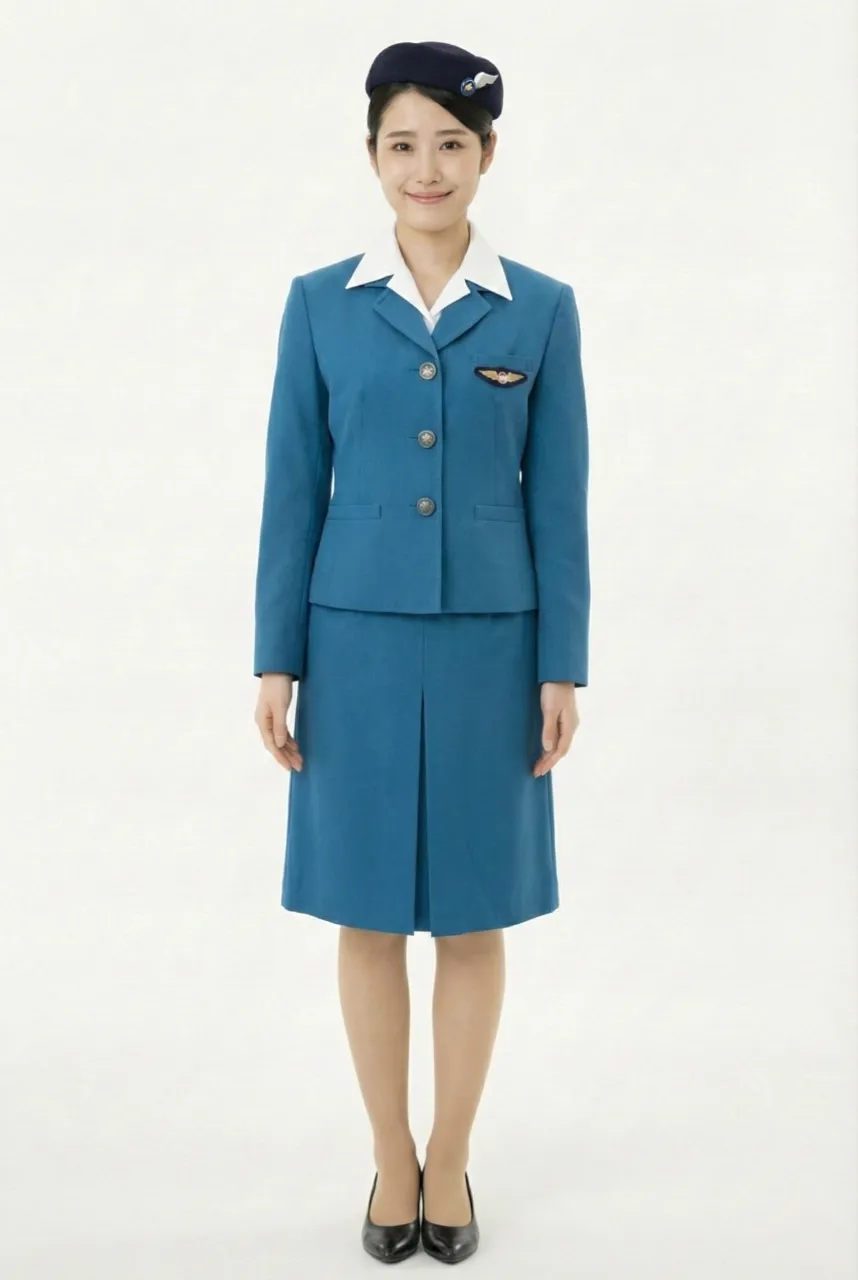
Female flight attendant
1955 ~ 1958 -
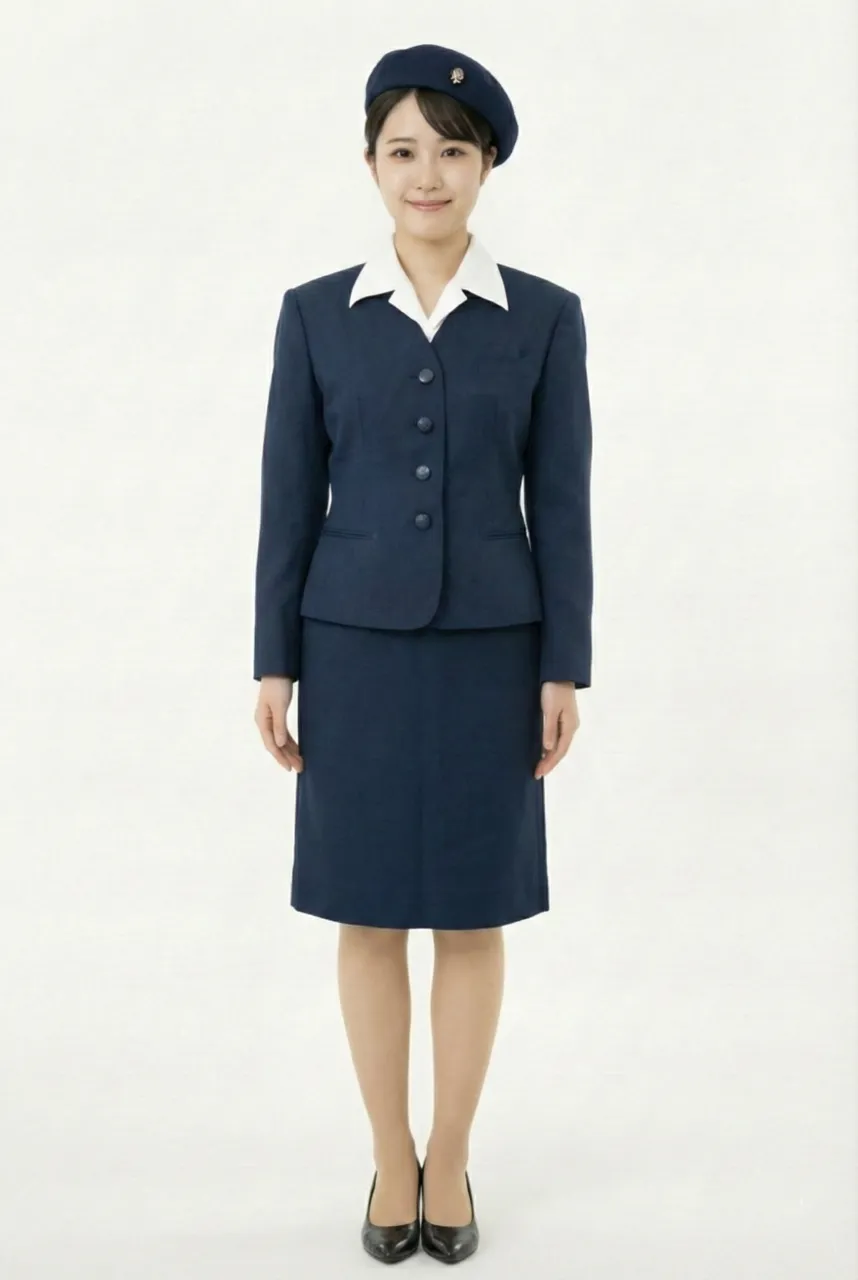
Female flight attendant
1958 ~ 1966 -
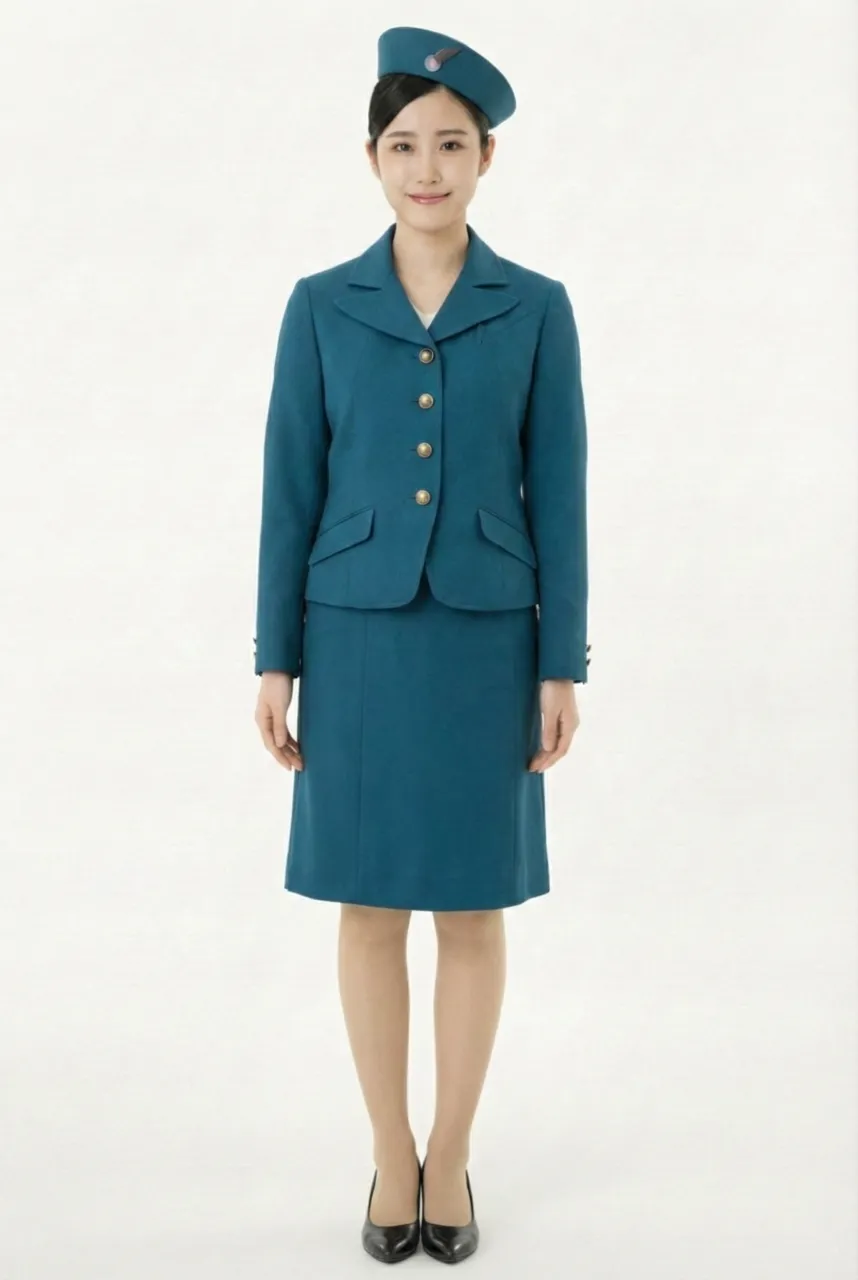
Female flight attendant
1966 ~ 1970 -
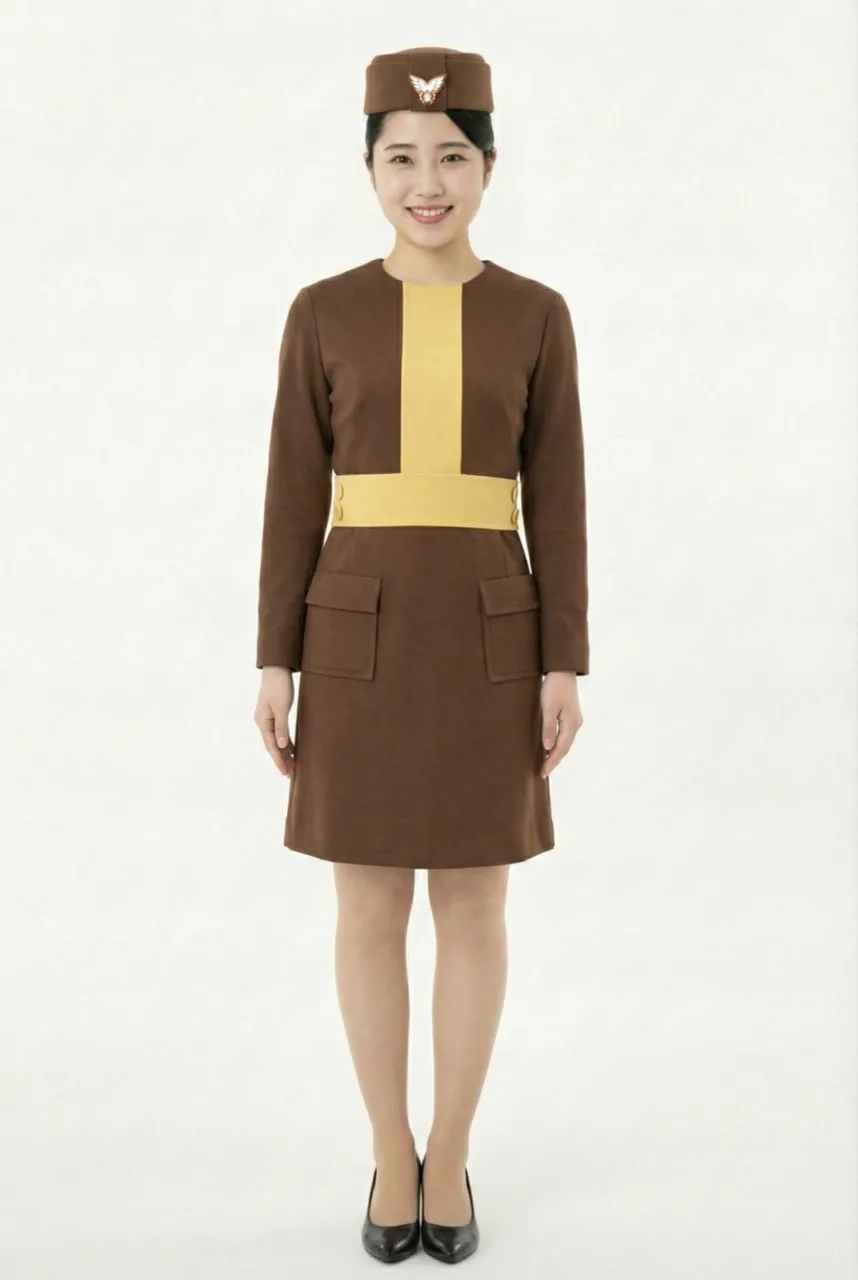
Female flight attendant
1970 ~ 1974 -
Female flight attendant
1974 ~ 1979 -
Female flight attendant
1979 ~ 1982 -
Female flight attendant
1982 ~ 1990 -
Female flight attendant
1990 ~ 2005 -
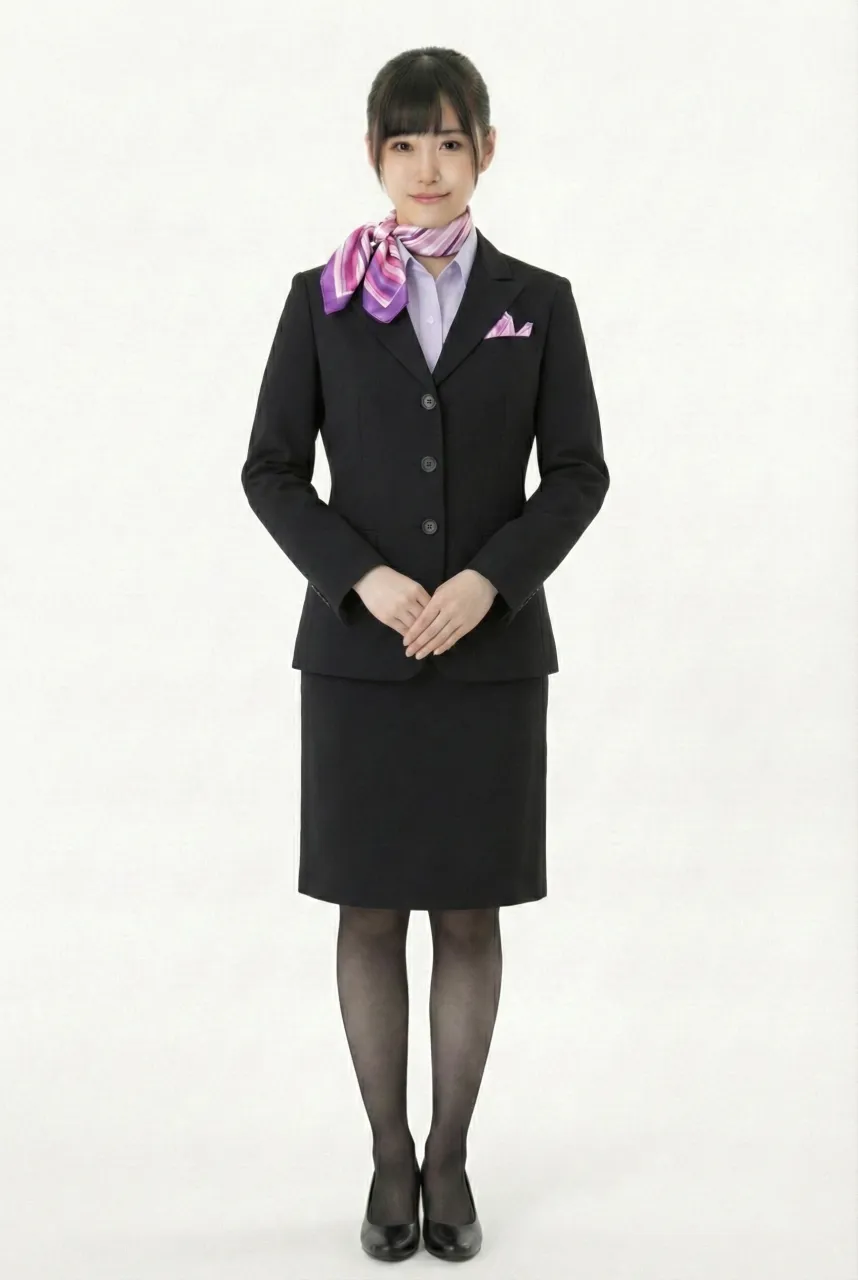
Female flight attendant
2005 ~ 2015 -
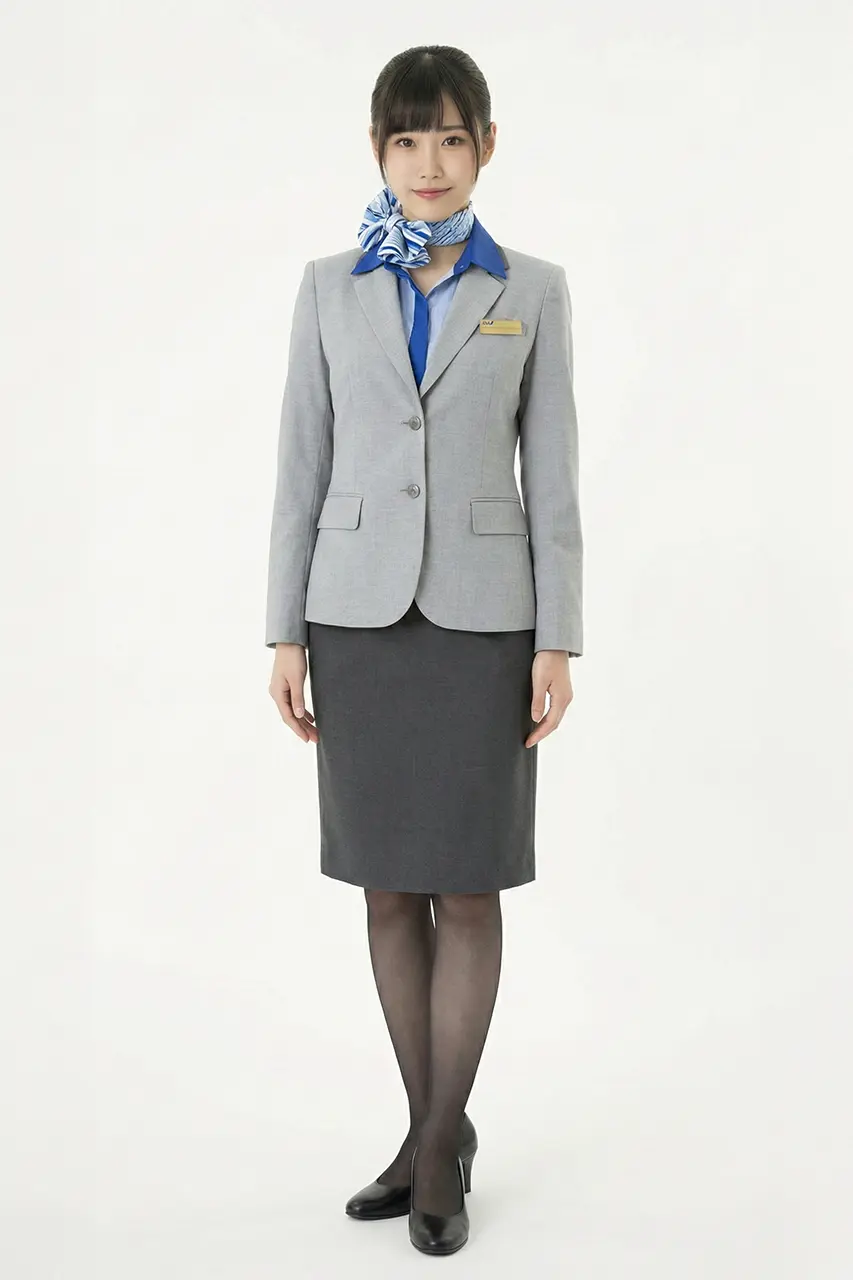
Female flight attendant
2015 ~ -
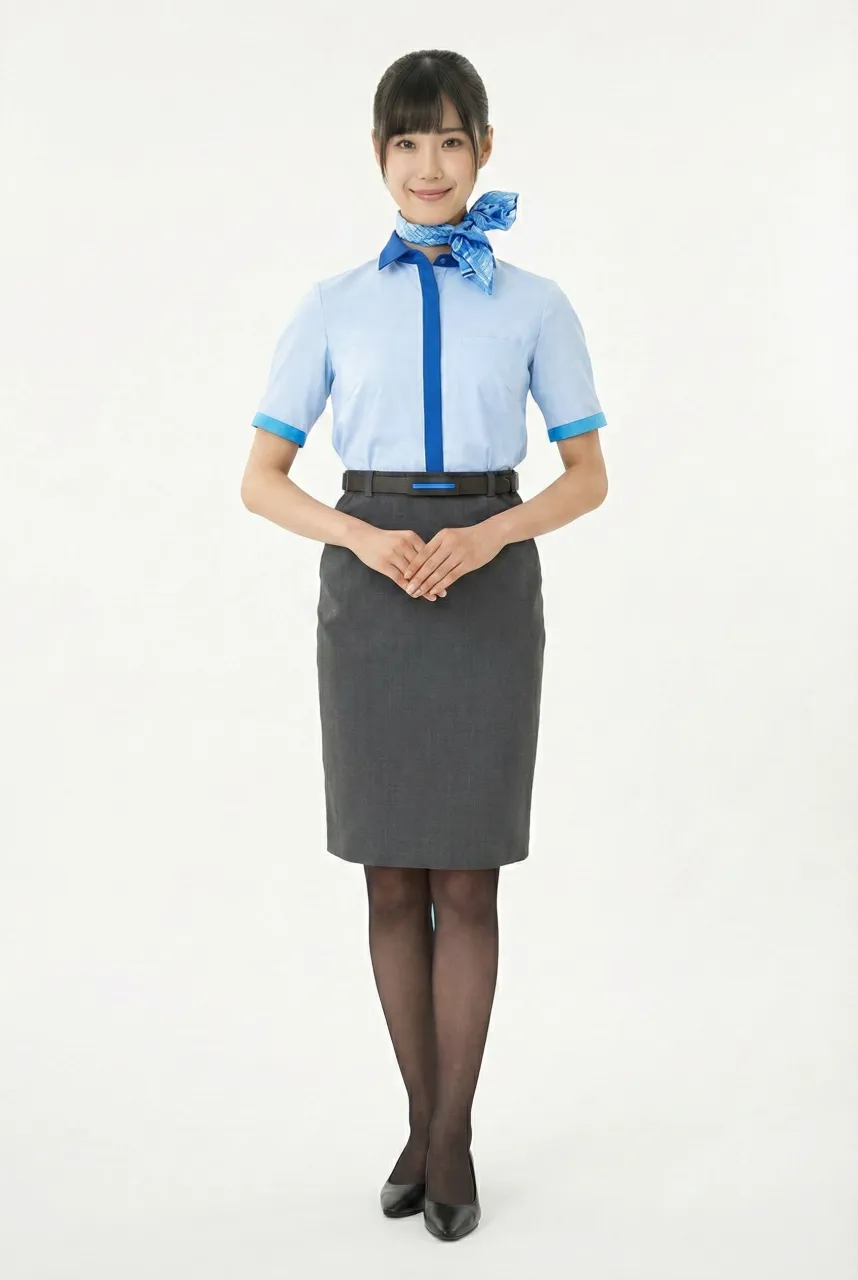
Female flight attendant
2015 ~
The images displayed in this section are AI-generated illustrations and are not official materials from the original organizations or brands. They do not represent actual uniform designs, real-life wear, or official positions. The content is for informational and organizational purposes. All brand/organization names and logos mentioned are the property of their respective owners.