 Sign in with Google


Female flight attendant - All Nippon Airways Uniform
1982 ~ 1990
Top
Bottom
Accessory
Overall
Description
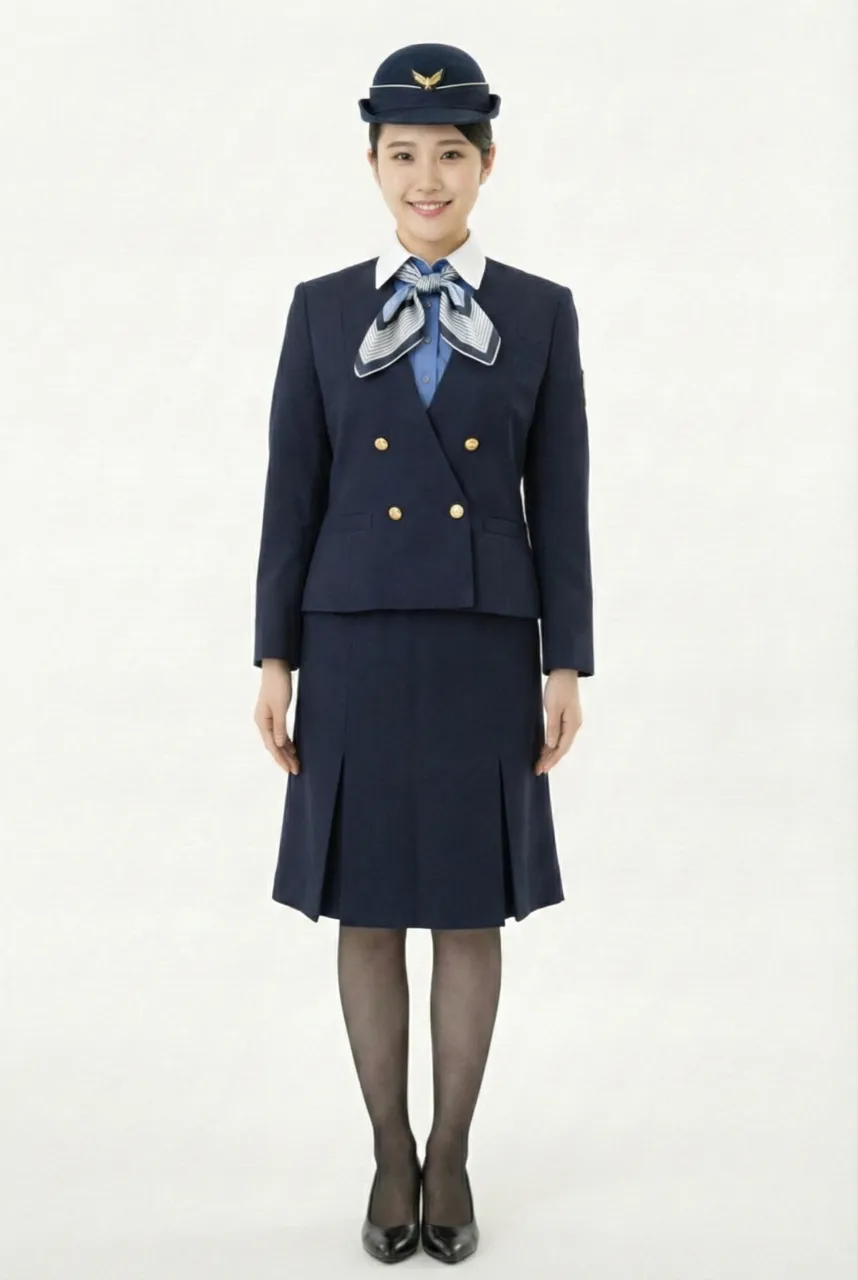
This uniform originates from the comprehensive uniform renewal implemented during All Nippon Airways (ANA)’s 30th anniversary and was designed by renowned Japanese designer Jun Ashida. It represents a milestone in ANA’s uniform history and marks a significant turning point in the evolution of the airline’s visual identity. Introduced as part of a commemorative brand phase, the redesign shifted from the softer aesthetic of previous uniforms to a deeper navy palette and a more formal, structured design language, symbolizing the airline’s transition toward maturity and internationalization.
The overall look is centered on a deep navy double-breasted suit structure, characterized by a “precise and formal” (kacchiri) design approach that conveys strong discipline and professionalism. The double-breasted blazer paired with a pleated skirt reinforces the traditional authority and formality associated with airline uniforms, while also creating a more stable and upright silhouette. This configuration aligned with ANA’s corporate objective at the time to establish a brand image defined by reliability, safety, and trustworthiness. Compared to the softer styling of earlier uniforms, this generation clearly emphasized a more corporate and standardized image befitting an international airline.
One of the most representative innovations in this uniform generation was the first official introduction of the scarf as a standard accessory in ANA’s uniform history. The scarf not only added an elegant layer to the female uniform but also became a key visual identity element, softening the otherwise strict and formal appearance with a sense of grace and approachability. The blue-grey geometric patterned scarf creates a refined contrast with the deep navy base, maintaining consistency with the corporate color system while enhancing recognizability and contemporary sophistication.
In terms of color strategy, deep navy was firmly established as the dominant tone, symbolizing professionalism, stability, and aviation safety, in strong alignment with ANA’s long-standing brand image. Gold buttons and cap badges further elevate the level of formality, bringing the uniform visually closer to the quasi-military professionalism traditionally emphasized in classic airline uniforms, while still preserving the refined elegance characteristic of Japanese design.
From a material and functional perspective, the suit-style structure balances the need for mobility during long hours of cabin service with the ability to maintain a neat and structured appearance. The pleated skirt enhances ease of movement, while the fitted yet non-restrictive tailoring ensures comfort during extended working hours.
The overall look is centered on a deep navy double-breasted suit structure, characterized by a “precise and formal” (kacchiri) design approach that conveys strong discipline and professionalism. The double-breasted blazer paired with a pleated skirt reinforces the traditional authority and formality associated with airline uniforms, while also creating a more stable and upright silhouette. This configuration aligned with ANA’s corporate objective at the time to establish a brand image defined by reliability, safety, and trustworthiness. Compared to the softer styling of earlier uniforms, this generation clearly emphasized a more corporate and standardized image befitting an international airline.
One of the most representative innovations in this uniform generation was the first official introduction of the scarf as a standard accessory in ANA’s uniform history. The scarf not only added an elegant layer to the female uniform but also became a key visual identity element, softening the otherwise strict and formal appearance with a sense of grace and approachability. The blue-grey geometric patterned scarf creates a refined contrast with the deep navy base, maintaining consistency with the corporate color system while enhancing recognizability and contemporary sophistication.
In terms of color strategy, deep navy was firmly established as the dominant tone, symbolizing professionalism, stability, and aviation safety, in strong alignment with ANA’s long-standing brand image. Gold buttons and cap badges further elevate the level of formality, bringing the uniform visually closer to the quasi-military professionalism traditionally emphasized in classic airline uniforms, while still preserving the refined elegance characteristic of Japanese design.
From a material and functional perspective, the suit-style structure balances the need for mobility during long hours of cabin service with the ability to maintain a neat and structured appearance. The pleated skirt enhances ease of movement, while the fitted yet non-restrictive tailoring ensures comfort during extended working hours.
Uniform List
-
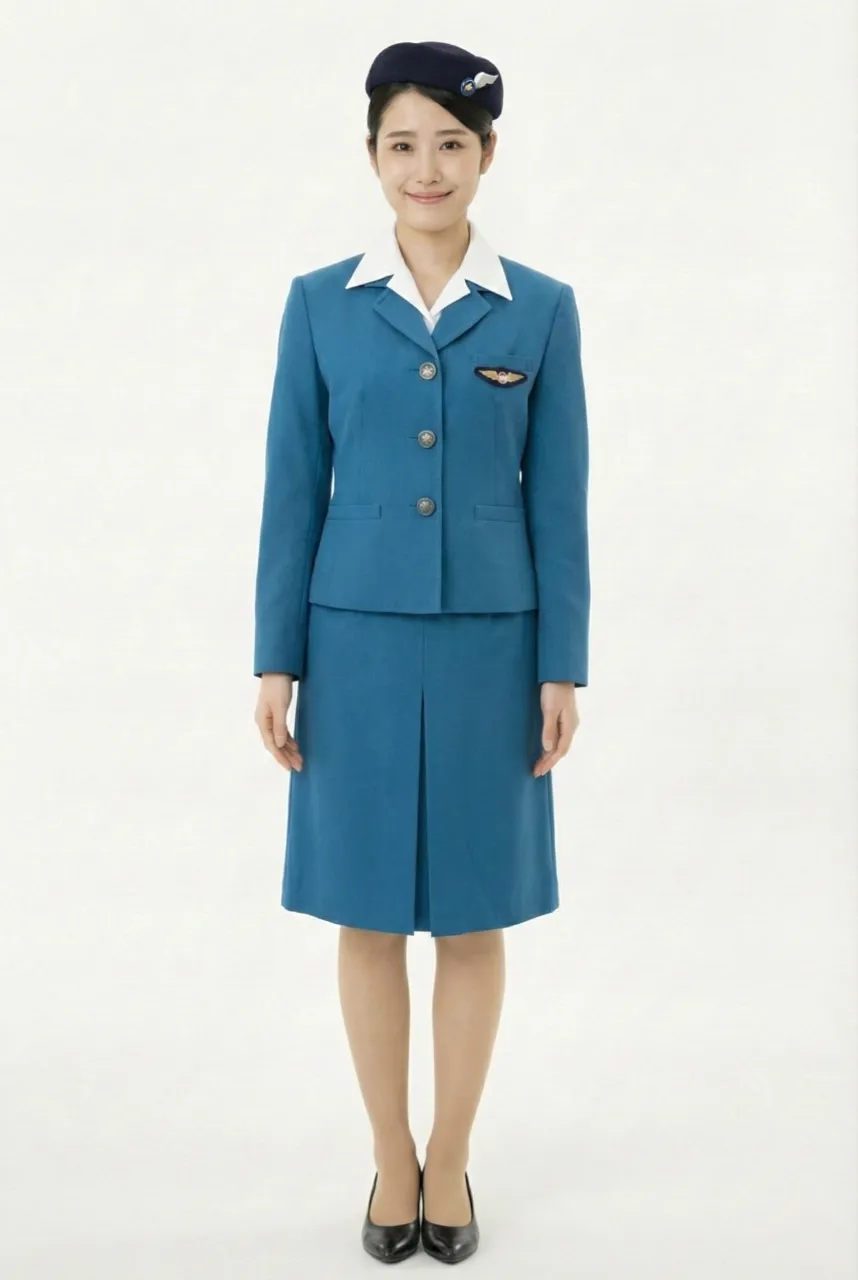
Female flight attendant
1955 ~ 1958 -
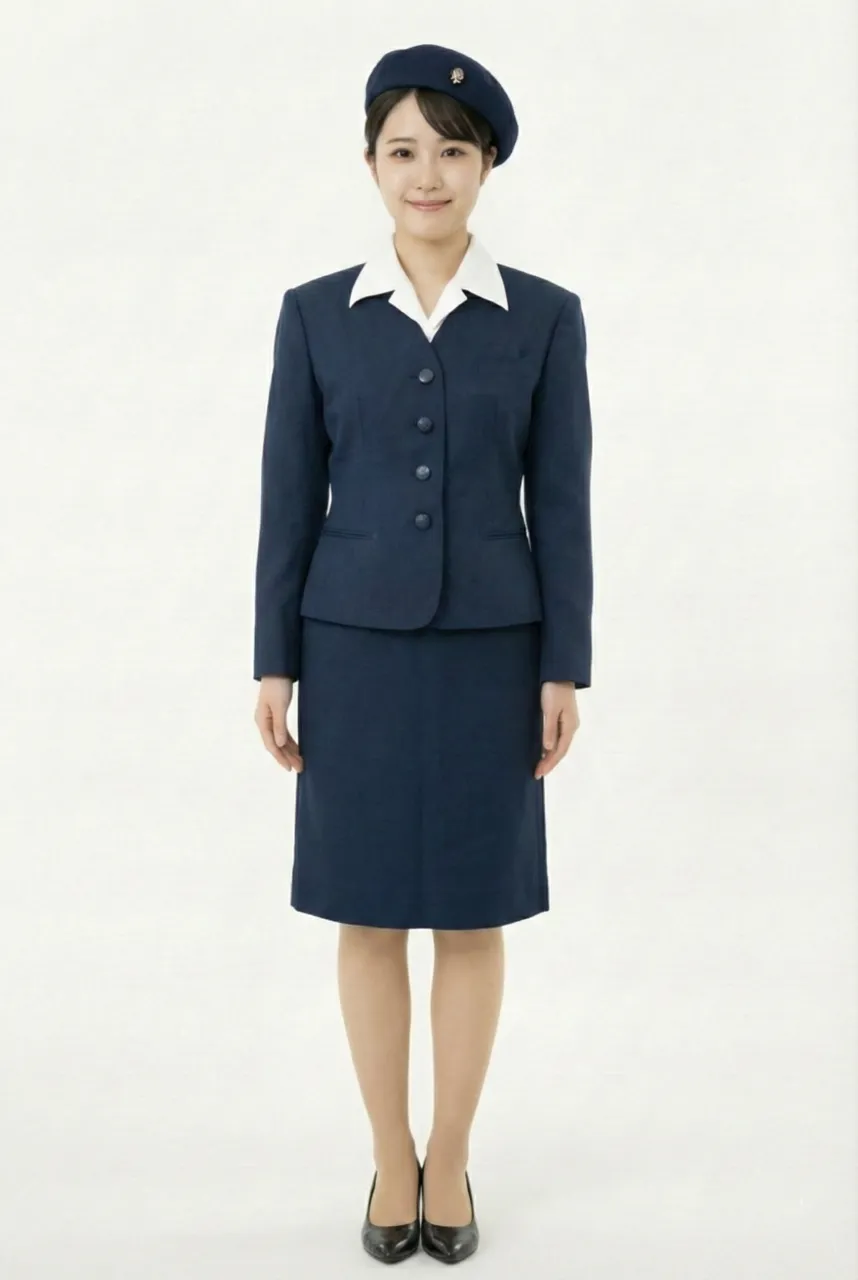
Female flight attendant
1958 ~ 1966 -
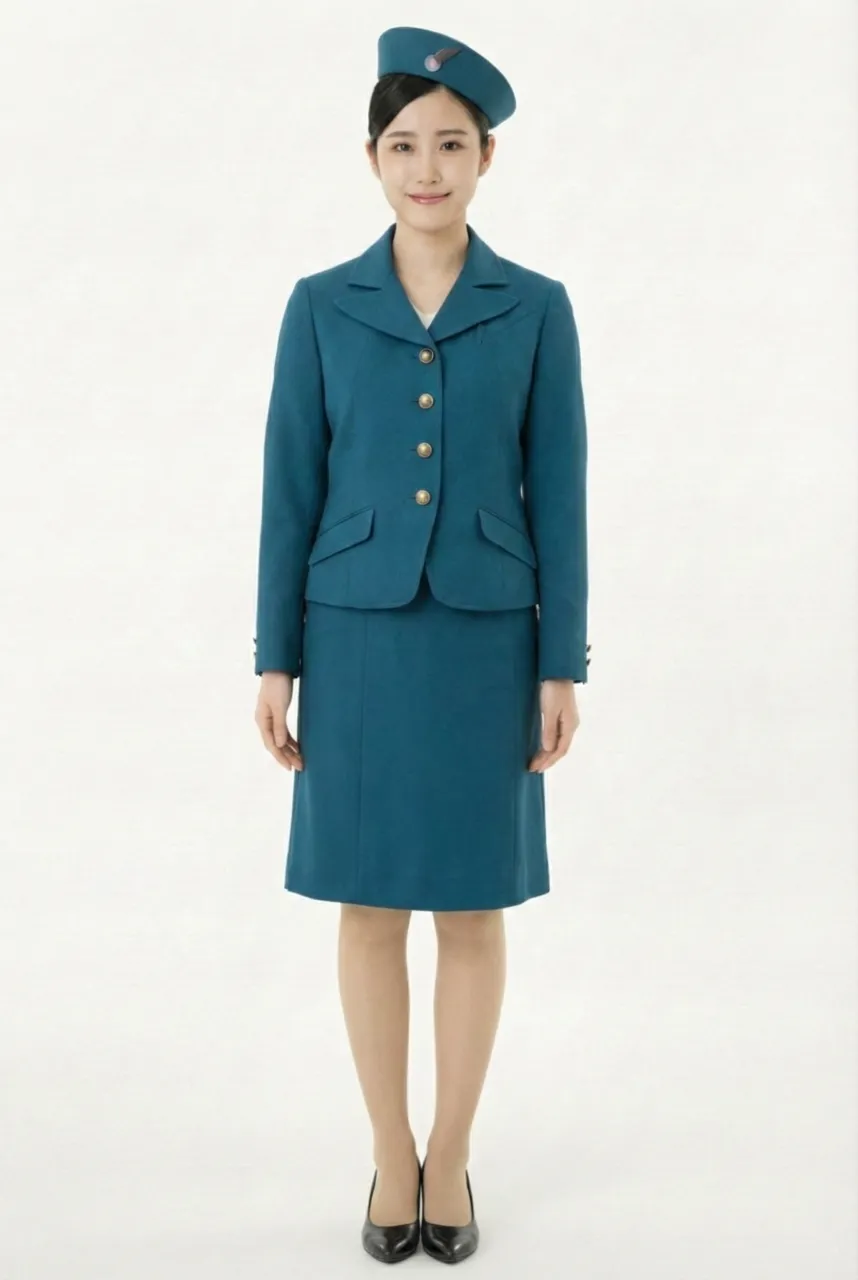
Female flight attendant
1966 ~ 1970 -
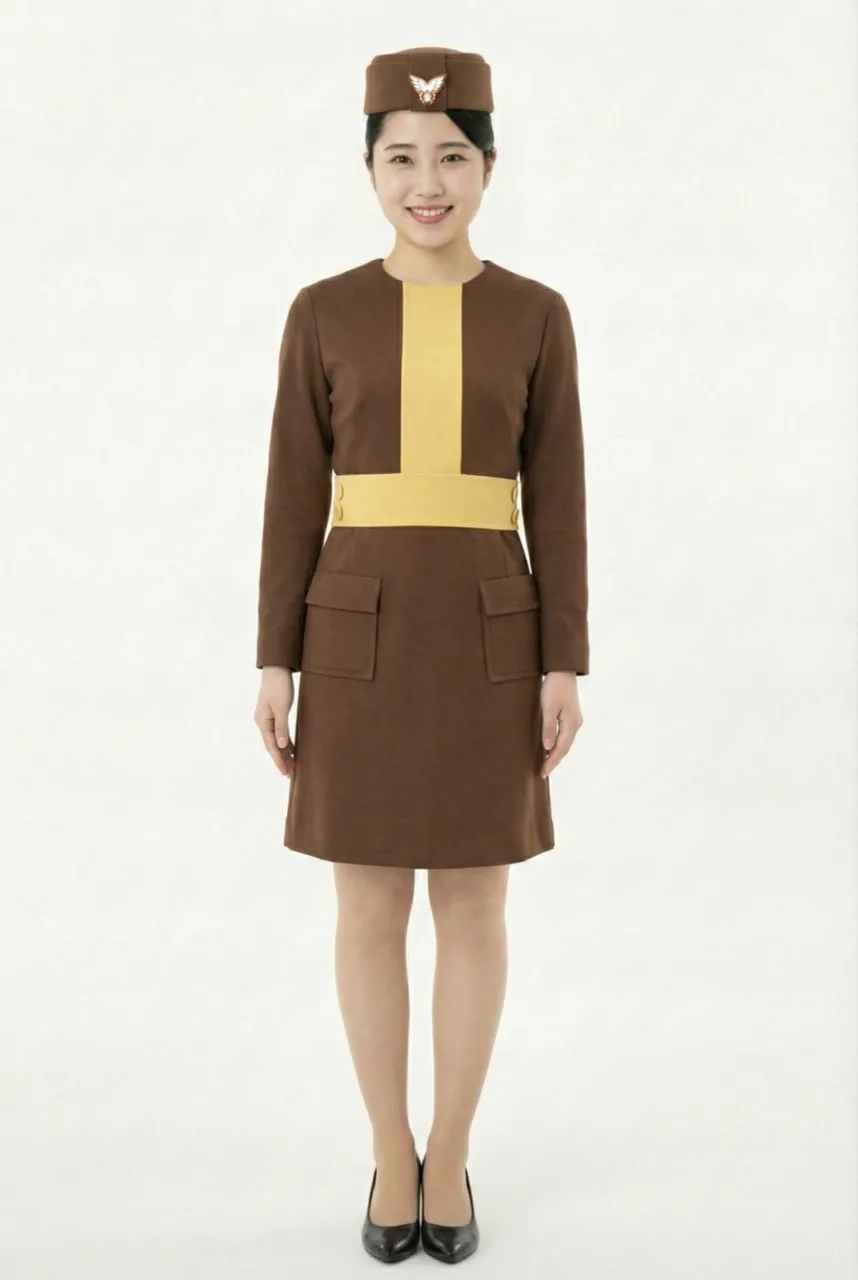
Female flight attendant
1970 ~ 1974 -
Female flight attendant
1974 ~ 1979 -
Female flight attendant
1979 ~ 1982 -
Female flight attendant
1982 ~ 1990 -
Female flight attendant
1990 ~ 2005 -
Female flight attendant
2005 ~ 2015 -
Female flight attendant
2015 ~ -
Female flight attendant
2015 ~
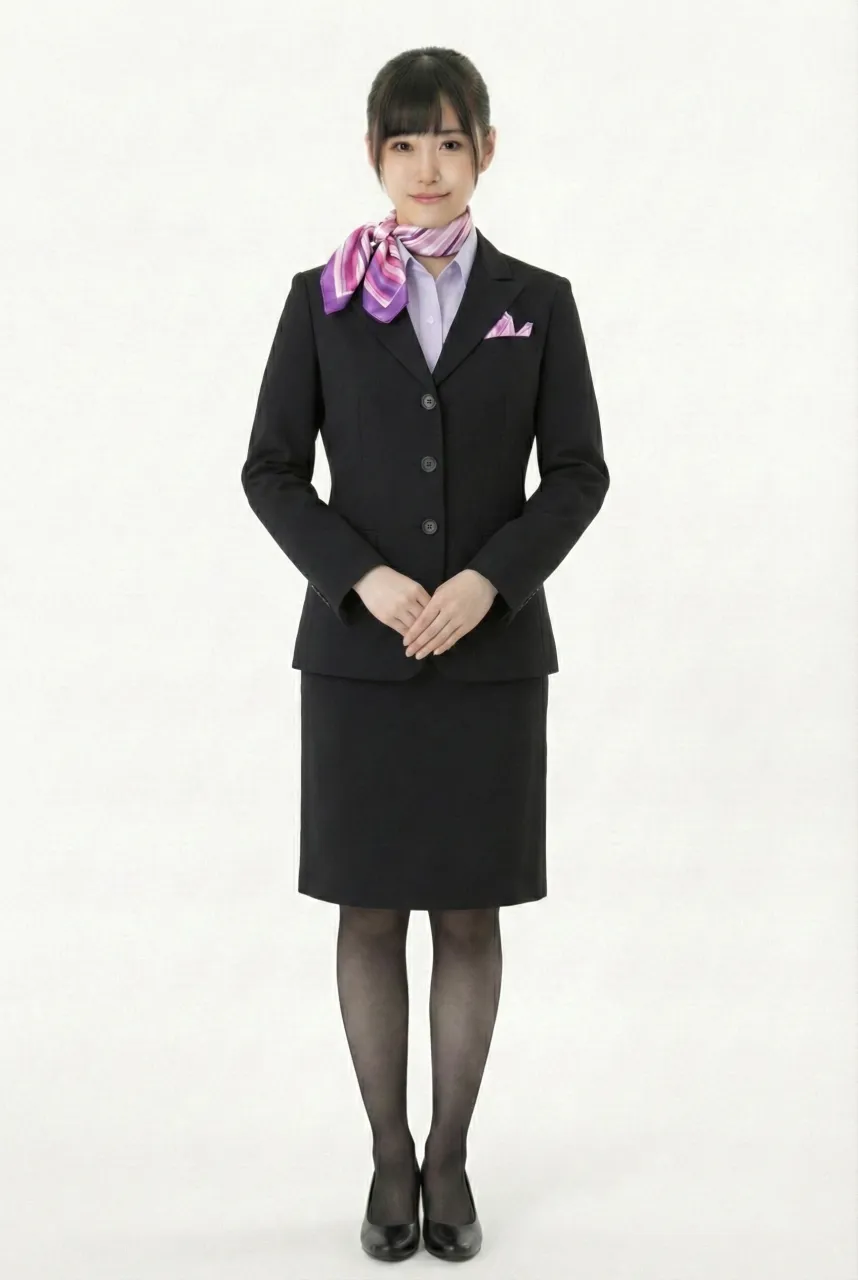
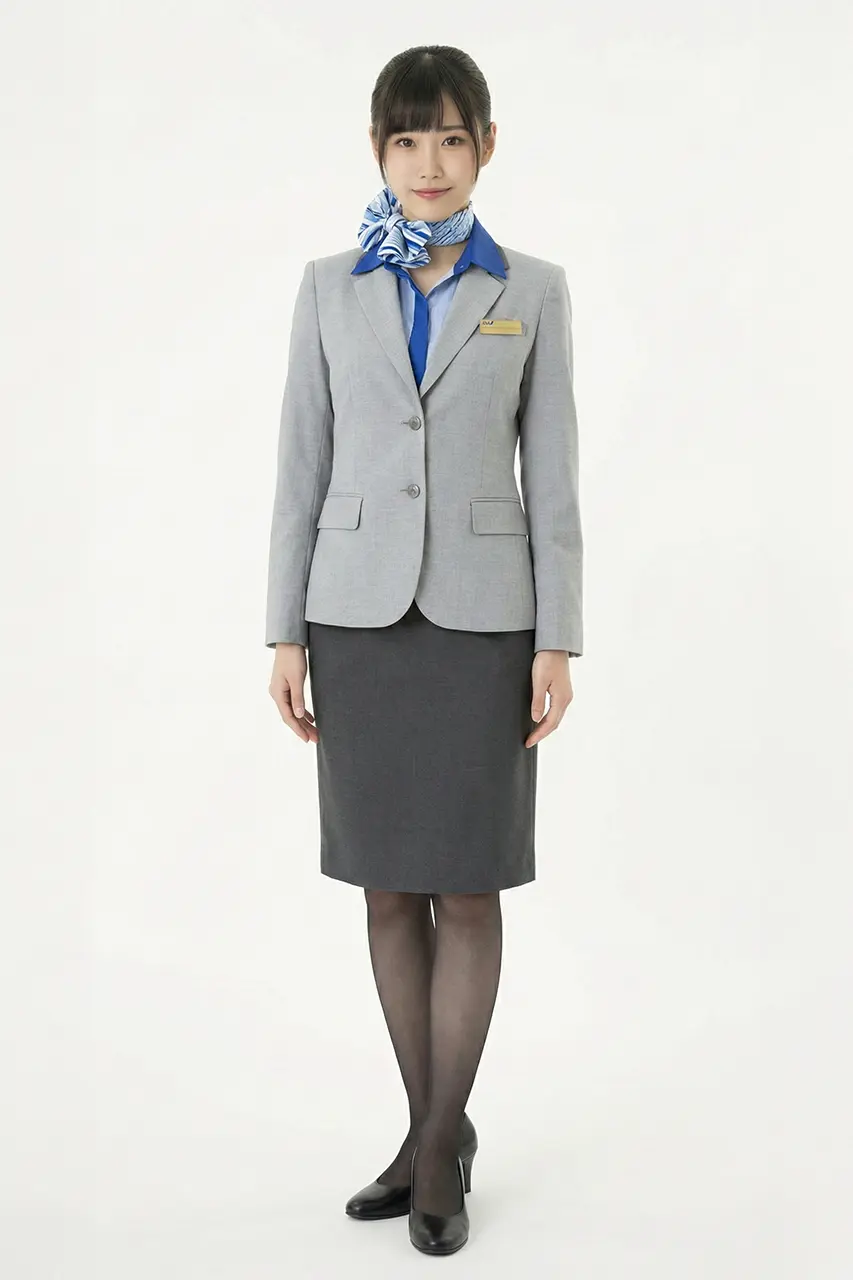
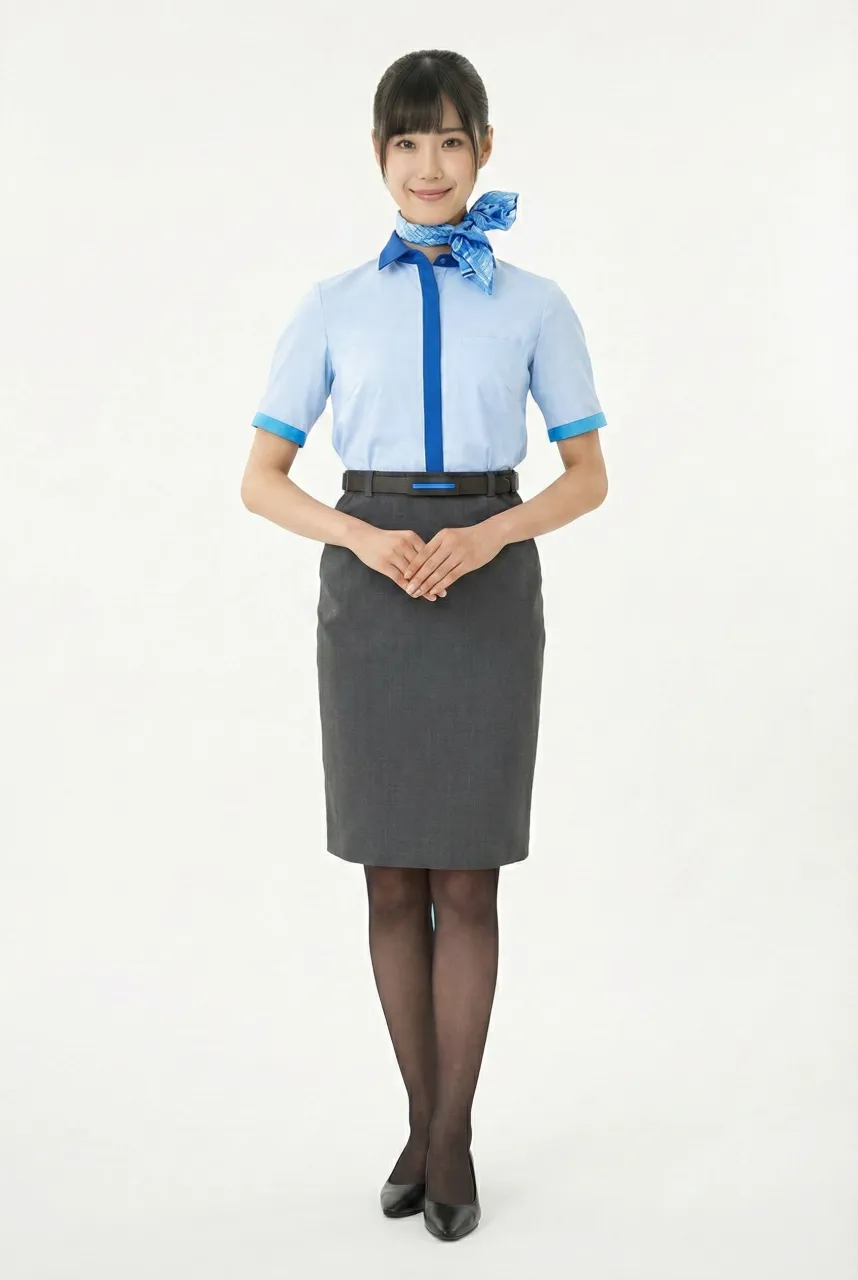
The images displayed in this section are AI-generated illustrations and are not official materials from the original organizations or brands. They do not represent actual uniform designs, real-life wear, or official positions. The content is for informational and organizational purposes. All brand/organization names and logos mentioned are the property of their respective owners.