 Sign in with Google


Female flight attendant - All Nippon Airways Uniform
1990 ~ 2005
Top
Bottom
Accessory
Overall
Description
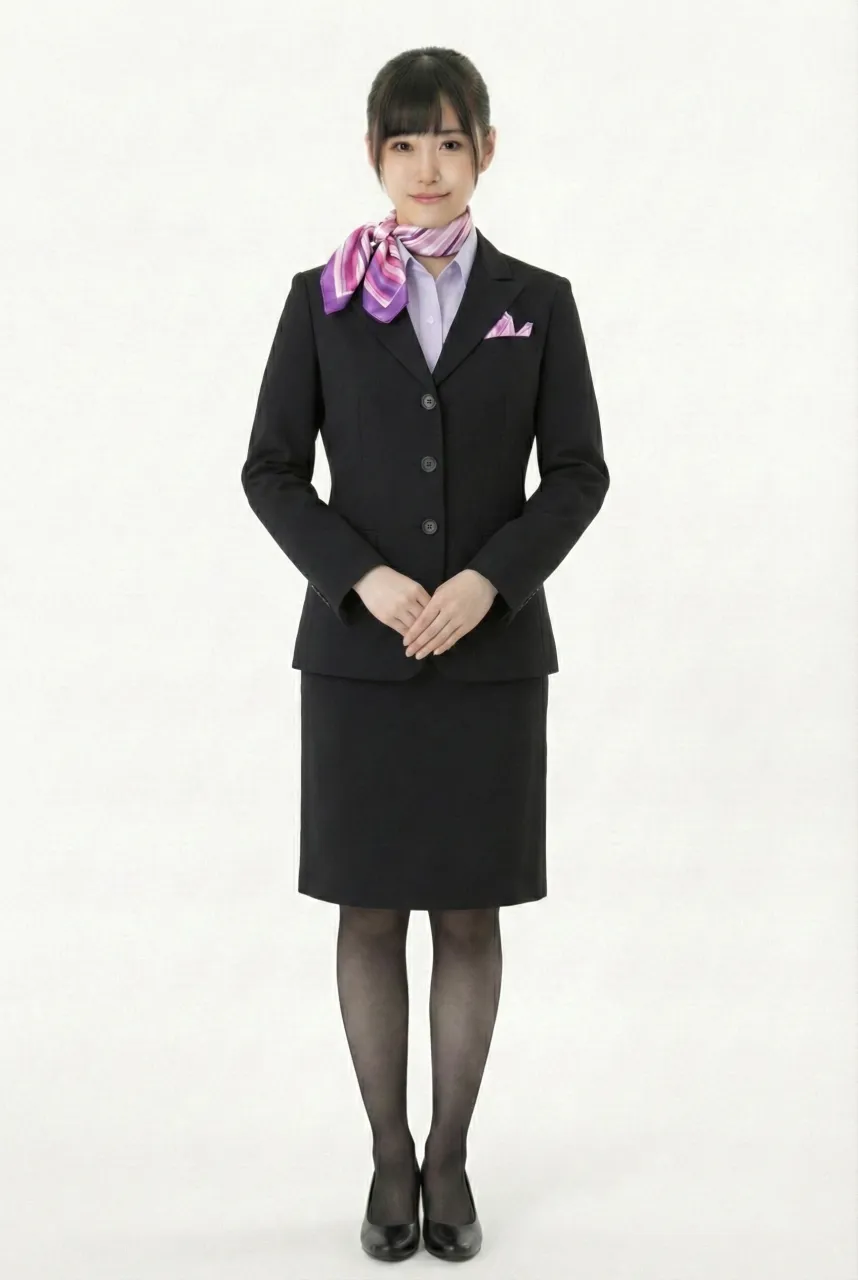
This uniform represents ANA’s eighth-generation uniform series, introduced alongside the official entry into service of the Boeing B747-400, also known as the “Technobo Jumbo.” Its debut symbolized a major transformation in the airline’s corporate image as it entered the era of large-scale long-haul operations and advanced high-tech aircraft. The design was created by renowned designer Jun Ashida, centering on a sharply tailored, neutral pinstripe suit style that emphasizes professionalism, structure, and discipline, projecting a mature, precise, and authoritative classic airline image. At the same time, the series also introduced greater flexibility in service presentation: shirts and scarves were offered in three color variations, allowing cabin crew a degree of personal expression while maintaining overall brand consistency. Additionally, from October 1998 onward, the gradual discontinuation of hats reflected a broader shift in airline service aesthetics—from traditional formality and ceremonial symbolism toward a more modern, practical, and comfort-oriented approach.
The overall style strongly embodies the essence of a “classic airline uniform.” The primary color is deep navy, enhanced with distinct vertical pinstripes that add a sense of rhythm and sharpness to the otherwise calm color palette. This creates a mature, rational, and highly institutionalized professional image. Visually, it is reminiscent of the authoritative and slightly military-inspired atmosphere often seen in traditional airline uniforms, yet the refined tailoring and careful detailing prevent the design from appearing rigid, preserving elegance and a sense of hospitality.
The jacket features a double-breasted design with prominent gold buttons, serving as one of the most visually impactful elements of the uniform. The double-breasted structure naturally conveys formality and uprightness, while the fitted cut and crisp shoulder lines enhance the upper body silhouette, making it appear more composed and authoritative. The pinstripe motif continues from the jacket to the skirt, forming a highly unified suit ensemble that reinforces visual order and professionalism, while also avoiding visual clutter through its restrained design language.
Underneath, a brighter blue-purple blouse is worn, creating a natural contrast in brightness against the deep navy jacket. This prevents the overall look from feeling too heavy and draws visual attention toward the upper torso. The neckline is paired with a deep navy scarf, tied in a side knot, preserving the refinement and elegance expected of airline uniforms while introducing a soft, graceful layer that balances the structured, almost military-like lines, thereby enhancing both recognizability and approachability.
The hat was originally one of the symbolic elements of this uniform set. The deep navy hat body combined with a gold emblem reinforced the ceremonial aspect and identity recognition typical of traditional airline uniforms. Its structured shape contributed to a complete and highly standardized service image. However, after October 1998, the gradual removal of the hat signified a stylistic transition from traditional authority and ritual symbolism toward a more modern, practical, and comfort-focused service philosophy.
The lower half consists of a matching pinstripe slim skirt, with a length falling slightly below the knee, presenting a balanced and composed proportion that complements the structured double-breasted jacket. Black stockings and black heels unify the color scheme from top to bottom, maintaining a strong sense of formality and professional coherence.
The overall style strongly embodies the essence of a “classic airline uniform.” The primary color is deep navy, enhanced with distinct vertical pinstripes that add a sense of rhythm and sharpness to the otherwise calm color palette. This creates a mature, rational, and highly institutionalized professional image. Visually, it is reminiscent of the authoritative and slightly military-inspired atmosphere often seen in traditional airline uniforms, yet the refined tailoring and careful detailing prevent the design from appearing rigid, preserving elegance and a sense of hospitality.
The jacket features a double-breasted design with prominent gold buttons, serving as one of the most visually impactful elements of the uniform. The double-breasted structure naturally conveys formality and uprightness, while the fitted cut and crisp shoulder lines enhance the upper body silhouette, making it appear more composed and authoritative. The pinstripe motif continues from the jacket to the skirt, forming a highly unified suit ensemble that reinforces visual order and professionalism, while also avoiding visual clutter through its restrained design language.
Underneath, a brighter blue-purple blouse is worn, creating a natural contrast in brightness against the deep navy jacket. This prevents the overall look from feeling too heavy and draws visual attention toward the upper torso. The neckline is paired with a deep navy scarf, tied in a side knot, preserving the refinement and elegance expected of airline uniforms while introducing a soft, graceful layer that balances the structured, almost military-like lines, thereby enhancing both recognizability and approachability.
The hat was originally one of the symbolic elements of this uniform set. The deep navy hat body combined with a gold emblem reinforced the ceremonial aspect and identity recognition typical of traditional airline uniforms. Its structured shape contributed to a complete and highly standardized service image. However, after October 1998, the gradual removal of the hat signified a stylistic transition from traditional authority and ritual symbolism toward a more modern, practical, and comfort-focused service philosophy.
The lower half consists of a matching pinstripe slim skirt, with a length falling slightly below the knee, presenting a balanced and composed proportion that complements the structured double-breasted jacket. Black stockings and black heels unify the color scheme from top to bottom, maintaining a strong sense of formality and professional coherence.
Uniform List
-
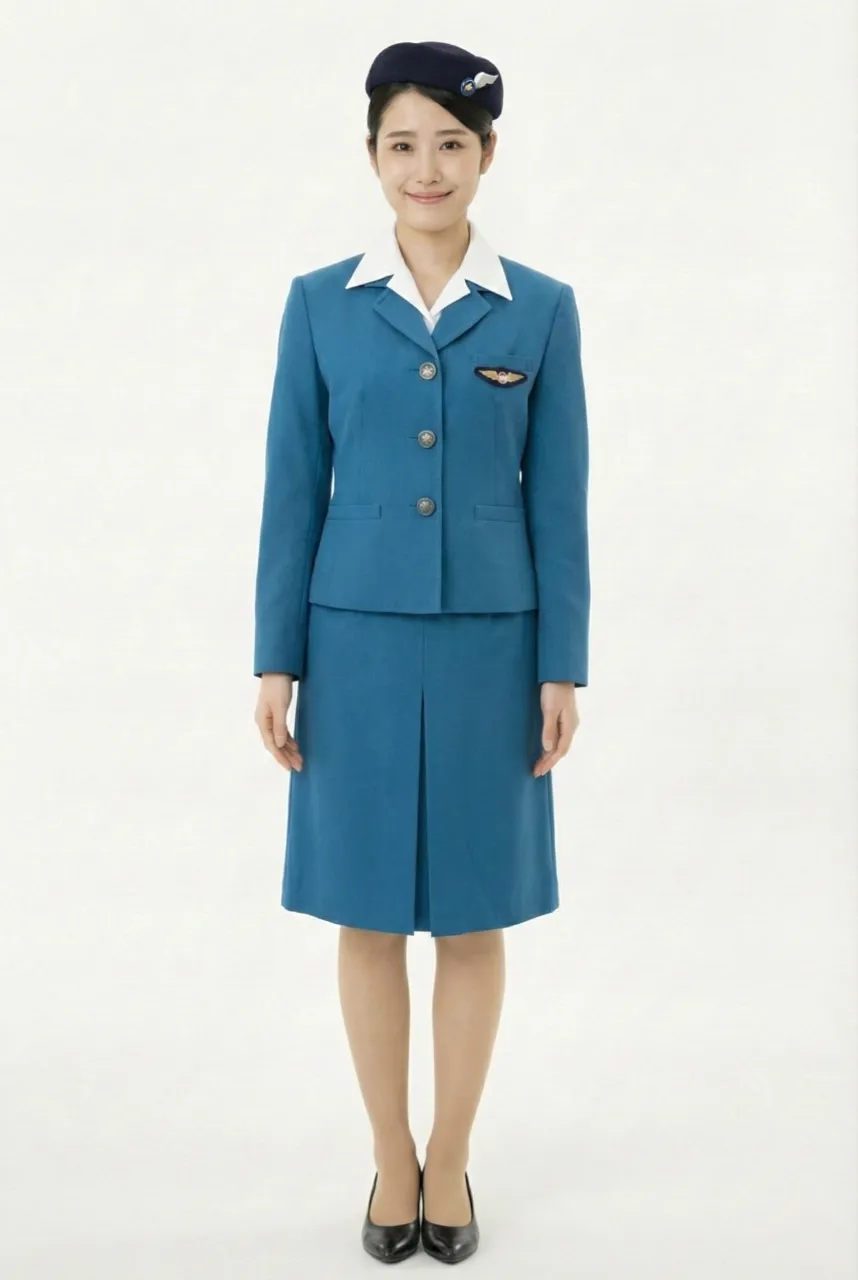
Female flight attendant
1955 ~ 1958 -
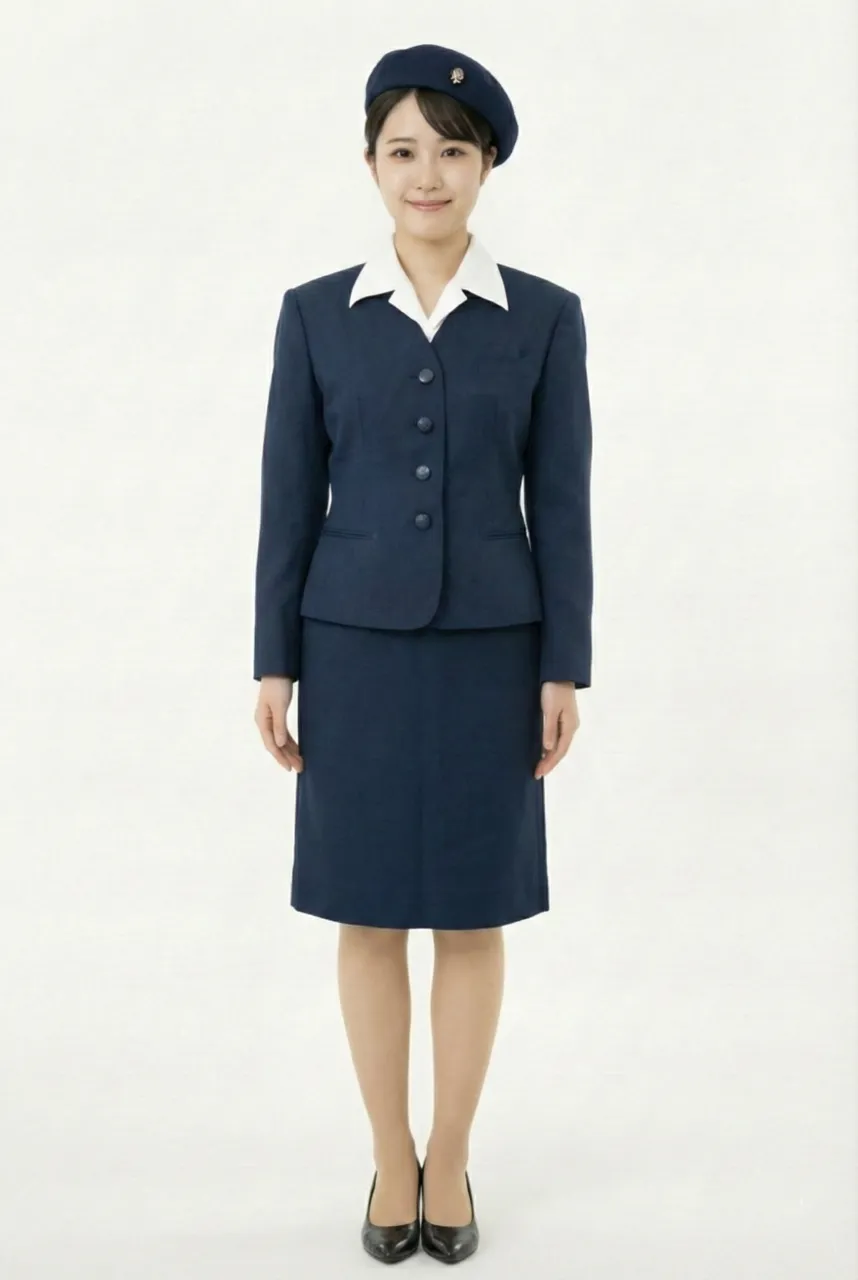
Female flight attendant
1958 ~ 1966 -
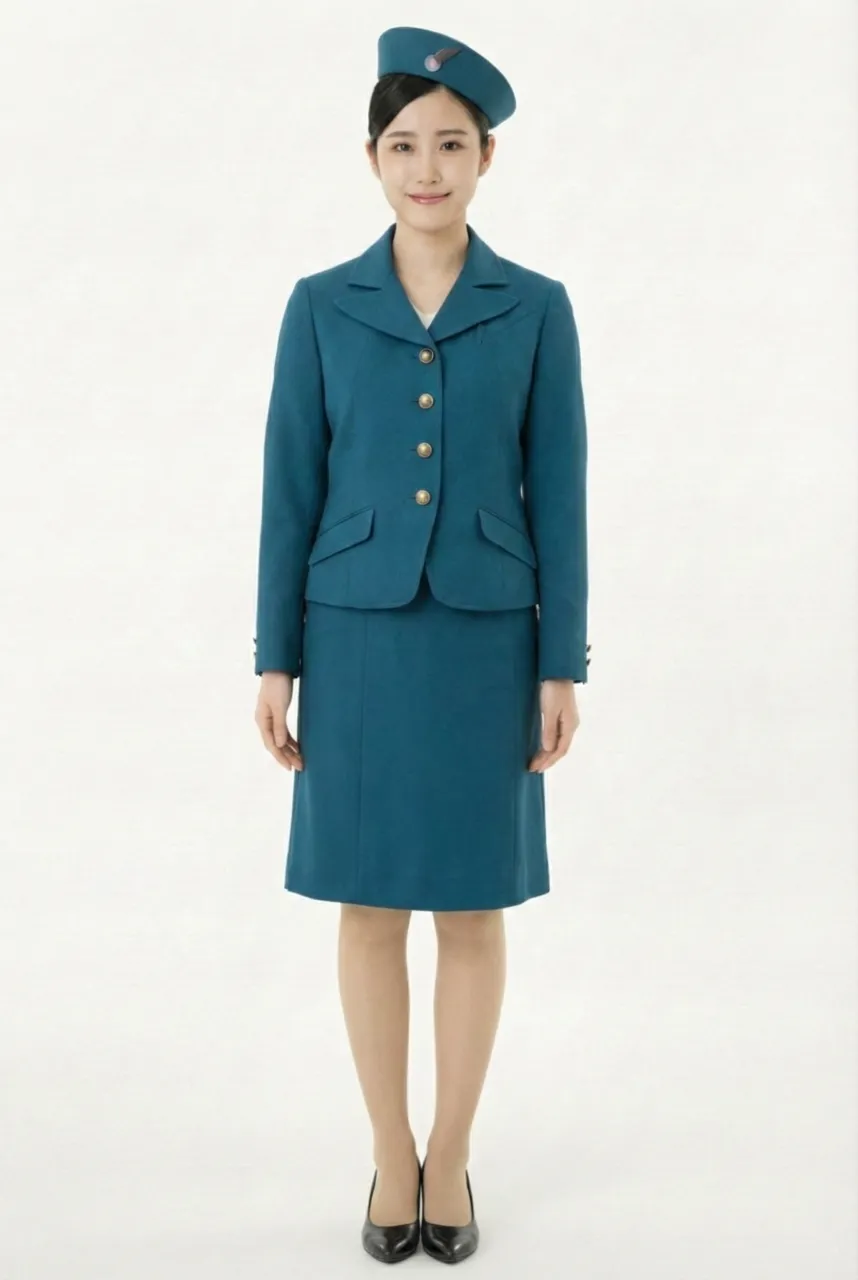
Female flight attendant
1966 ~ 1970 -
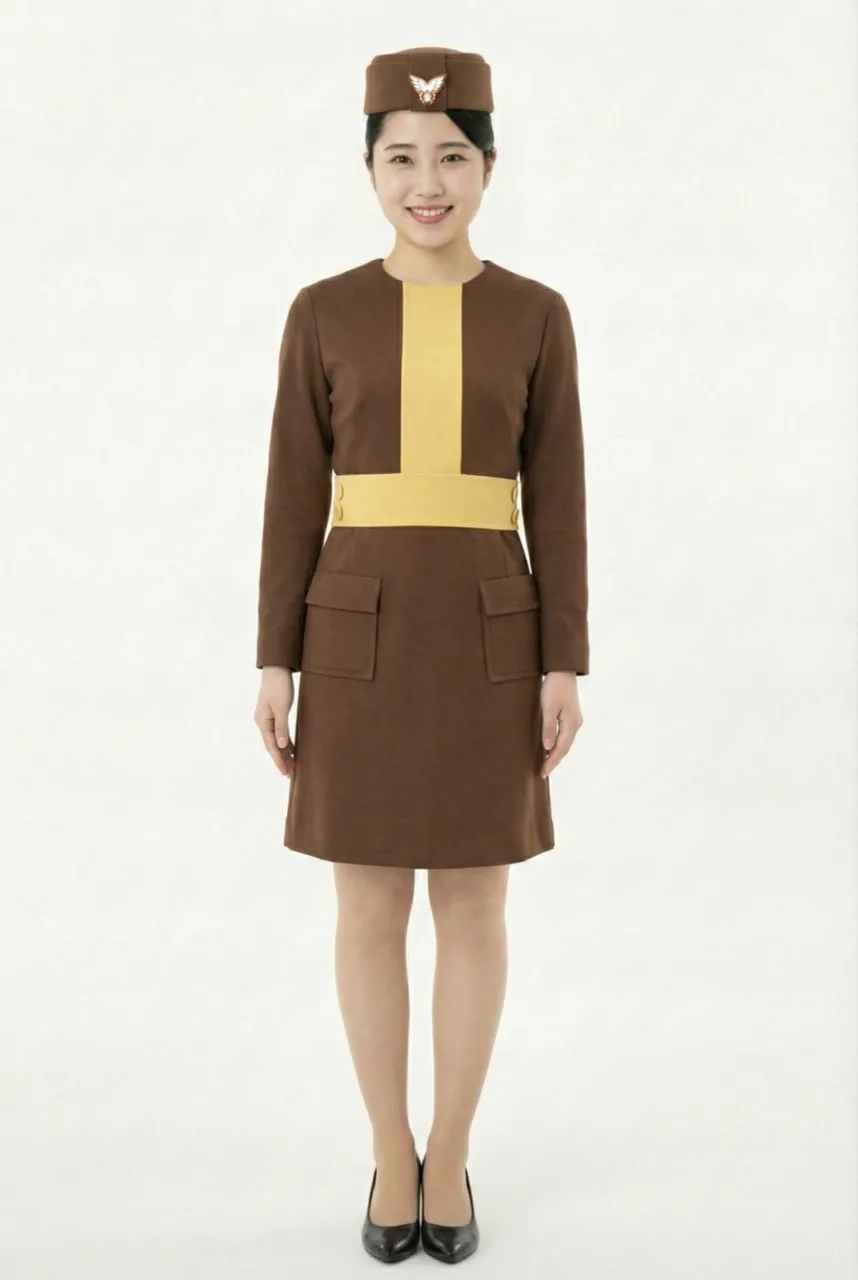
Female flight attendant
1970 ~ 1974 -
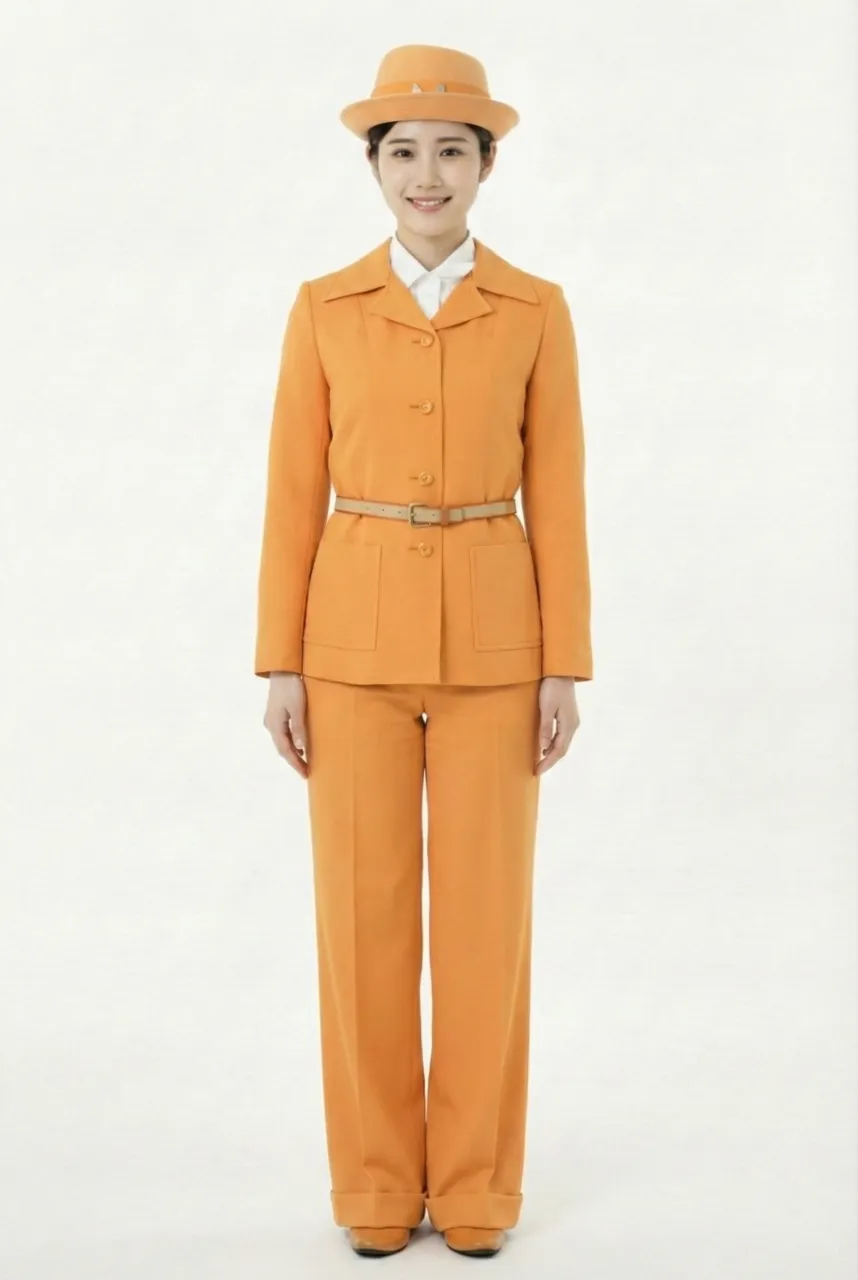
Female flight attendant
1974 ~ 1979 -
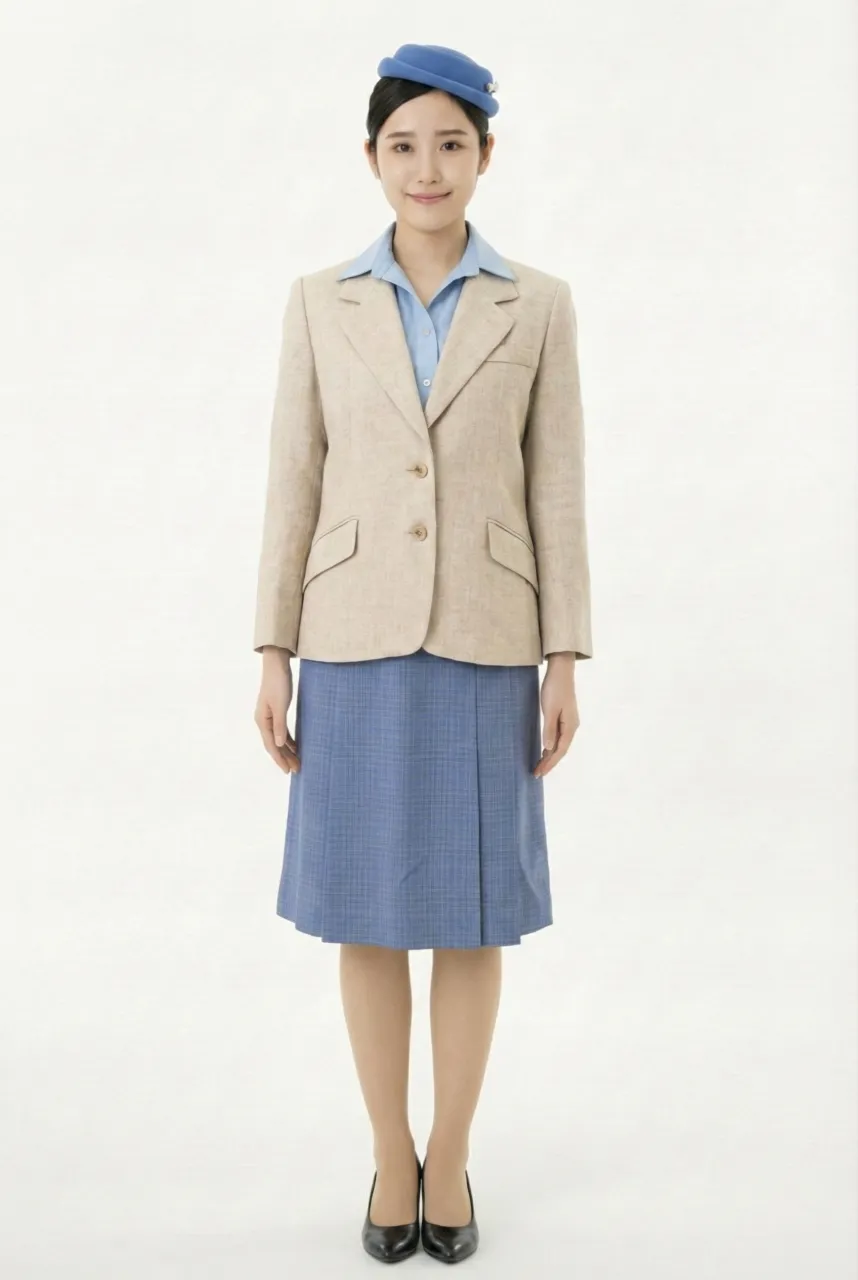
Female flight attendant
1979 ~ 1982 -
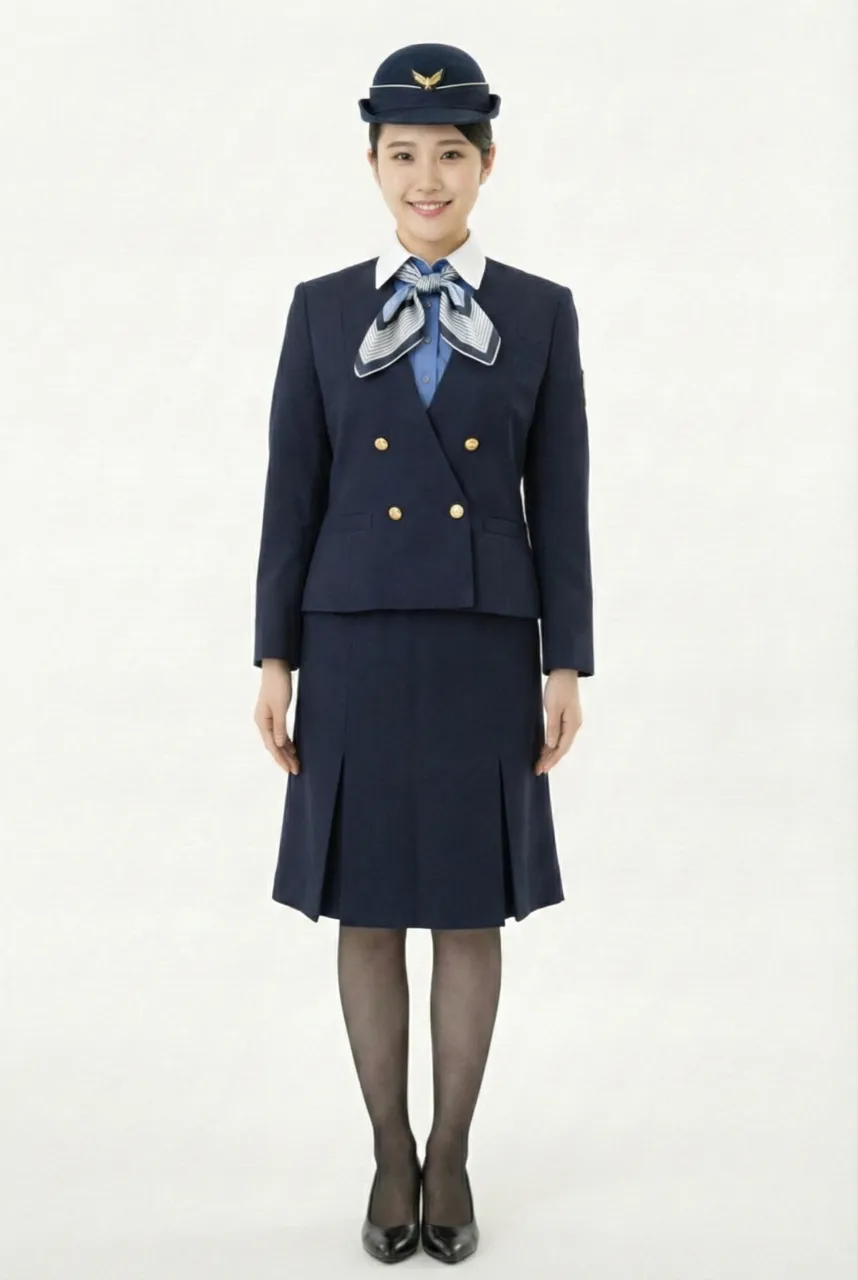
Female flight attendant
1982 ~ 1990 -
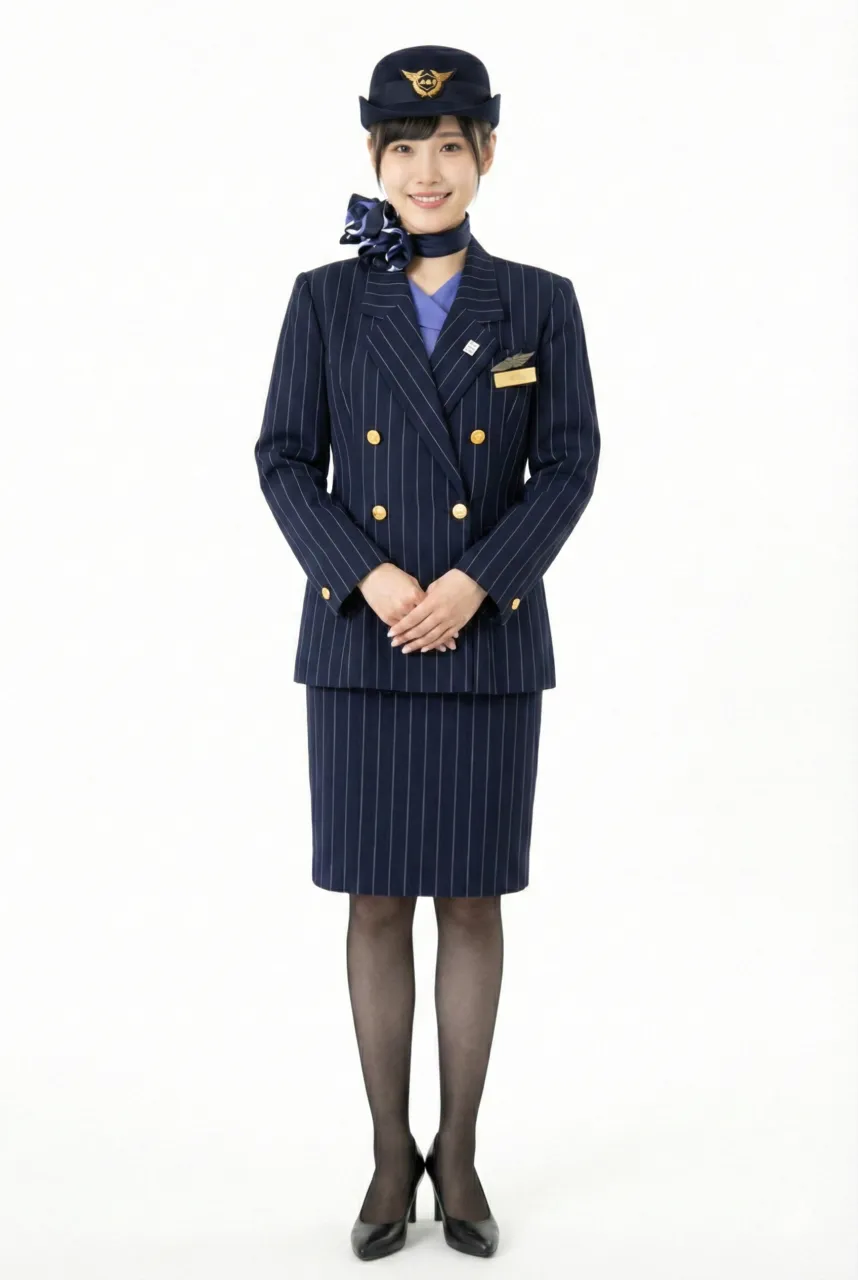
Female flight attendant
1990 ~ 2005 -
Female flight attendant
2005 ~ 2015 -
Female flight attendant
2015 ~ -
Female flight attendant
2015 ~
The images displayed in this section are AI-generated illustrations and are not official materials from the original organizations or brands. They do not represent actual uniform designs, real-life wear, or official positions. The content is for informational and organizational purposes. All brand/organization names and logos mentioned are the property of their respective owners.