 Sign in with Google


Female flight attendant - Japan Airlines Uniform
1954 ~ 1960
Top
Bottom
Accessory
Overall
Description
This uniform represents the second-generation cabin crew uniform introduced by Japan Airlines (JAL) in the mid-1950s. It was created during a pivotal period when Japan resumed international flight operations after World War II and began establishing itself as a national flag carrier, giving this uniform strong historical significance.
JAL was founded in 1951 and restructured in 1953 as a government-backed entity, officially taking on the role of Japan’s national airline. As postwar restrictions were lifted, the airline resumed international services, launching its first flight from Tokyo Haneda to San Francisco via Honolulu in 1954—an important milestone symbolizing Japan’s reconnection with the world. This uniform was introduced within that historical context.
In terms of design, the second-generation uniform marked a shift from the blue-gray tones of the first generation to a more authoritative deep navy color, establishing a classic foundation that would influence JAL uniforms in later years. The upper garment features a collarless tailored jacket with clean, streamlined lines, paired with a wing emblem on the chest to reinforce both brand identity and professional symbolism. The overall silhouette leans toward a fitted cut, combined with a slim straight skirt featuring a front slit, balancing elegance with improved mobility.
The hat design also evolved from the cylindrical style of the first generation to a more structured form, with a bird-shaped emblem positioned on the left front. This element is considered a precursor to the iconic “Tsurumaru” crane logo, officially adopted in 1959, giving the uniform an important transitional role in the development of JAL’s visual identity.
JAL was founded in 1951 and restructured in 1953 as a government-backed entity, officially taking on the role of Japan’s national airline. As postwar restrictions were lifted, the airline resumed international services, launching its first flight from Tokyo Haneda to San Francisco via Honolulu in 1954—an important milestone symbolizing Japan’s reconnection with the world. This uniform was introduced within that historical context.
In terms of design, the second-generation uniform marked a shift from the blue-gray tones of the first generation to a more authoritative deep navy color, establishing a classic foundation that would influence JAL uniforms in later years. The upper garment features a collarless tailored jacket with clean, streamlined lines, paired with a wing emblem on the chest to reinforce both brand identity and professional symbolism. The overall silhouette leans toward a fitted cut, combined with a slim straight skirt featuring a front slit, balancing elegance with improved mobility.
The hat design also evolved from the cylindrical style of the first generation to a more structured form, with a bird-shaped emblem positioned on the left front. This element is considered a precursor to the iconic “Tsurumaru” crane logo, officially adopted in 1959, giving the uniform an important transitional role in the development of JAL’s visual identity.
Uniform List
-

First Generation No.1 Uniform (Summer Uniform)
1951 ~ 1952 -
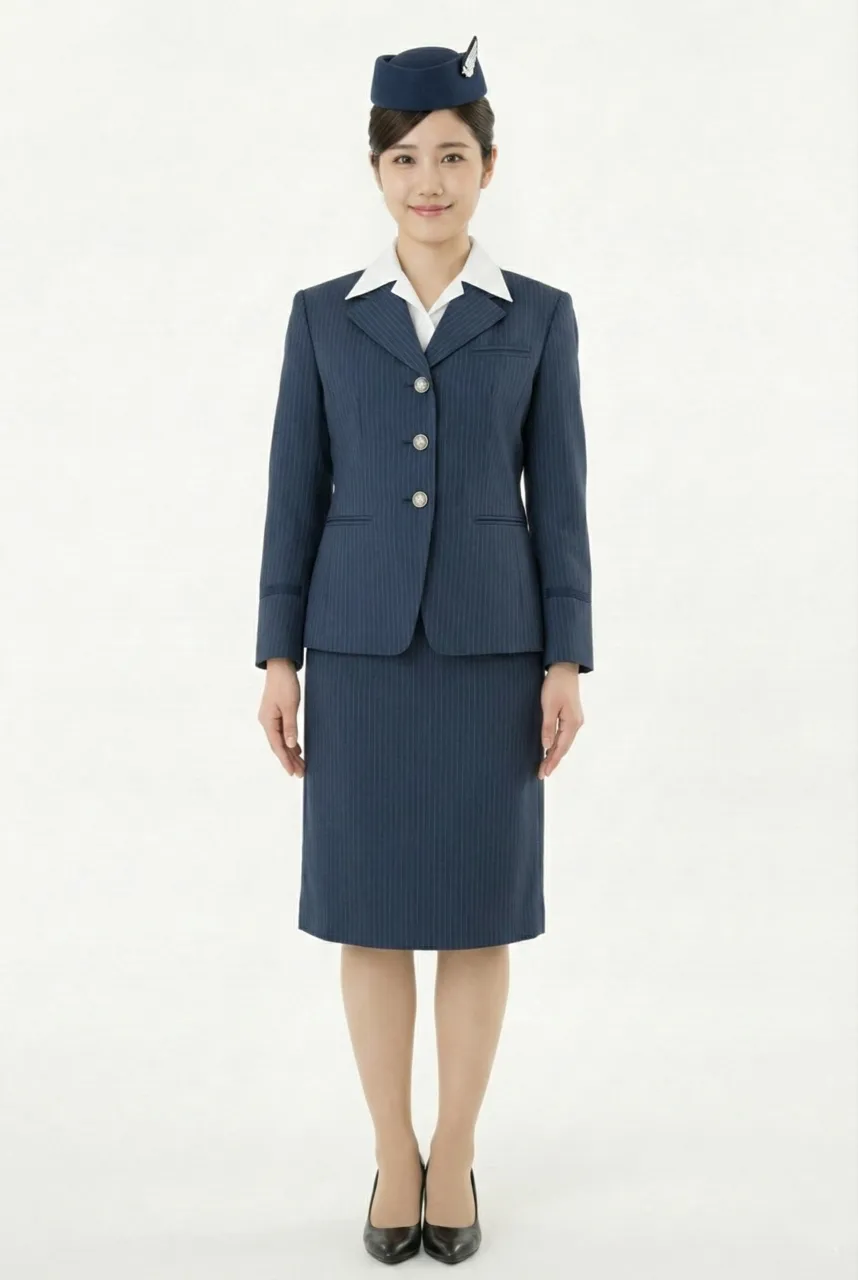
First Generation No.2 Uniform (Winter Uniform)
1951 ~ 1954 -

First Generation No.3 Uniform (Summer Uniform)
1953 ~ 1953 -
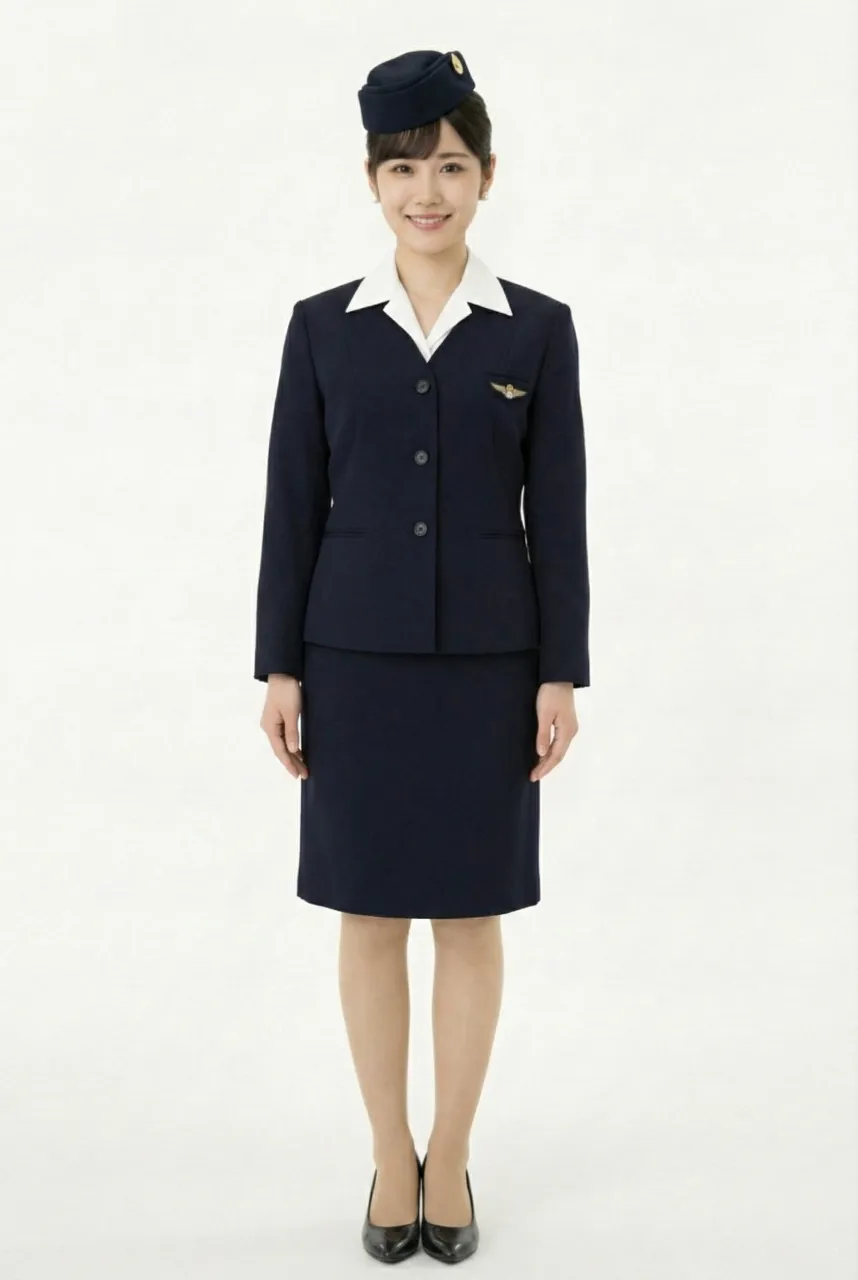
Female flight attendant
1954 ~ 1960 -
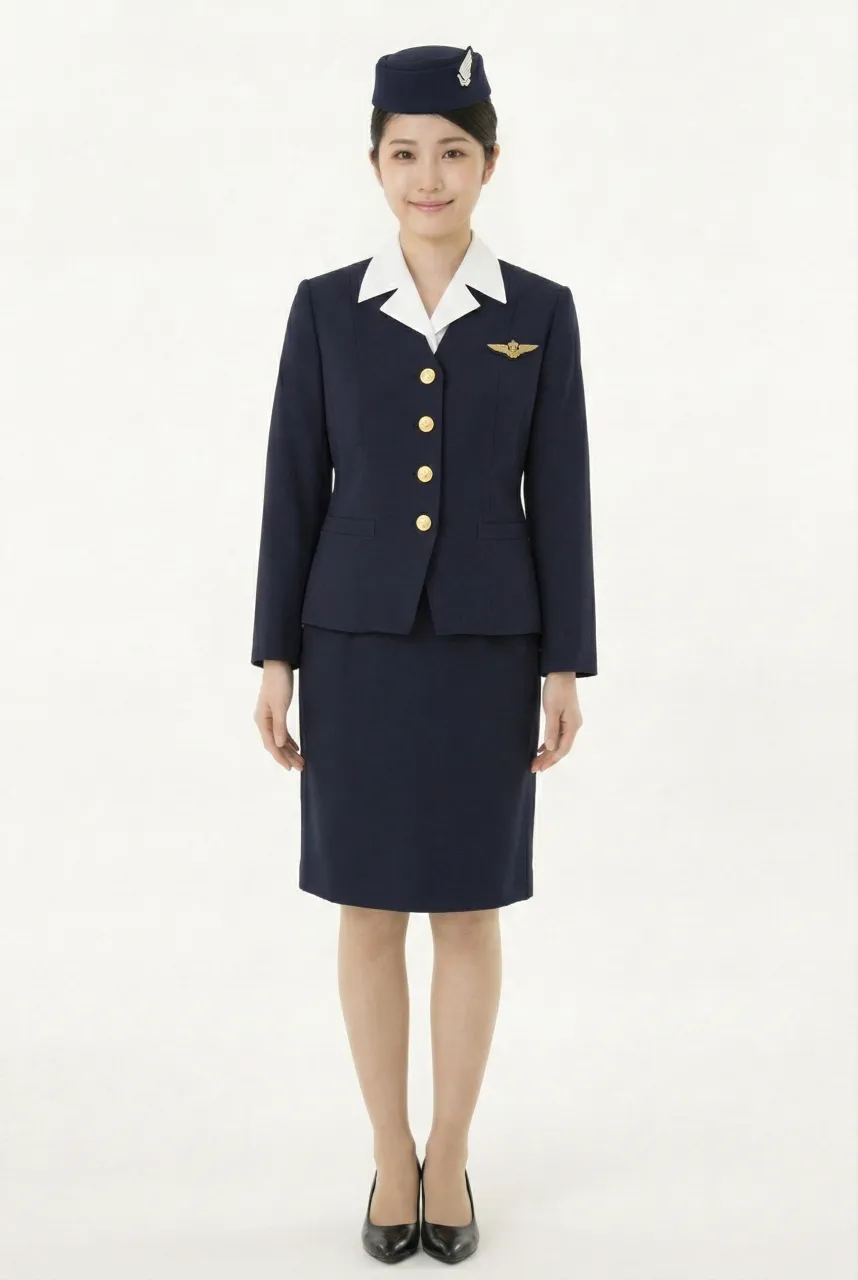
Female flight attendant
1960 ~ 1967 -

Female flight attendant
1967 ~ 1970 -
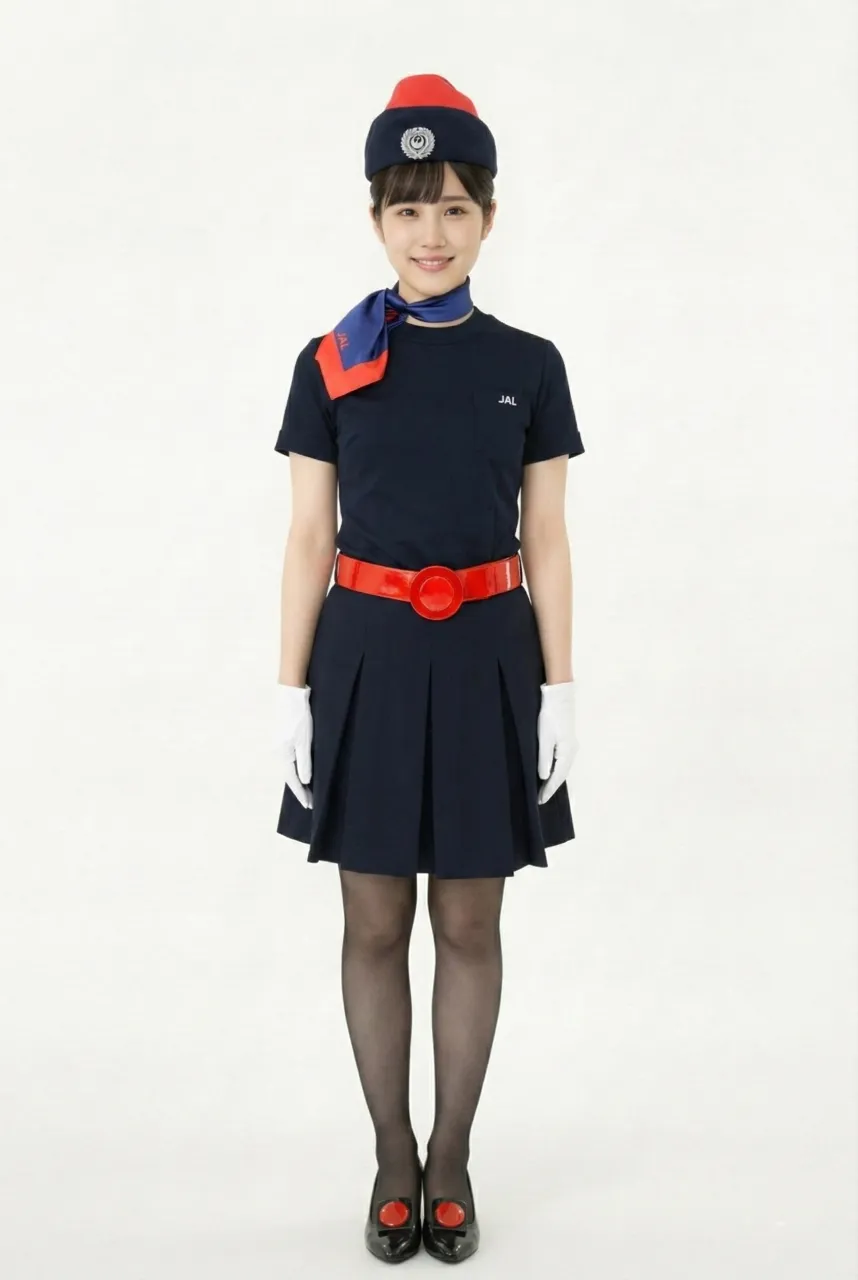
Female flight attendant
1970 ~ 1977 -

Female flight attendant
1977 ~ 1987 -

Female flight attendant
1988 ~ 1996 -

Female flight attendant
1996 ~ 2004 -

Female flight attendant
2004 ~ 2013 -

Female flight attendant
2013 ~ 2020 -
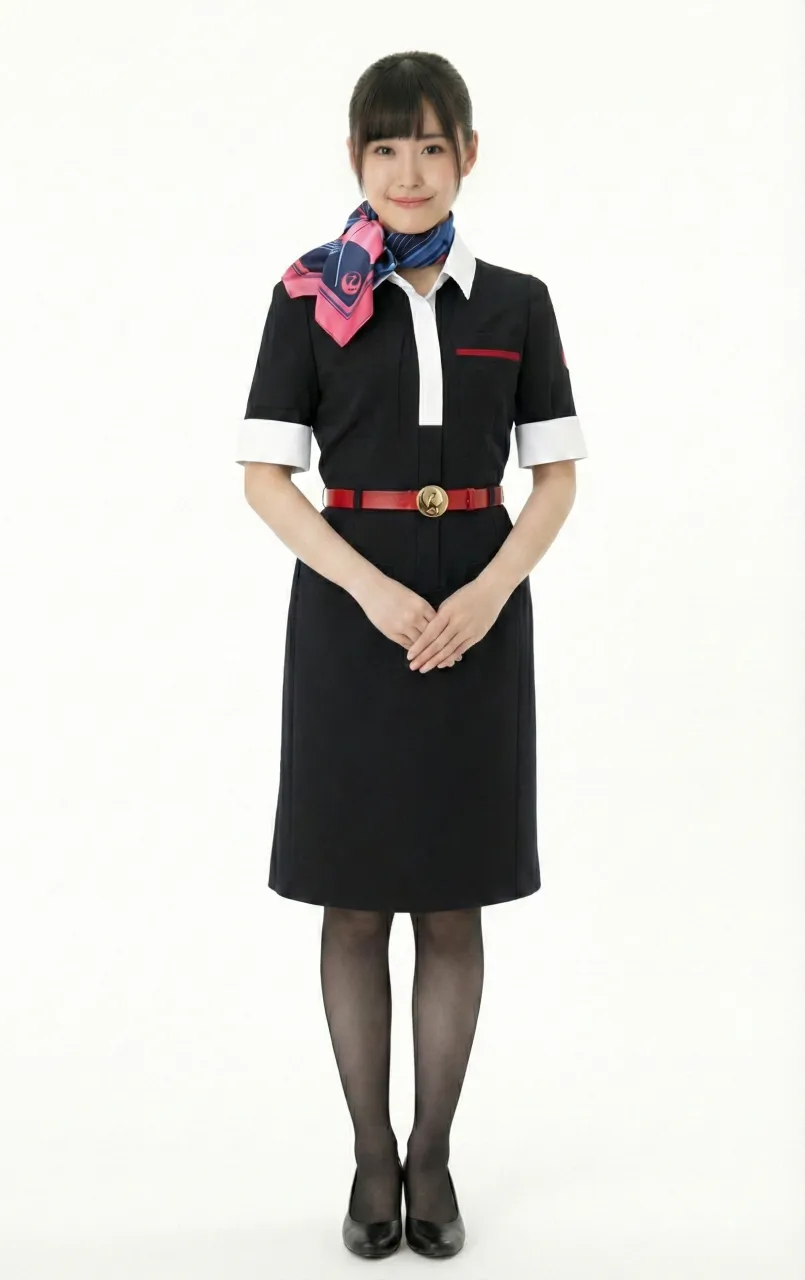
Female flight attendant
2013 ~ 2020 -
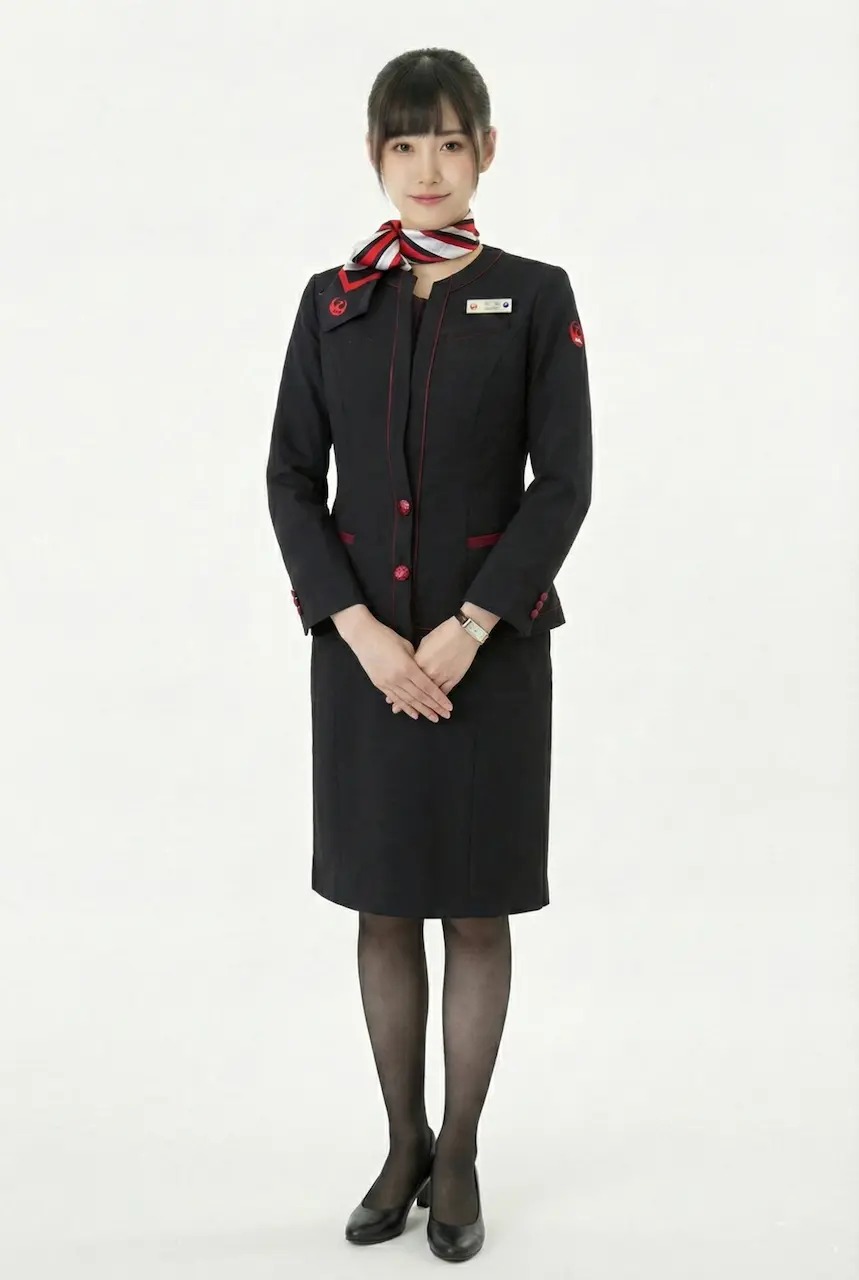
Female flight attendant
2020 ~ -
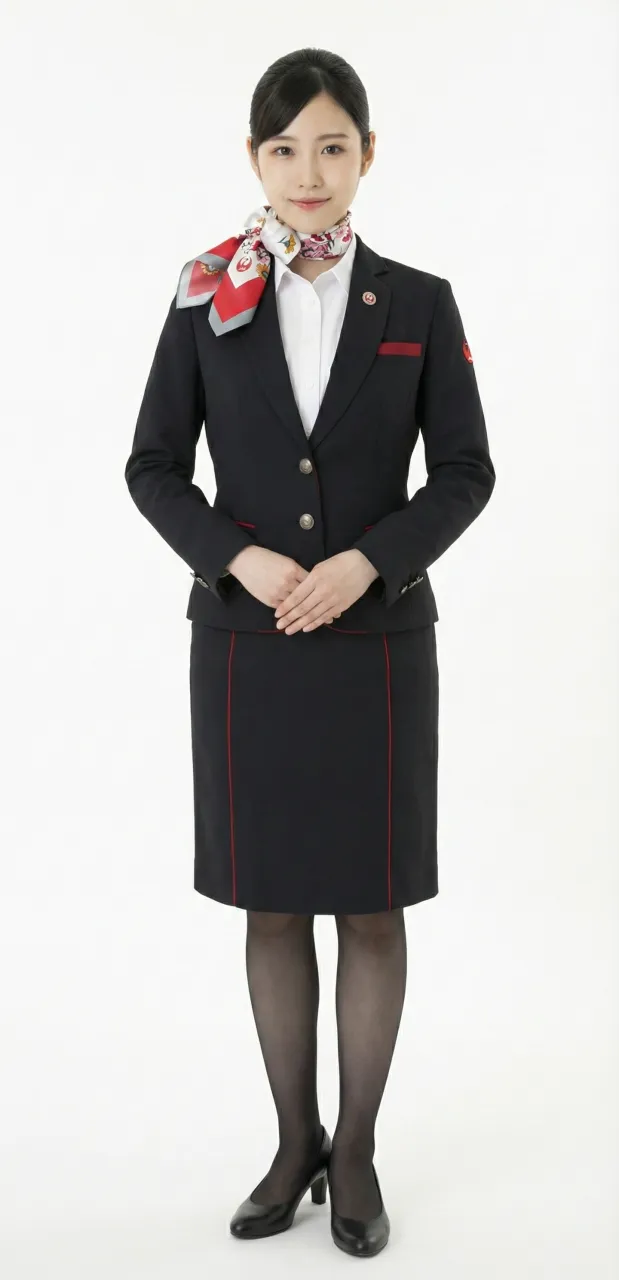
Female ground staff
2020 ~ -
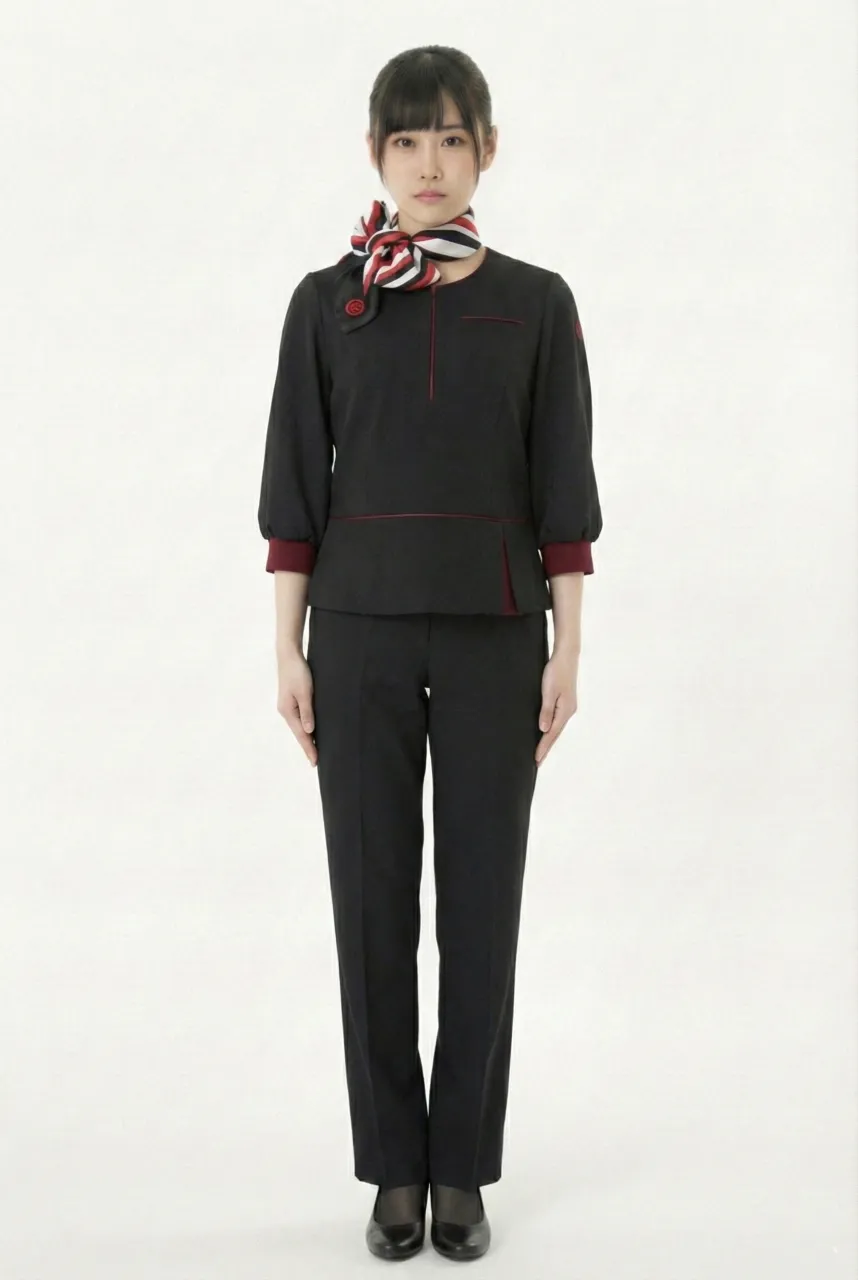
Female flight attendant in pants
2020 ~
The images displayed in this section are AI-generated illustrations and are not official materials from the original organizations or brands. They do not represent actual uniform designs, real-life wear, or official positions. The content is for informational and organizational purposes. All brand/organization names and logos mentioned are the property of their respective owners.