 Sign in with Google


Female flight attendant - Japan Airlines Uniform
1967 ~ 1970
Top
Bottom
Accessory
Overall
Description
This uniform represents the fourth-generation cabin crew uniform introduced by Japan Airlines (JAL) in 1967 (Showa 42). It was launched to coincide with the airline’s inauguration of its round-the-world route, marking a major milestone as JAL expanded into the global aviation market.
The most notable breakthrough of this generation lies in its bold use of color. Unlike earlier uniforms that relied on subdued tones such as gray and navy, this design introduced a striking “sky blue” as its primary color—the only time this color has been used in JAL’s uniform history. This bright and refreshing tone not only evokes the imagery of the sky and aviation but also reflects the optimism and energy of Japan’s period of rapid economic growth, giving the uniform a more modern and vibrant presence.
The design was created by pioneering Japanese fashion designer Hanae Mori, who blended Western tailoring with elements of Japanese aesthetics. The jacket features a kimono-inspired crossover collar, forming elegant lines across the chest and introducing a distinctly Japanese visual identity. The front hem is softly curved, complemented by large round buttons and flap pockets, creating a design that is both simple and highly recognizable. Underneath, a white round-neck top is paired with a matching skirt, which includes a back slit to enhance mobility.
This generation also marked the first introduction of white gloves, adding a sense of formality and refinement to the cabin crew’s appearance—an element that would later become an iconic feature of airline service presentation.
In terms of brand identity, the “Tsurumaru” (crane emblem)—adopted as the company symbol in 1965—was incorporated into the uniform for the first time. A crane brooch made of pearl-like elements was worn on the right chest, while the same emblem appeared on the front of the hat, creating a cohesive and highly recognizable brand image.
Notably, Hanae Mori continued to design the fourth through sixth generations of JAL uniforms, establishing a consistent and distinctive style during this era. With its innovative color scheme and fusion of Eastern and Western design elements, the fourth-generation uniform attracted widespread attention and remains one of the most iconic designs in JAL’s uniform history.
The most notable breakthrough of this generation lies in its bold use of color. Unlike earlier uniforms that relied on subdued tones such as gray and navy, this design introduced a striking “sky blue” as its primary color—the only time this color has been used in JAL’s uniform history. This bright and refreshing tone not only evokes the imagery of the sky and aviation but also reflects the optimism and energy of Japan’s period of rapid economic growth, giving the uniform a more modern and vibrant presence.
The design was created by pioneering Japanese fashion designer Hanae Mori, who blended Western tailoring with elements of Japanese aesthetics. The jacket features a kimono-inspired crossover collar, forming elegant lines across the chest and introducing a distinctly Japanese visual identity. The front hem is softly curved, complemented by large round buttons and flap pockets, creating a design that is both simple and highly recognizable. Underneath, a white round-neck top is paired with a matching skirt, which includes a back slit to enhance mobility.
This generation also marked the first introduction of white gloves, adding a sense of formality and refinement to the cabin crew’s appearance—an element that would later become an iconic feature of airline service presentation.
In terms of brand identity, the “Tsurumaru” (crane emblem)—adopted as the company symbol in 1965—was incorporated into the uniform for the first time. A crane brooch made of pearl-like elements was worn on the right chest, while the same emblem appeared on the front of the hat, creating a cohesive and highly recognizable brand image.
Notably, Hanae Mori continued to design the fourth through sixth generations of JAL uniforms, establishing a consistent and distinctive style during this era. With its innovative color scheme and fusion of Eastern and Western design elements, the fourth-generation uniform attracted widespread attention and remains one of the most iconic designs in JAL’s uniform history.
Uniform List
-

First Generation No.1 Uniform (Summer Uniform)
1951 ~ 1952 -
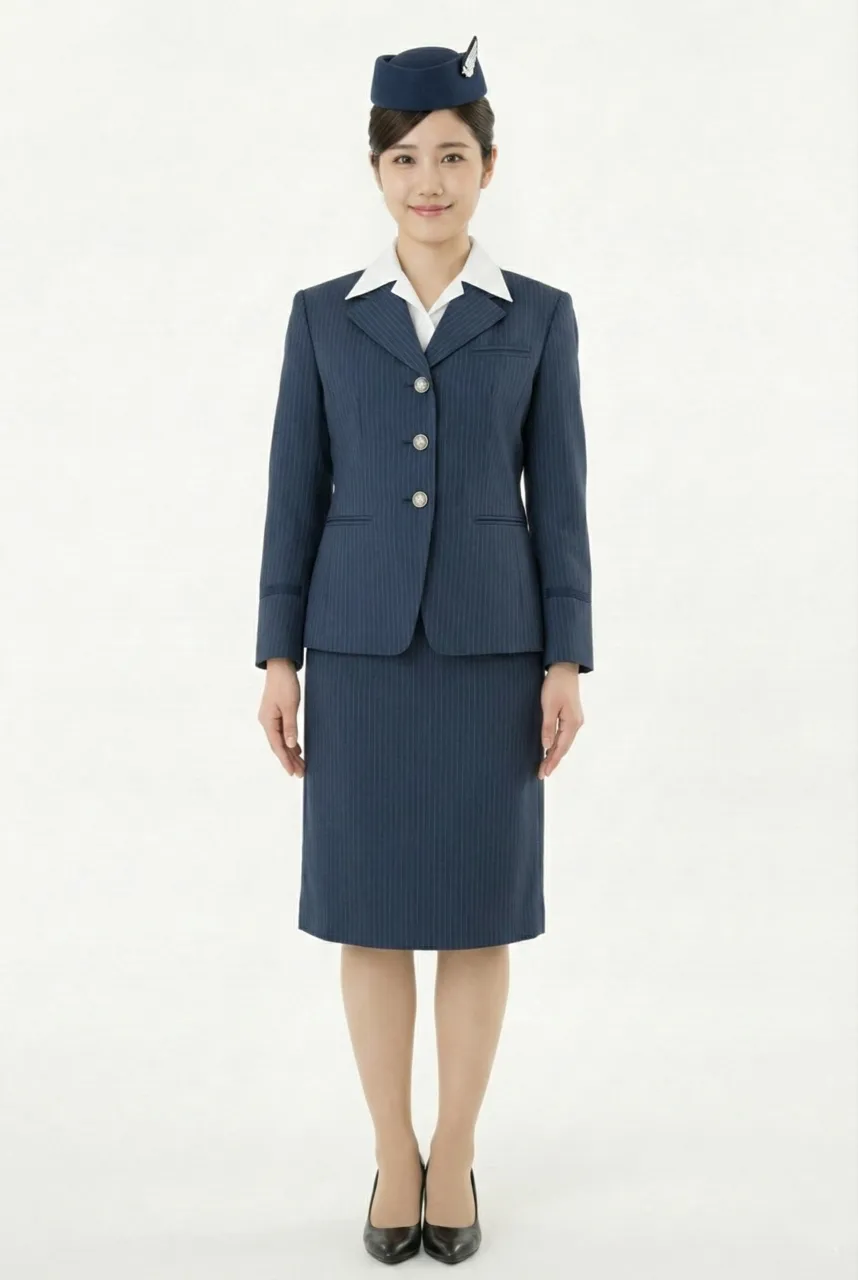
First Generation No.2 Uniform (Winter Uniform)
1951 ~ 1954 -

First Generation No.3 Uniform (Summer Uniform)
1953 ~ 1953 -
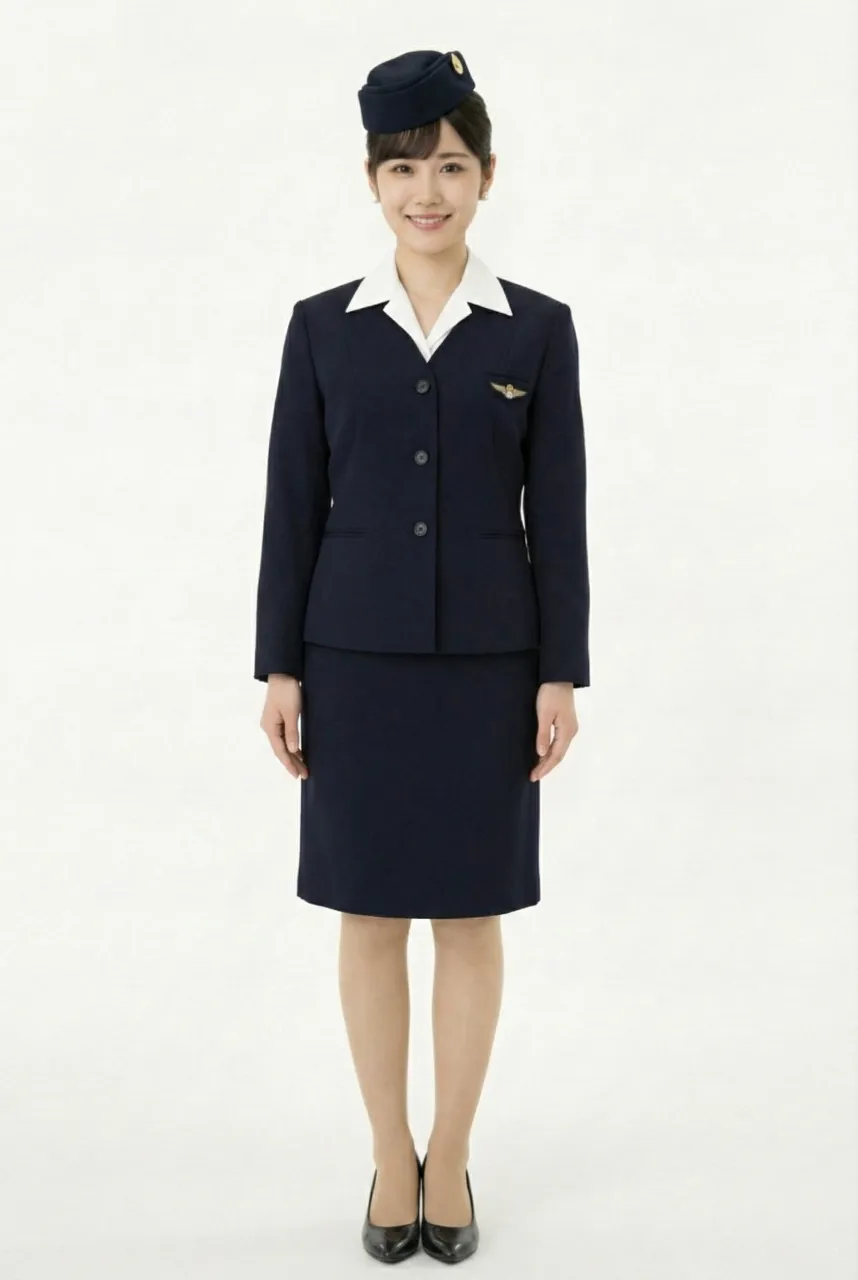
Female flight attendant
1954 ~ 1960 -
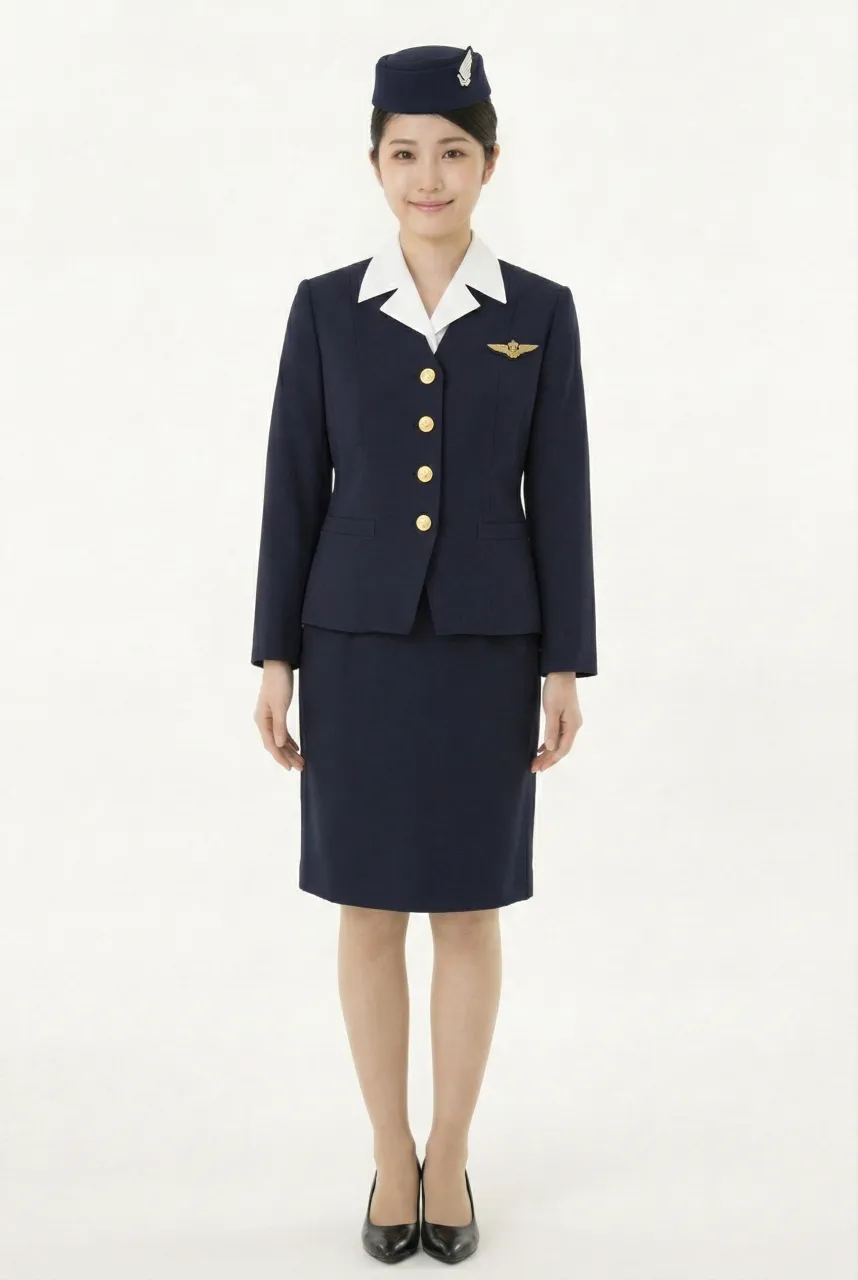
Female flight attendant
1960 ~ 1967 -

Female flight attendant
1967 ~ 1970 -
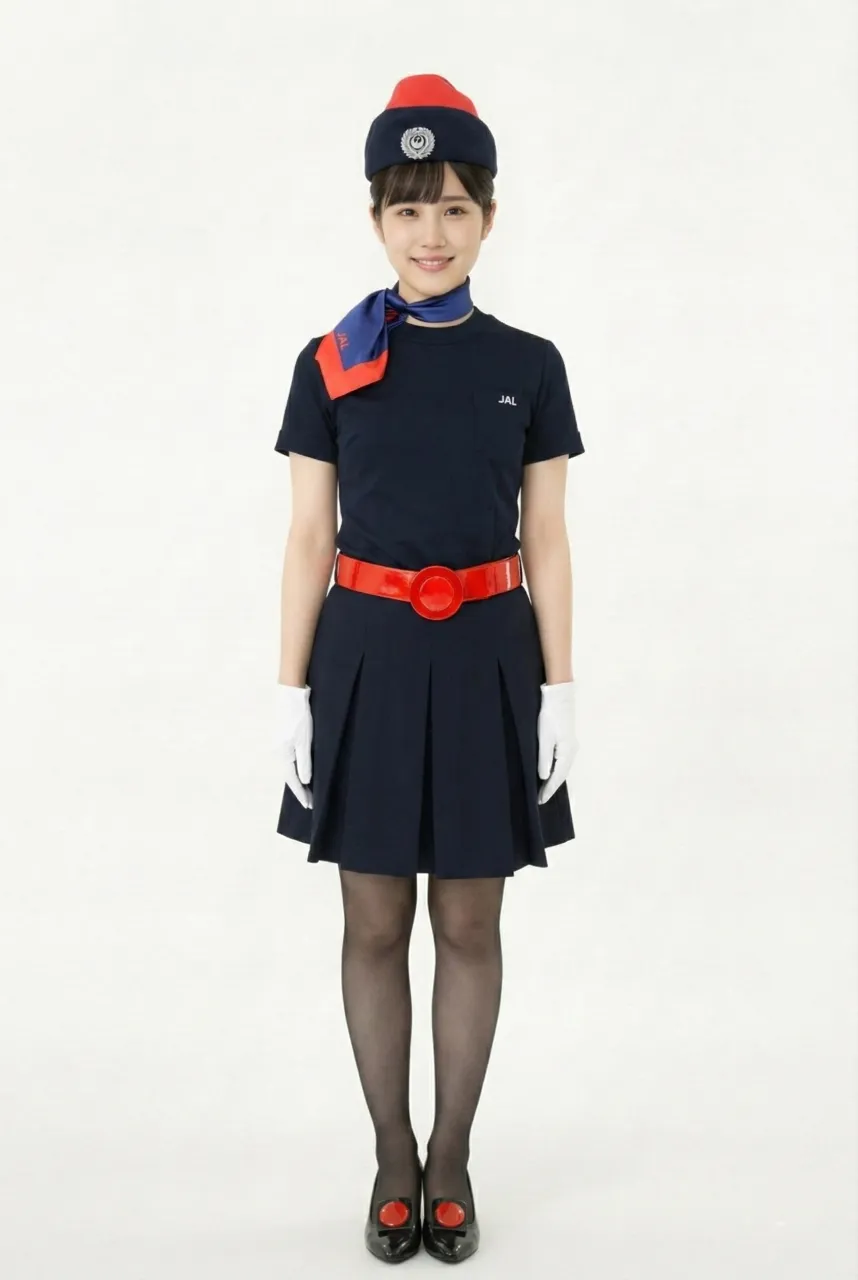
Female flight attendant
1970 ~ 1977 -

Female flight attendant
1977 ~ 1987 -

Female flight attendant
1988 ~ 1996 -

Female flight attendant
1996 ~ 2004 -

Female flight attendant
2004 ~ 2013 -

Female flight attendant
2013 ~ 2020 -
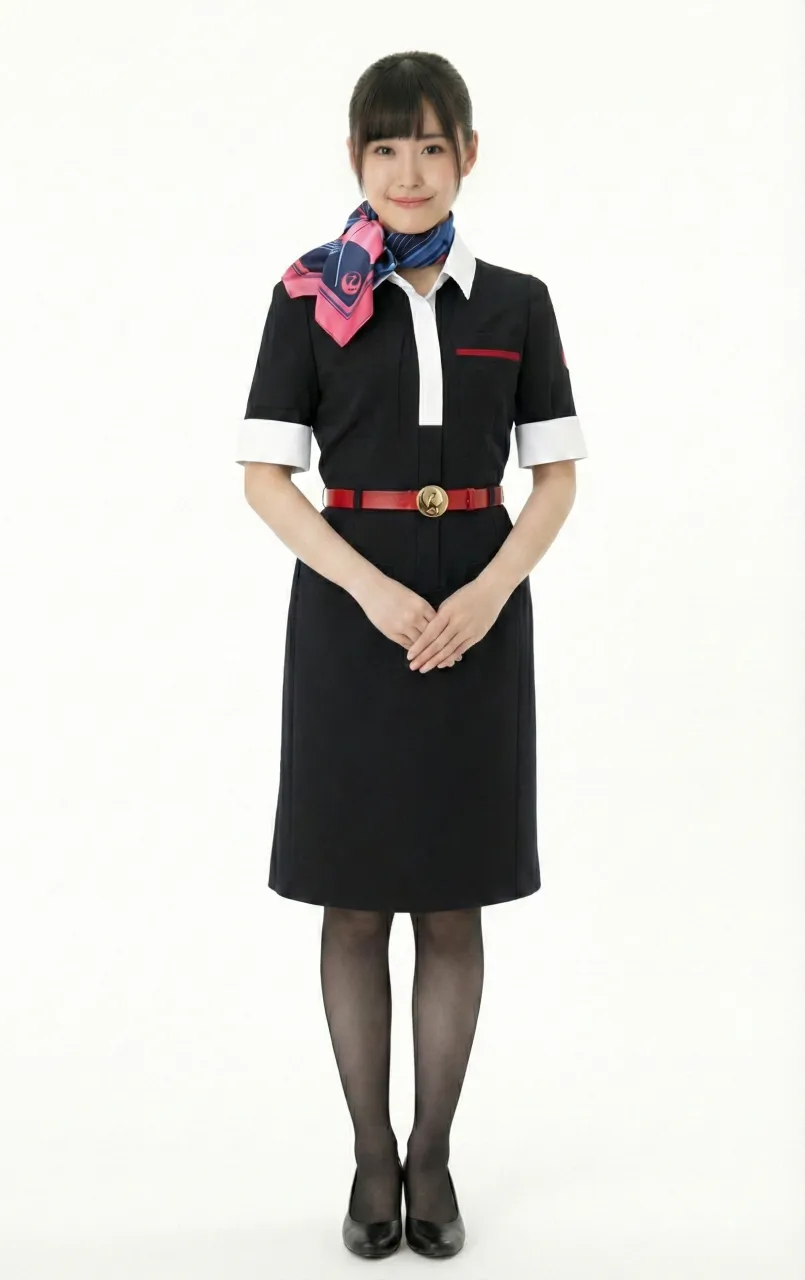
Female flight attendant
2013 ~ 2020 -
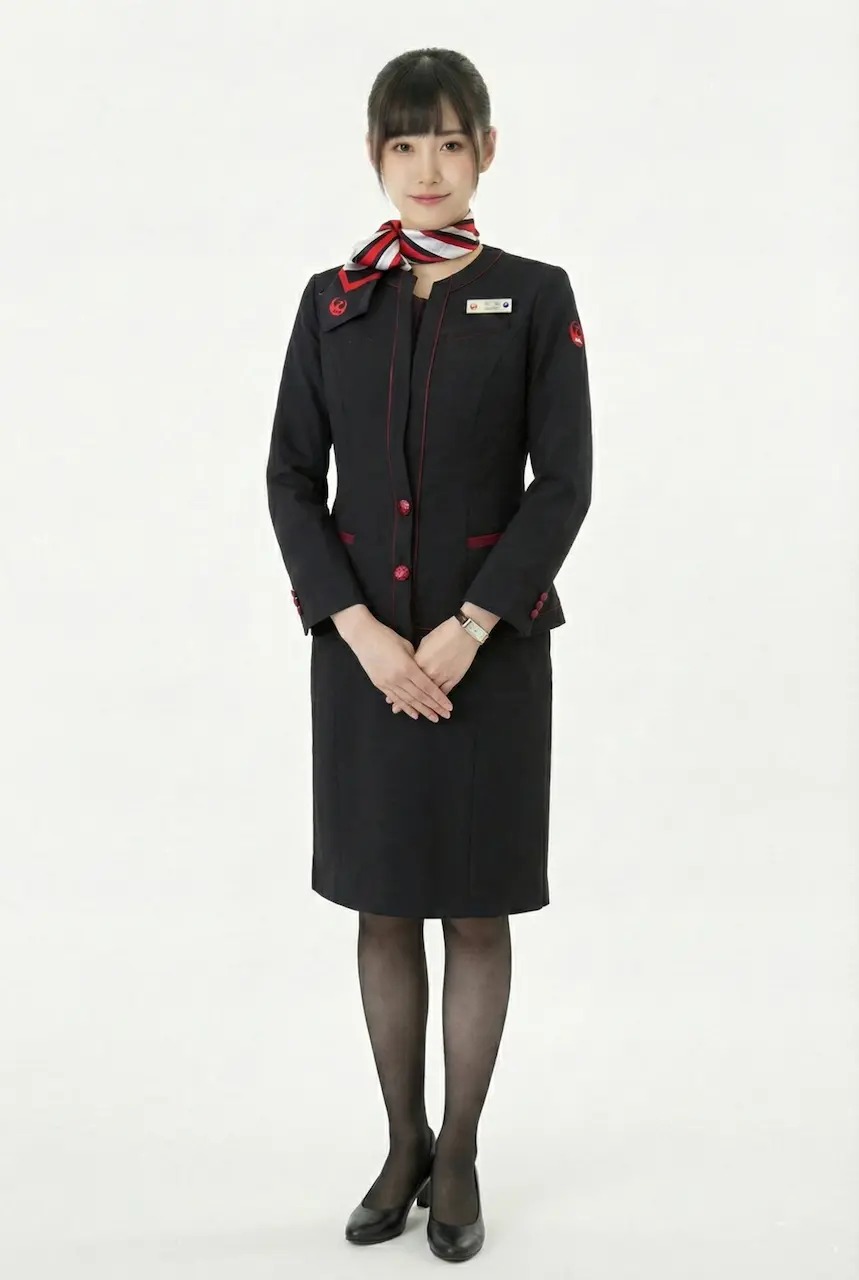
Female flight attendant
2020 ~ -
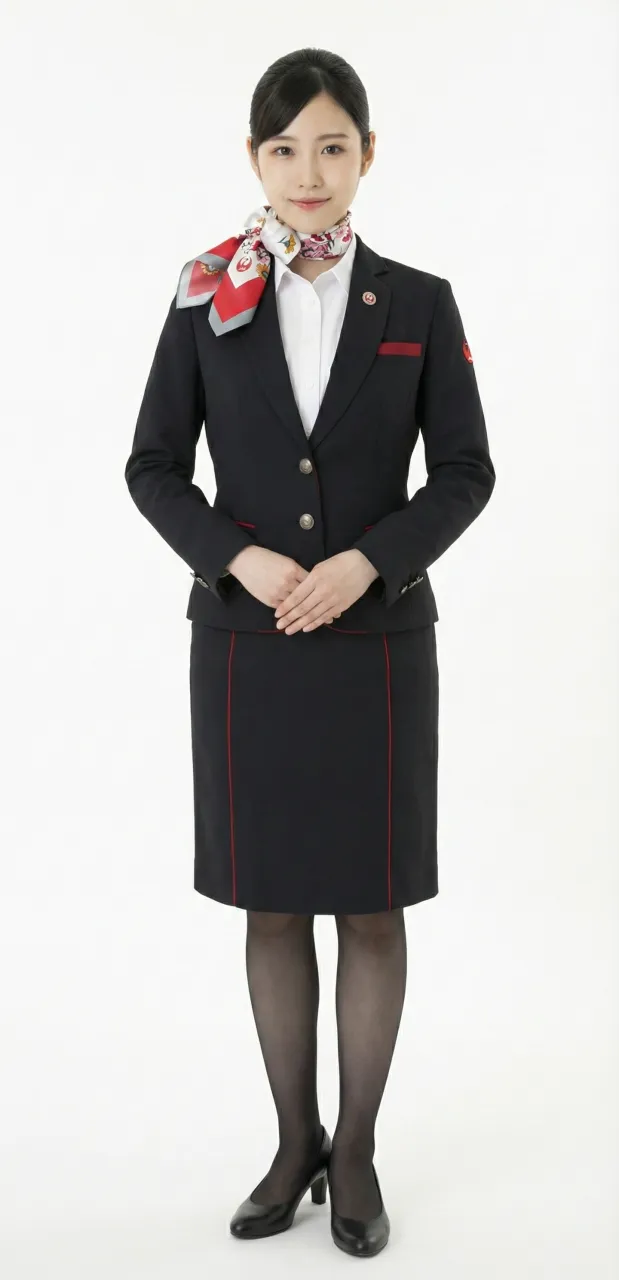
Female ground staff
2020 ~ -
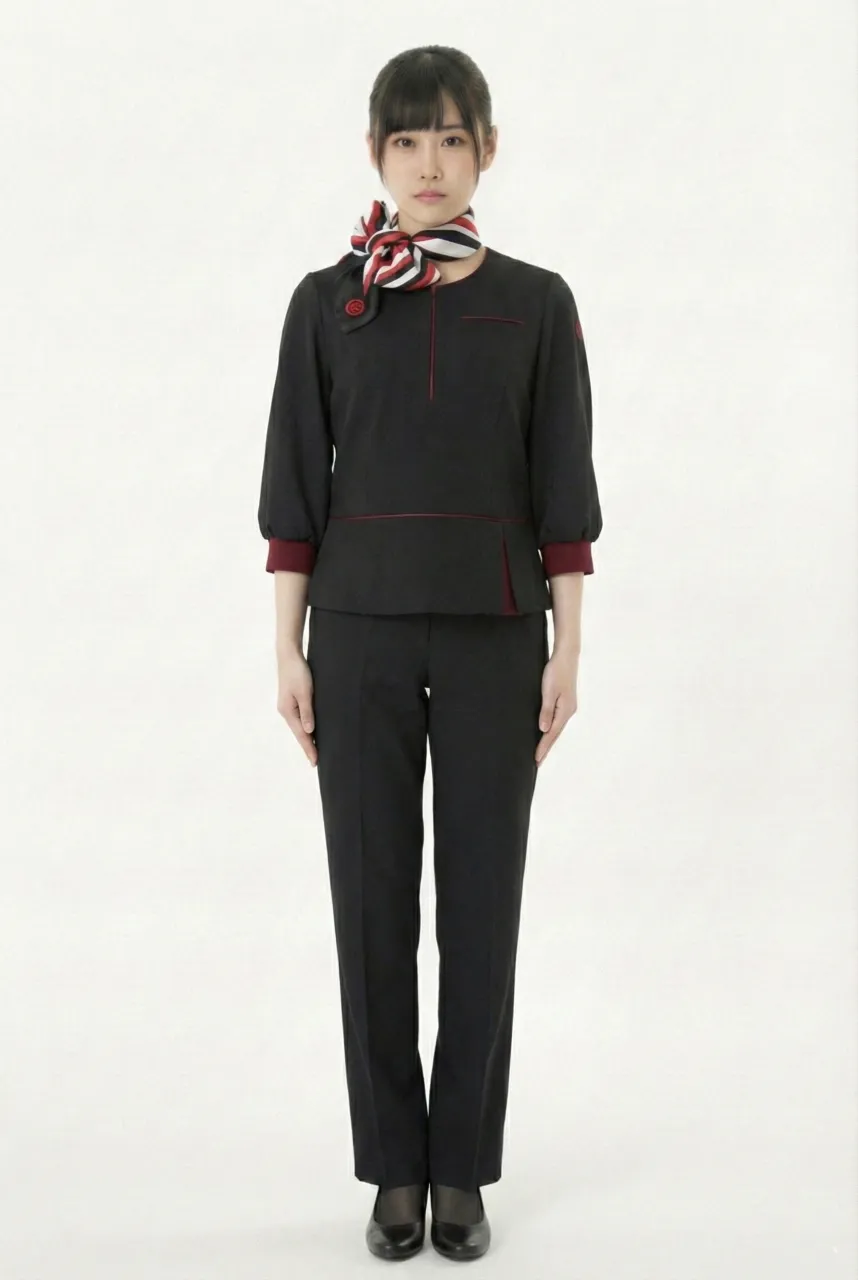
Female flight attendant in pants
2020 ~
The images displayed in this section are AI-generated illustrations and are not official materials from the original organizations or brands. They do not represent actual uniform designs, real-life wear, or official positions. The content is for informational and organizational purposes. All brand/organization names and logos mentioned are the property of their respective owners.