 Sign in with Google


Female flight attendant - Japan Airlines Uniform
1988 ~ 1996
Top
Bottom
Accessory
Overall
Description
This uniform represents the seventh-generation cabin crew uniform introduced by Japan Airlines (JAL) in 1988 (Showa 63), following the airline’s privatization. It stands as an important symbol of JAL entering a new phase in both corporate identity and brand development.
This design holds unique historical significance—it was the first and only uniform selected through a public design competition. Out of 7,830 submitted entries, the design by Shigenobu Motoi won first prize and was adopted. This approach reflected JAL’s more open and innovative direction after privatization.
The overall design strongly reflects the fashion trends of Japan’s bubble economy era, with a focus on the “big silhouette.” The jacket features a double-breasted structure with broad shoulders and pronounced padding, creating a bold and authoritative outline. At the same time, a cinched waist maintains feminine proportions, resulting in a balanced contrast between strength and elegance. The chest badge centers on the iconic “crane emblem” (Tsurumaru), flanked by wing-like elements, incorporating a subtle military-inspired design language that enhances discipline and recognizability.
Accessories are particularly distinctive in this generation. The hat adopts a rounded, bowl-like shape with a wide brim, prominently featuring the crane emblem at the center, making it highly recognizable. The scarf uses a red and deep navy palette, paired with a striped shirt and tied in a bow at the neckline, becoming one of the most visually striking elements of the uniform. The overall base color remains deep navy, conveying professionalism, while red accents reinforce brand identity.
During the period when this uniform was in use, JAL also continued to introduce innovations in service and operations. For example, in 1990, the airline introduced the Boeing 747-400, which could be operated by a two-pilot crew, symbolizing advancements in aviation technology. In 1992, JAL launched its signature in-flight product “Udon de Sky” (うどんですかい), later expanding into soba and ramen variations, which became a long-standing and popular onboard service offering.
This design holds unique historical significance—it was the first and only uniform selected through a public design competition. Out of 7,830 submitted entries, the design by Shigenobu Motoi won first prize and was adopted. This approach reflected JAL’s more open and innovative direction after privatization.
The overall design strongly reflects the fashion trends of Japan’s bubble economy era, with a focus on the “big silhouette.” The jacket features a double-breasted structure with broad shoulders and pronounced padding, creating a bold and authoritative outline. At the same time, a cinched waist maintains feminine proportions, resulting in a balanced contrast between strength and elegance. The chest badge centers on the iconic “crane emblem” (Tsurumaru), flanked by wing-like elements, incorporating a subtle military-inspired design language that enhances discipline and recognizability.
Accessories are particularly distinctive in this generation. The hat adopts a rounded, bowl-like shape with a wide brim, prominently featuring the crane emblem at the center, making it highly recognizable. The scarf uses a red and deep navy palette, paired with a striped shirt and tied in a bow at the neckline, becoming one of the most visually striking elements of the uniform. The overall base color remains deep navy, conveying professionalism, while red accents reinforce brand identity.
During the period when this uniform was in use, JAL also continued to introduce innovations in service and operations. For example, in 1990, the airline introduced the Boeing 747-400, which could be operated by a two-pilot crew, symbolizing advancements in aviation technology. In 1992, JAL launched its signature in-flight product “Udon de Sky” (うどんですかい), later expanding into soba and ramen variations, which became a long-standing and popular onboard service offering.
Uniform List
-

First Generation No.1 Uniform (Summer Uniform)
1951 ~ 1952 -
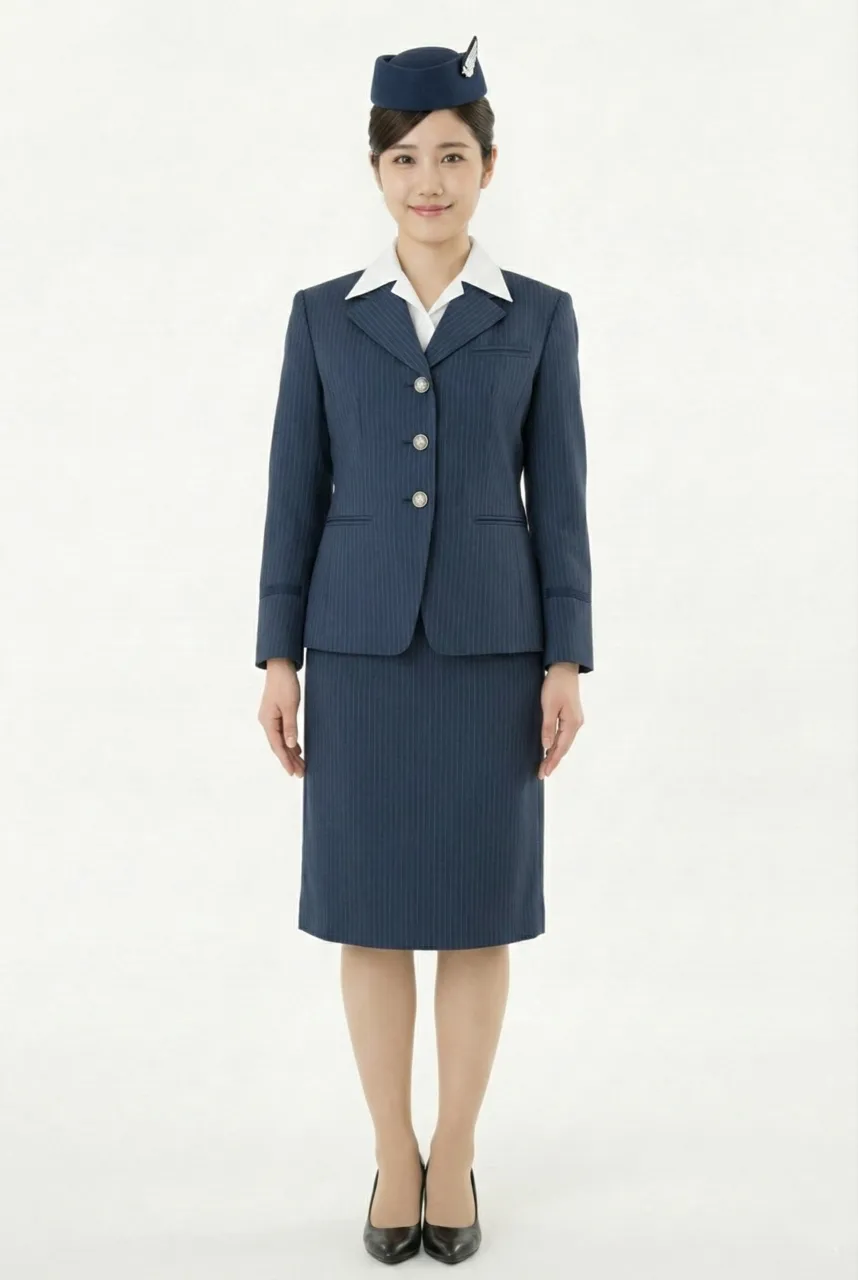
First Generation No.2 Uniform (Winter Uniform)
1951 ~ 1954 -

First Generation No.3 Uniform (Summer Uniform)
1953 ~ 1953 -
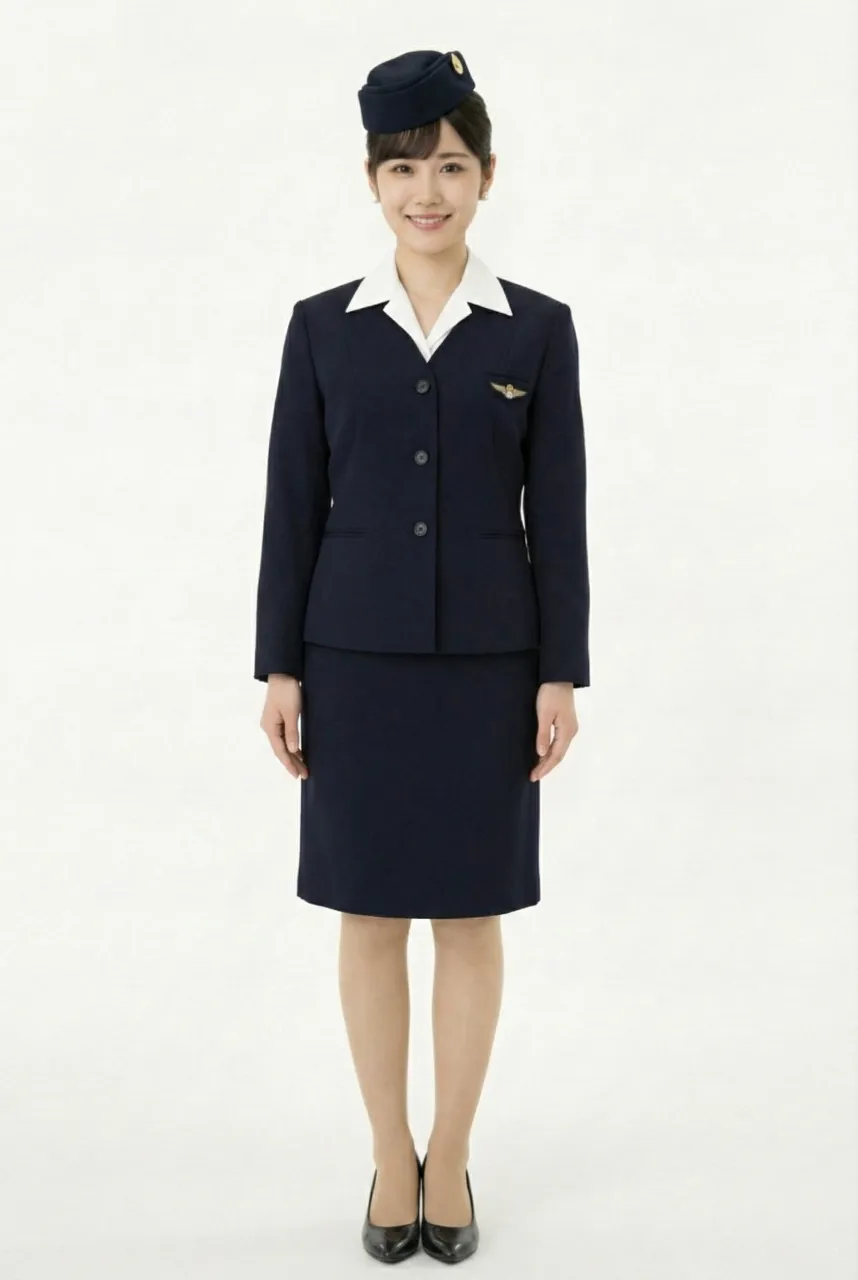
Female flight attendant
1954 ~ 1960 -
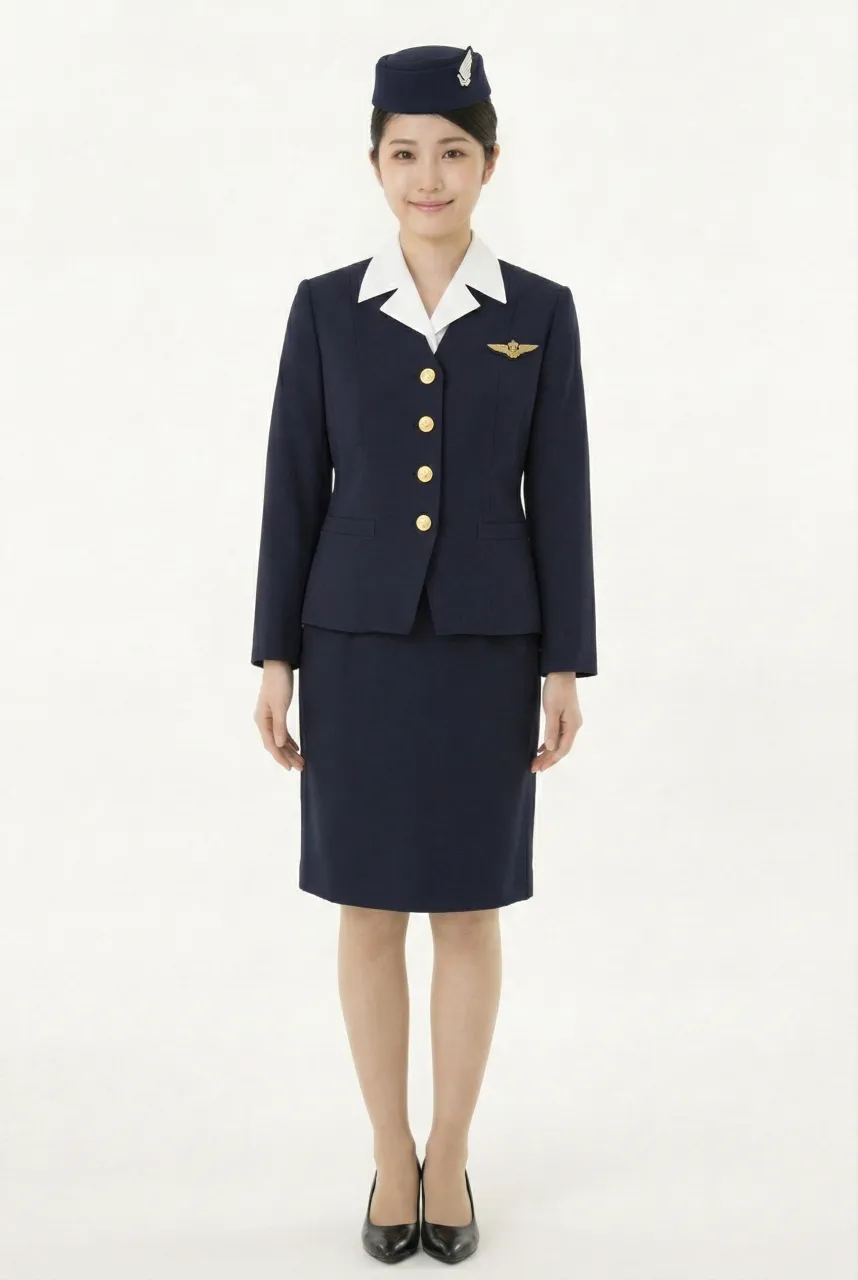
Female flight attendant
1960 ~ 1967 -

Female flight attendant
1967 ~ 1970 -
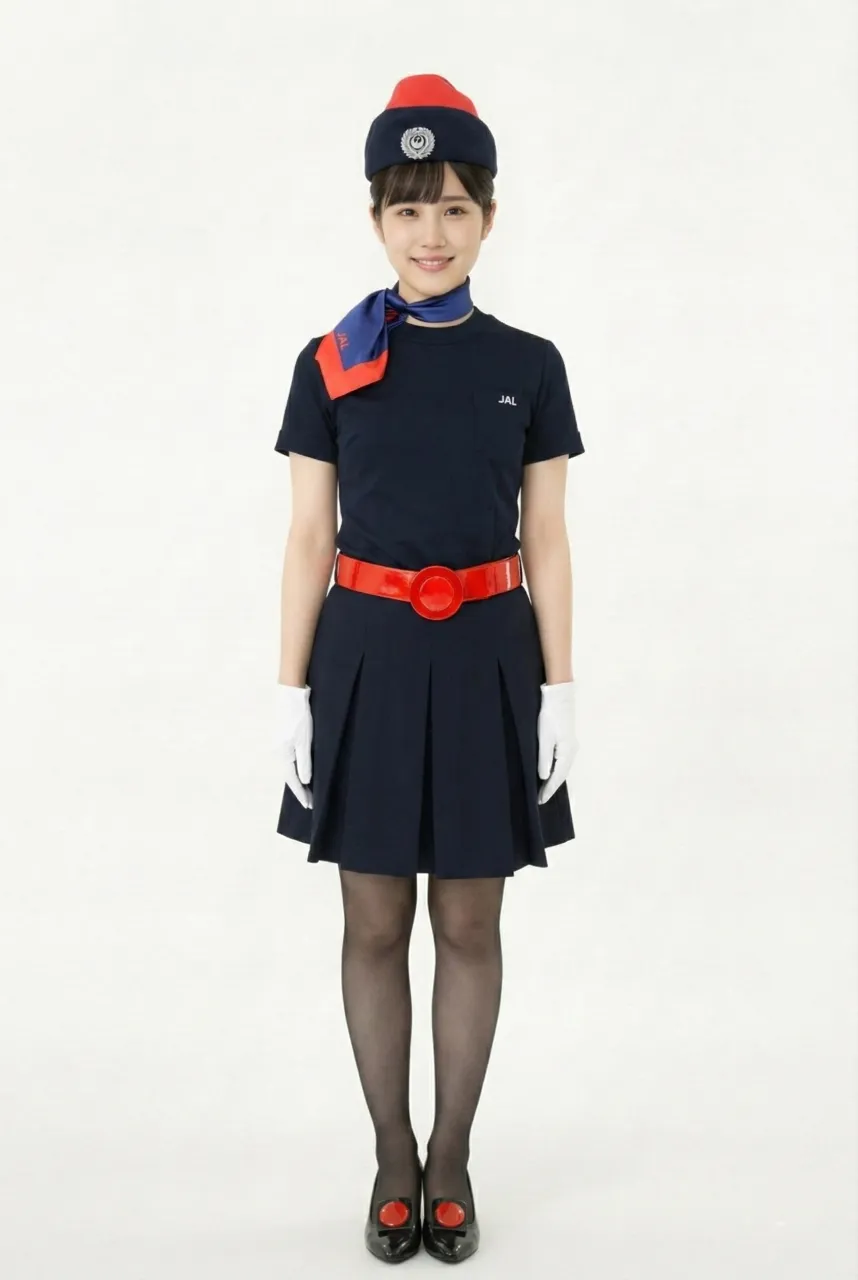
Female flight attendant
1970 ~ 1977 -

Female flight attendant
1977 ~ 1987 -

Female flight attendant
1988 ~ 1996 -

Female flight attendant
1996 ~ 2004 -

Female flight attendant
2004 ~ 2013 -

Female flight attendant
2013 ~ 2020 -
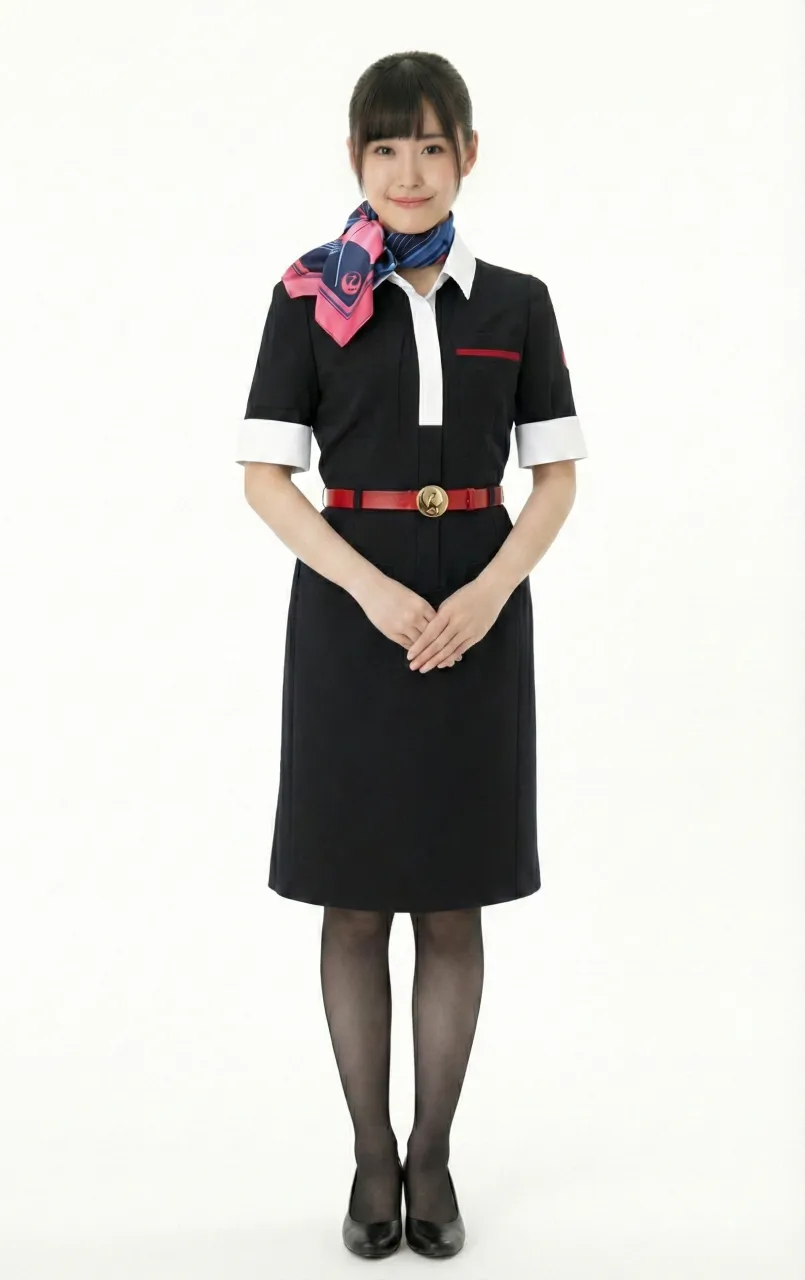
Female flight attendant
2013 ~ 2020 -
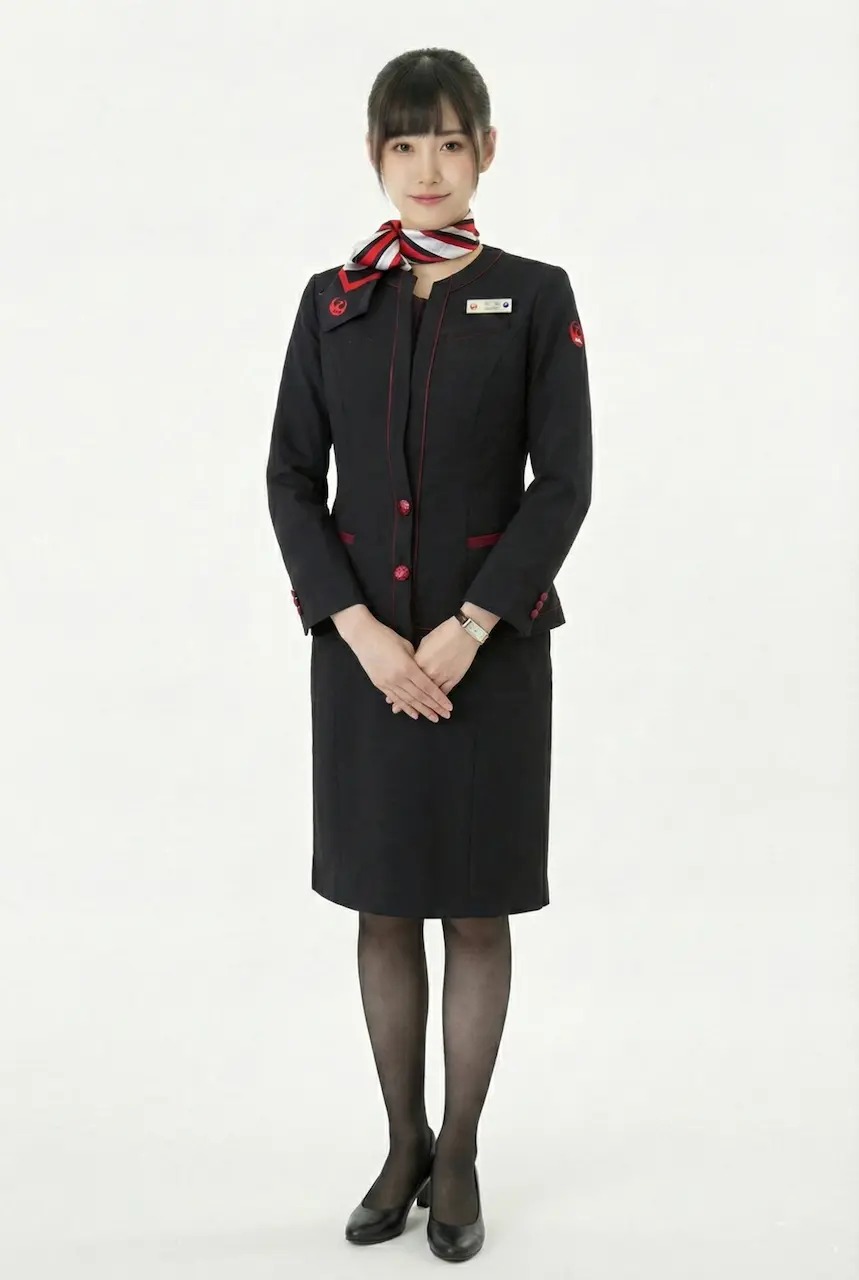
Female flight attendant
2020 ~ -
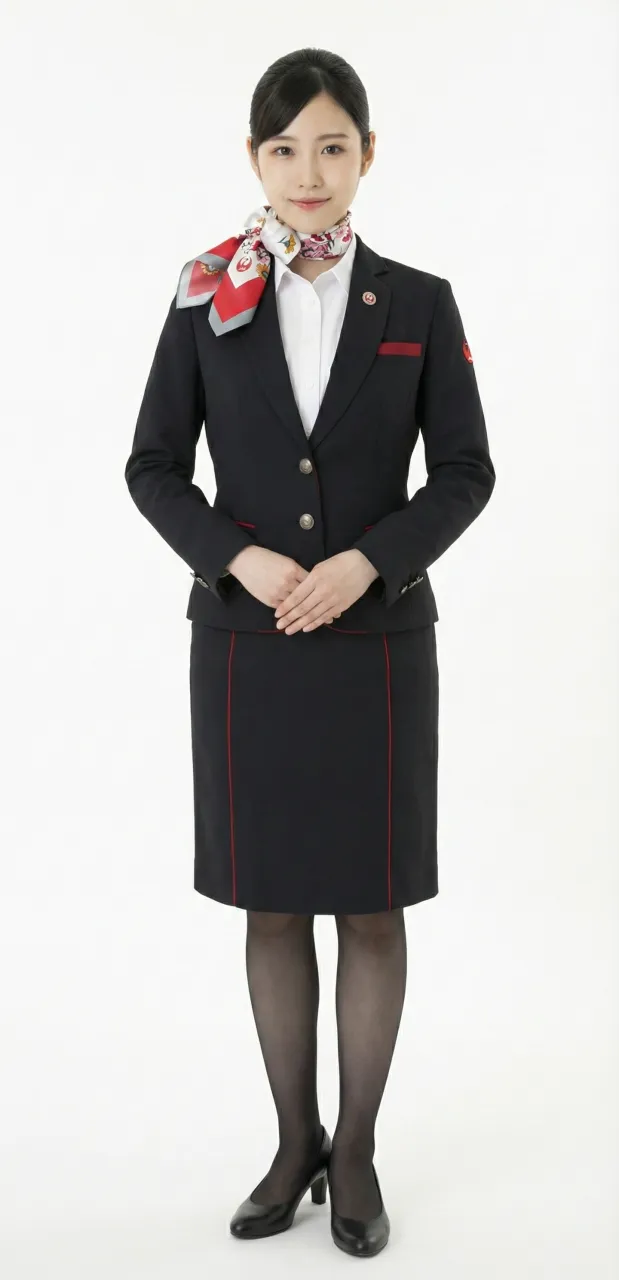
Female ground staff
2020 ~ -
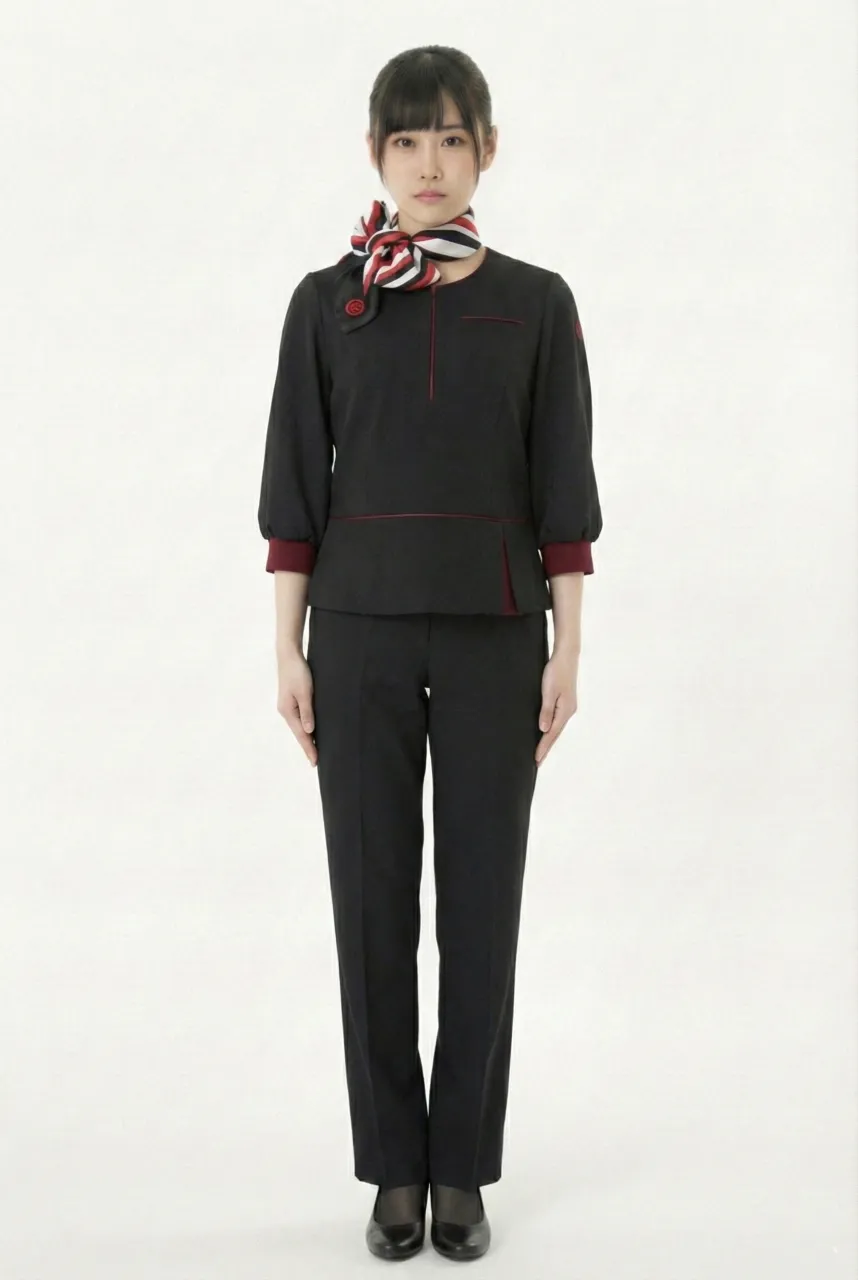
Female flight attendant in pants
2020 ~
The images displayed in this section are AI-generated illustrations and are not official materials from the original organizations or brands. They do not represent actual uniform designs, real-life wear, or official positions. The content is for informational and organizational purposes. All brand/organization names and logos mentioned are the property of their respective owners.