 Sign in with Google


Female flight attendant - Korean Air Uniform
1971 ~ 1972
Top
Bottom
Accessory
Overall
Description
The overall style of this uniform strongly reflects the “quasi-militarized” and “professional authority” aesthetic prevalent in the international aviation industry at the time, making it a classic example of airline uniform language from the 1960s to the 1970s.
The design is dominated by deep navy blue as the primary color, symbolizing stability, discipline, and trustworthiness. In terms of tailoring, the suit-style jacket is fitted without being tight, featuring defined shoulders and a gently tapered waist that creates an upright, dignified silhouette. The front of the jacket is fastened with three gold metal buttons, which visually echo the gold wing emblem on the left chest, reinforcing the visual language of aviation professionalism and hierarchical distinction.
Underneath, a pure white shirt is worn, with the collar fully closed and free of decorative elements. This deliberate avoidance of ornamentation further emphasizes a strict, neutral appearance. The lower half consists of a knee-length pencil skirt with clean lines and restrained mobility, aligning with the era’s expectations of flight attendants as poised and reserved. The overall proportions favor straight, linear construction, with little emphasis on soft curves, prioritizing order and uniformity instead.
The hat is also a key element of this uniform. The dark blue cap features a simple form, adorned only with a small gold emblem placed slightly off-center. This positioning carries a clear sense of role identification and brings the overall look closer to the visual impression of an air force or state-run aviation system. Paired with black mid-heeled leather shoes, the uniform achieves a balance between professionalism and practicality.
The design is dominated by deep navy blue as the primary color, symbolizing stability, discipline, and trustworthiness. In terms of tailoring, the suit-style jacket is fitted without being tight, featuring defined shoulders and a gently tapered waist that creates an upright, dignified silhouette. The front of the jacket is fastened with three gold metal buttons, which visually echo the gold wing emblem on the left chest, reinforcing the visual language of aviation professionalism and hierarchical distinction.
Underneath, a pure white shirt is worn, with the collar fully closed and free of decorative elements. This deliberate avoidance of ornamentation further emphasizes a strict, neutral appearance. The lower half consists of a knee-length pencil skirt with clean lines and restrained mobility, aligning with the era’s expectations of flight attendants as poised and reserved. The overall proportions favor straight, linear construction, with little emphasis on soft curves, prioritizing order and uniformity instead.
The hat is also a key element of this uniform. The dark blue cap features a simple form, adorned only with a small gold emblem placed slightly off-center. This positioning carries a clear sense of role identification and brings the overall look closer to the visual impression of an air force or state-run aviation system. Paired with black mid-heeled leather shoes, the uniform achieves a balance between professionalism and practicality.
Uniform List
-
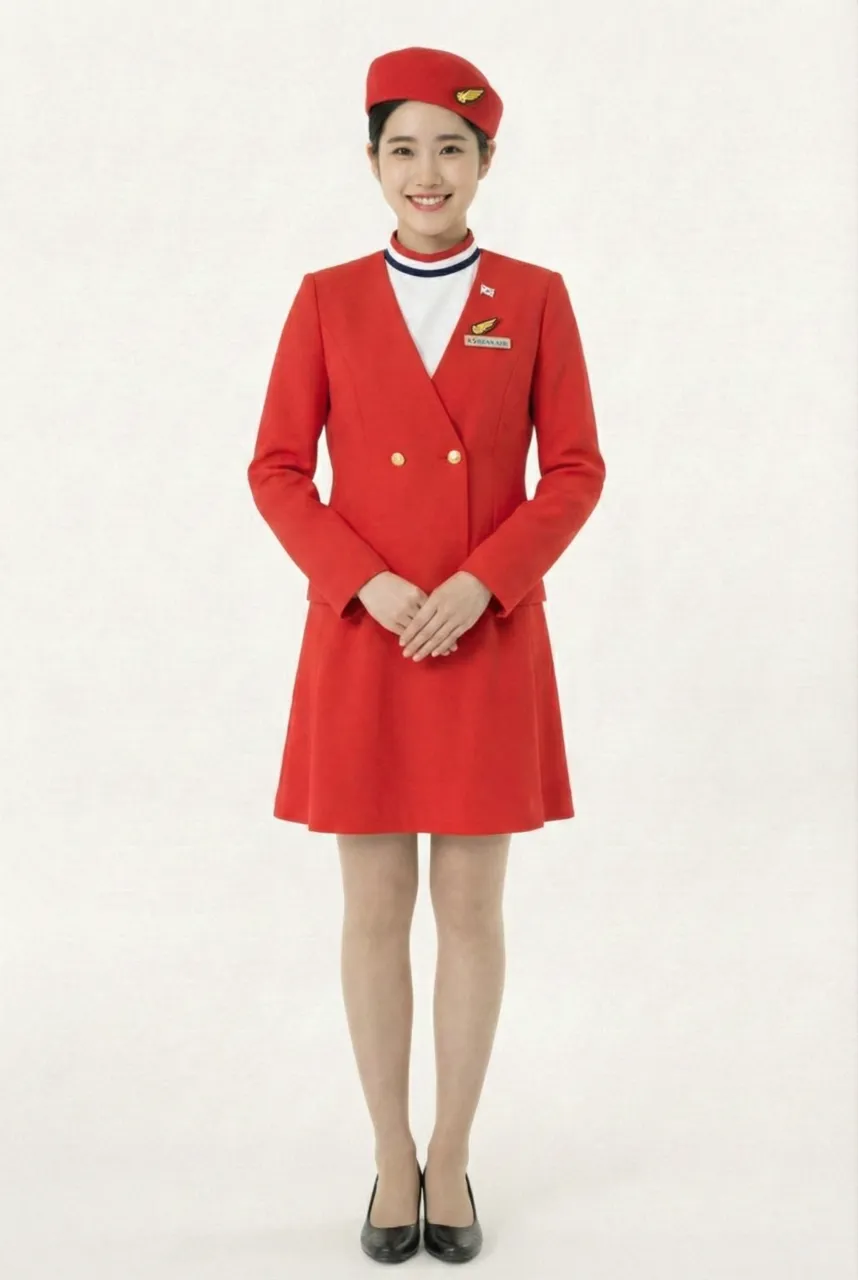
Female flight attendant
1969 ~ 1970 -
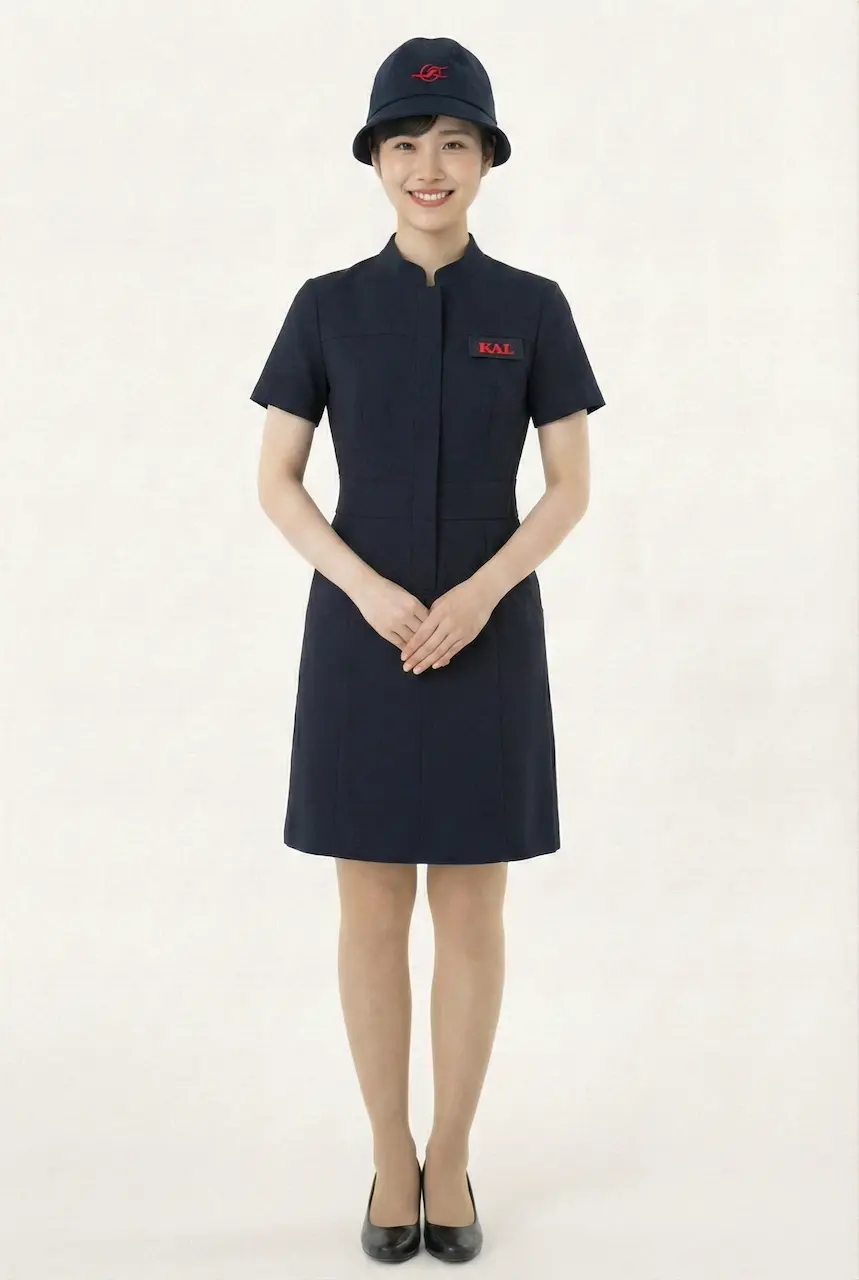
Female flight attendant
1970 ~ 1971 -
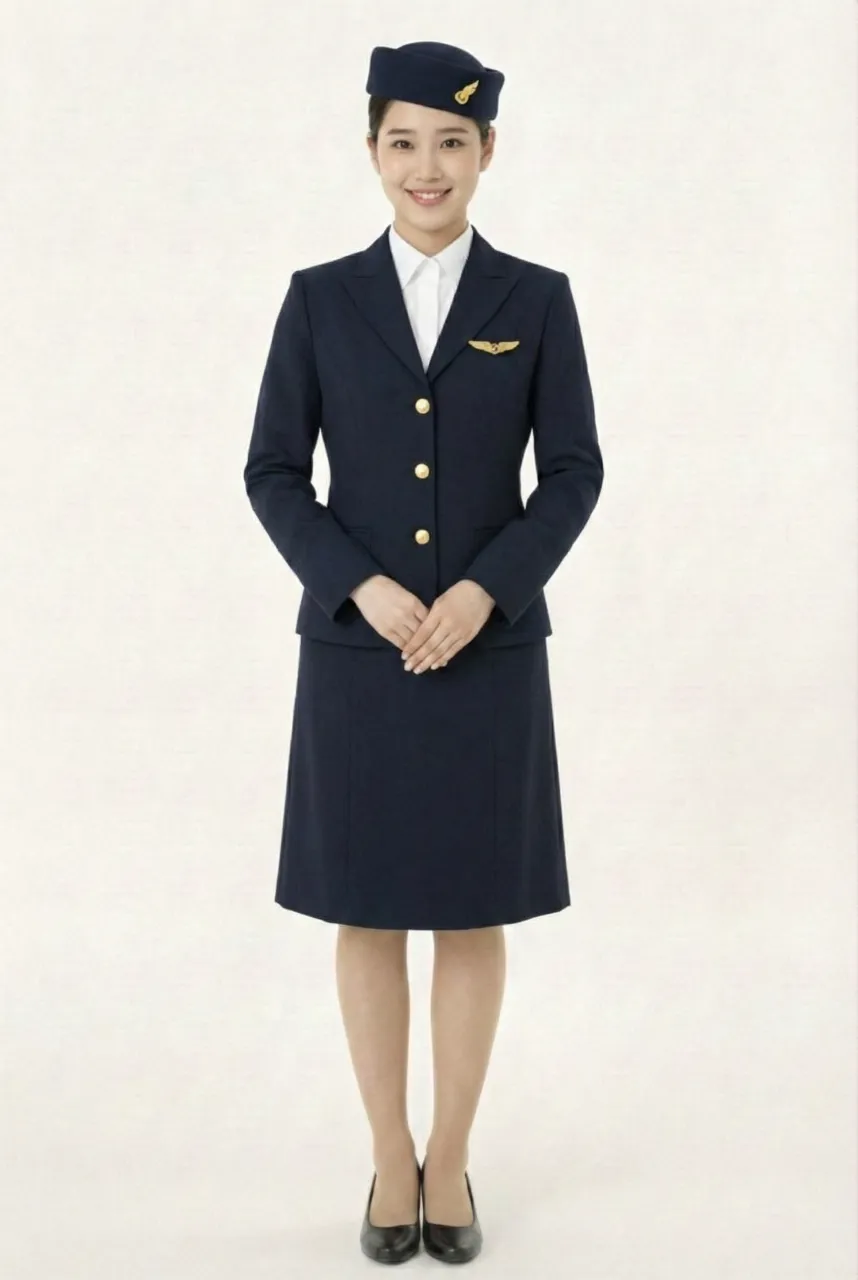
Female flight attendant
1971 ~ 1972 -
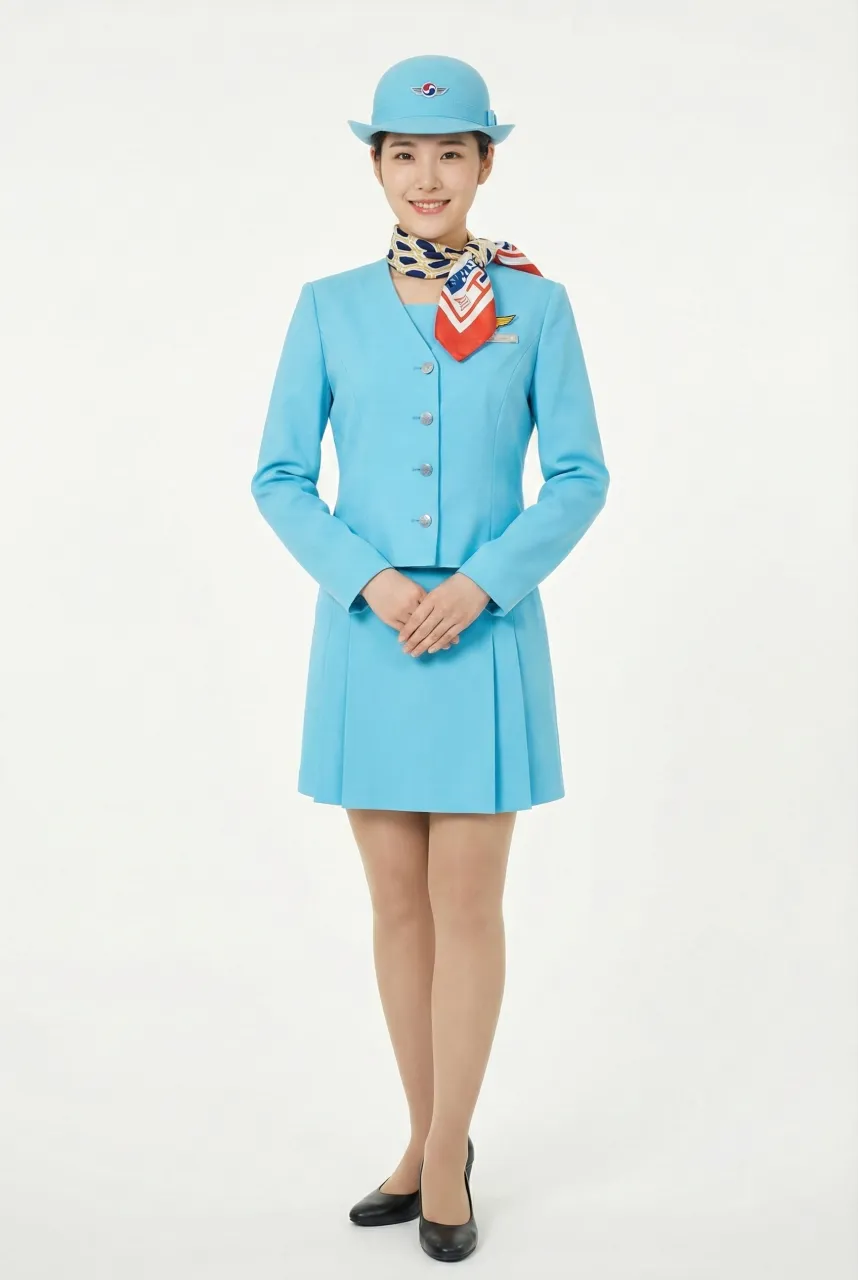
Female flight attendant
1973 ~ 1974 -
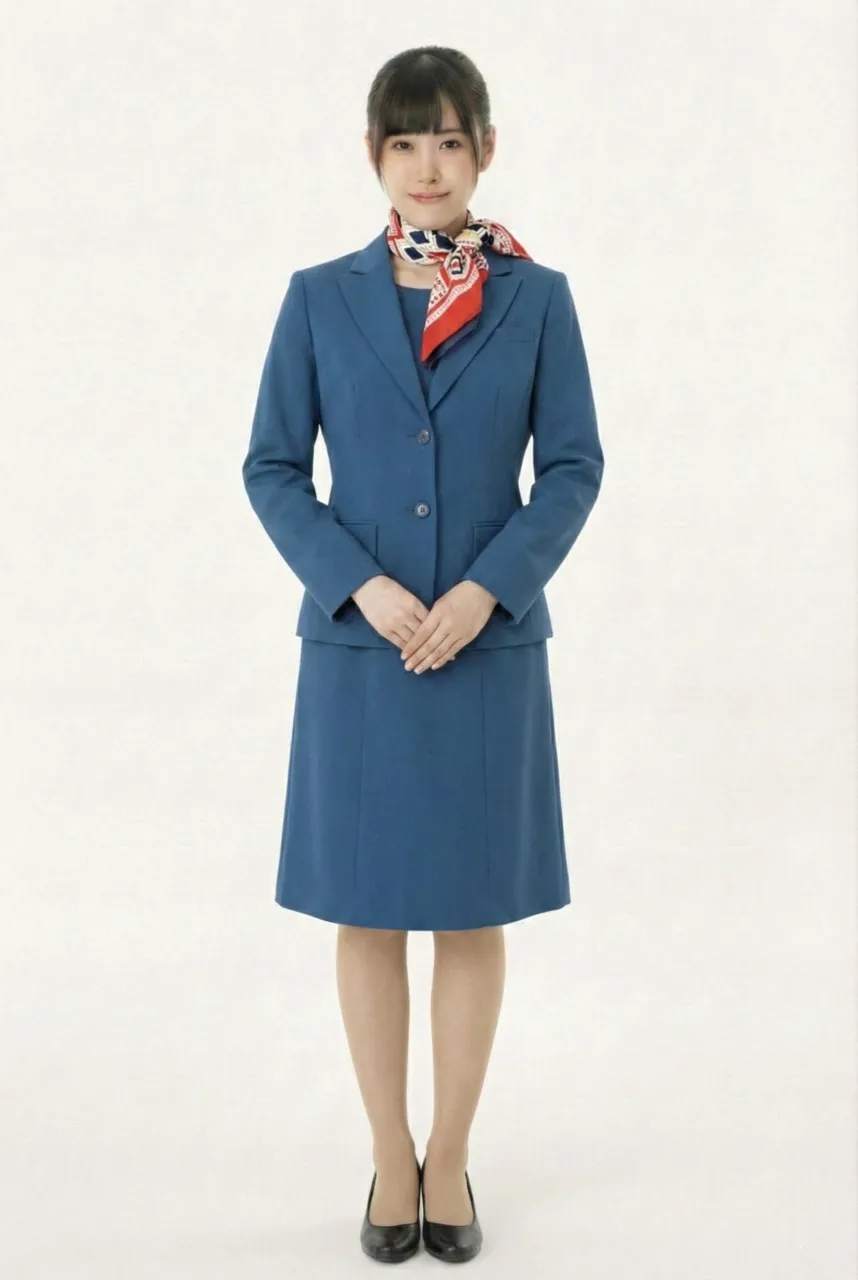
Female flight attendant
1974 ~ 1975 -
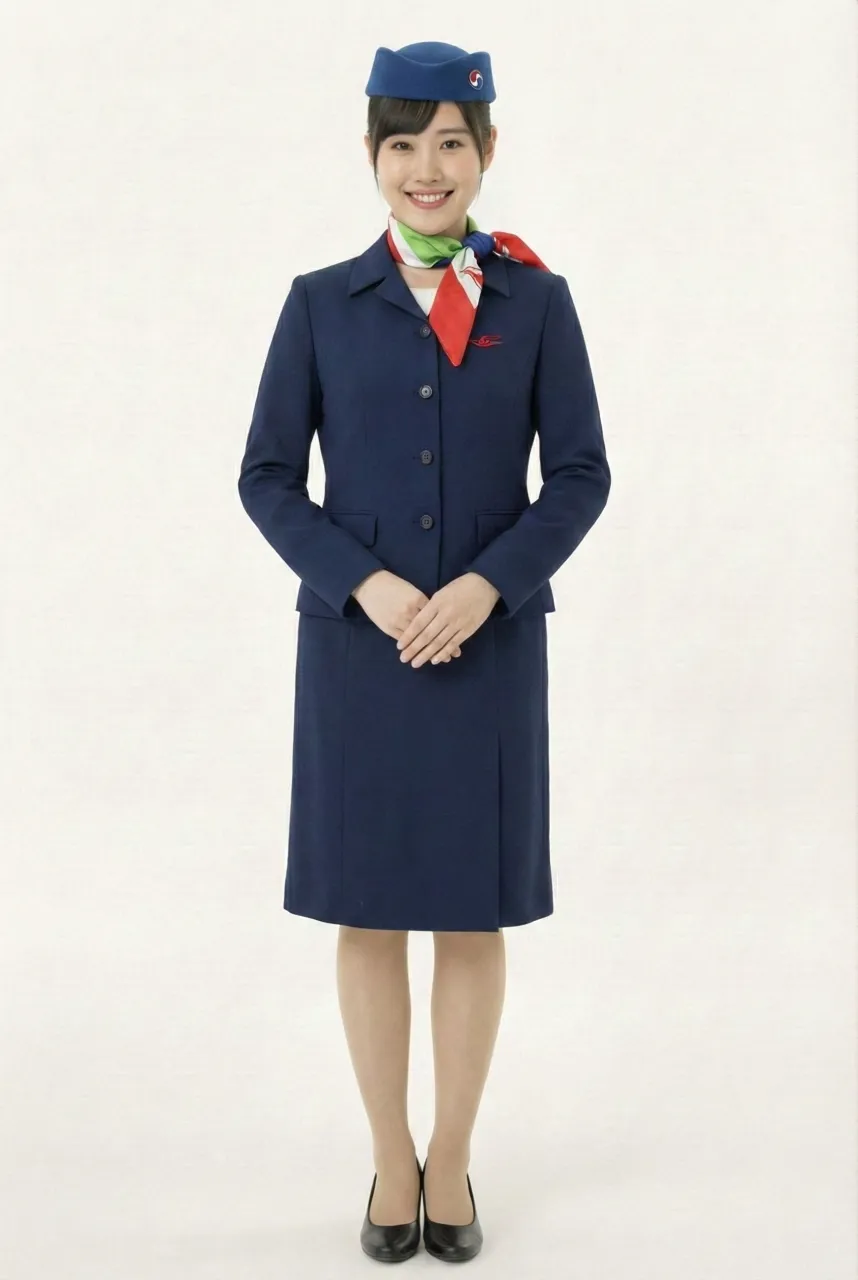
Female flight attendant
1976 ~ 1977 -
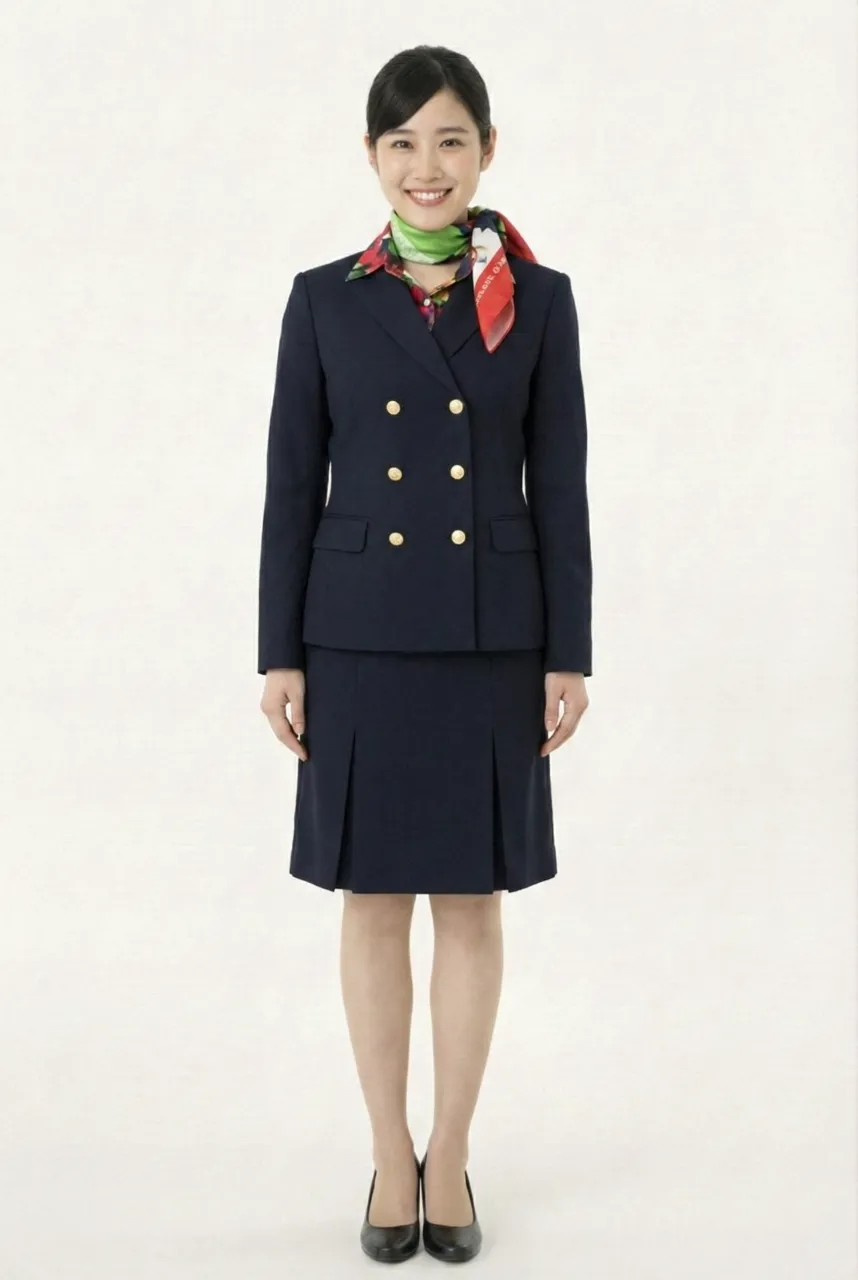
Female flight attendant
1978 ~ 1979 -
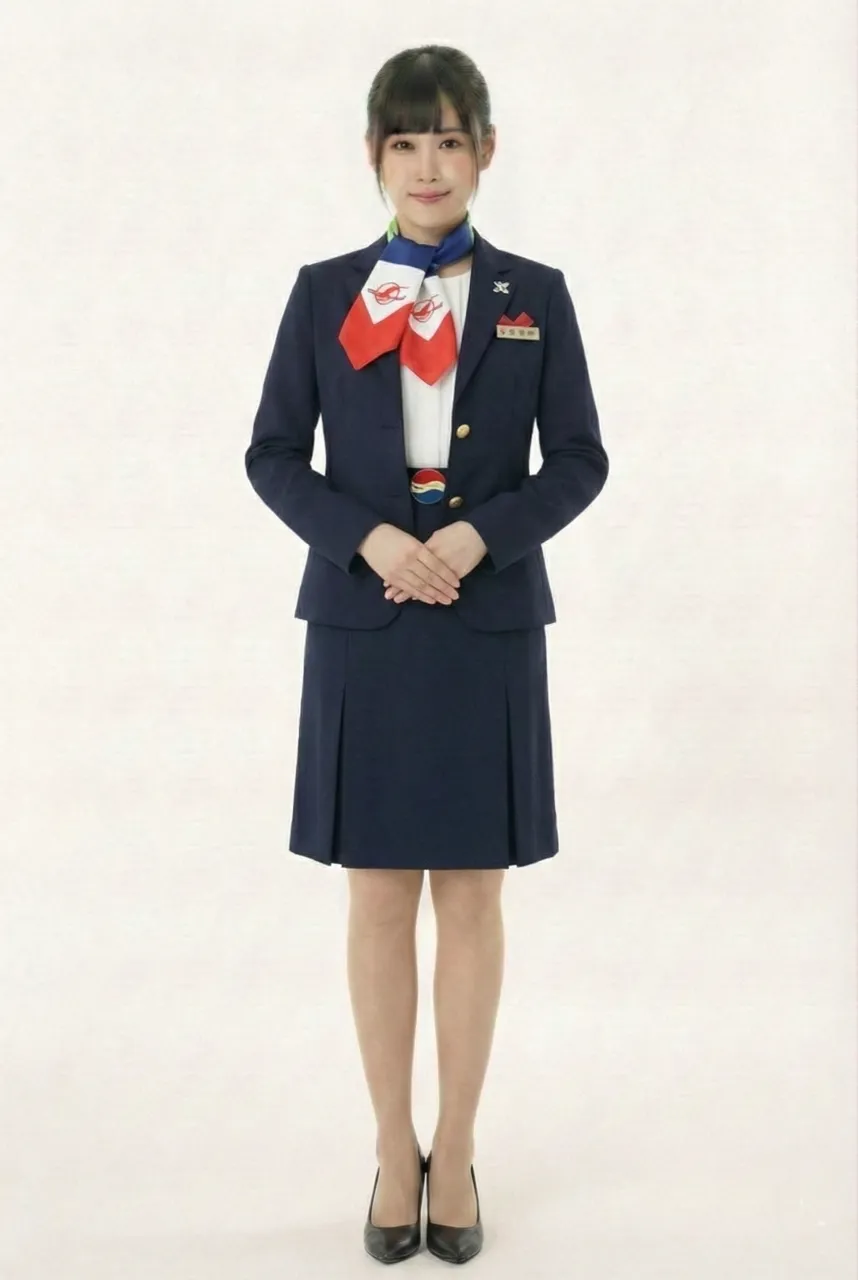
Female flight attendant
1980 ~ 1985 -
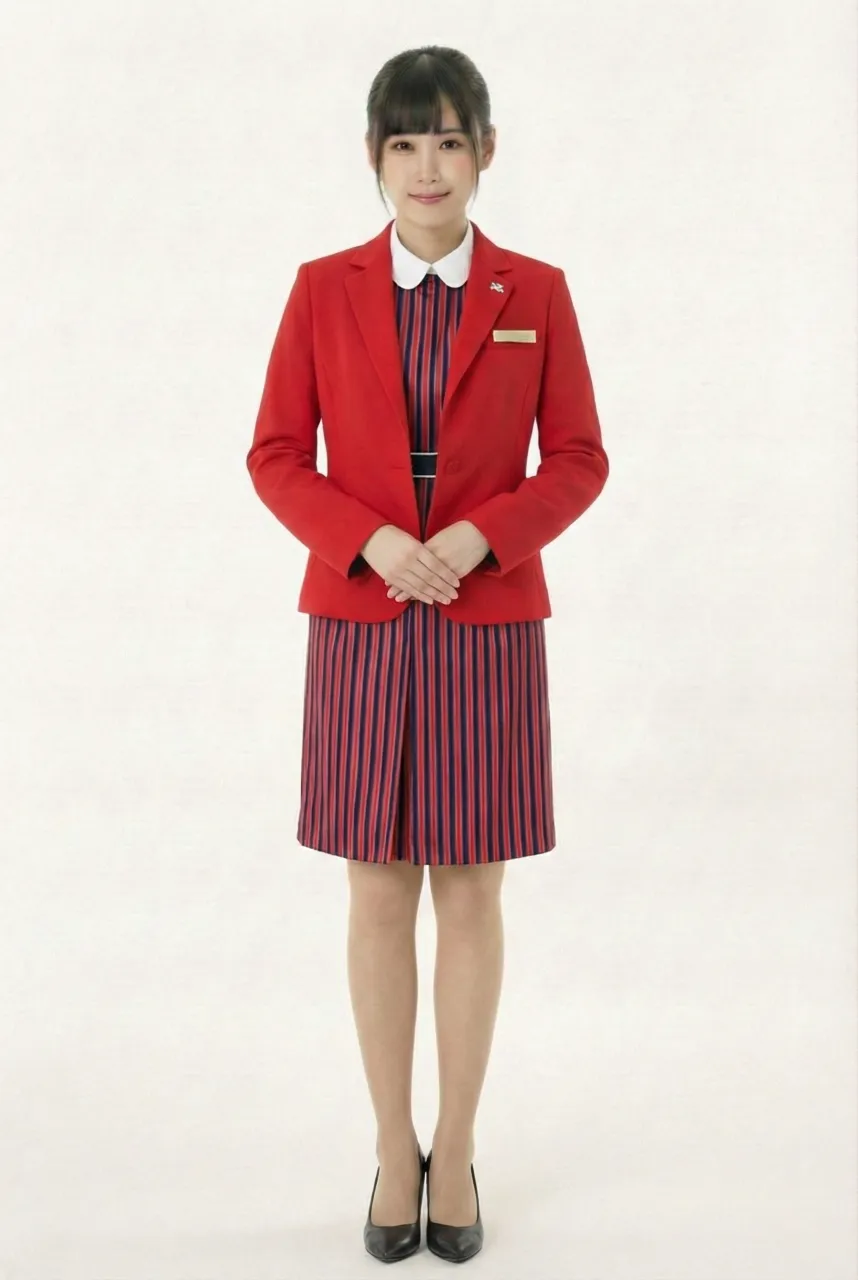
Female flight attendant
1986 ~ 1990 -
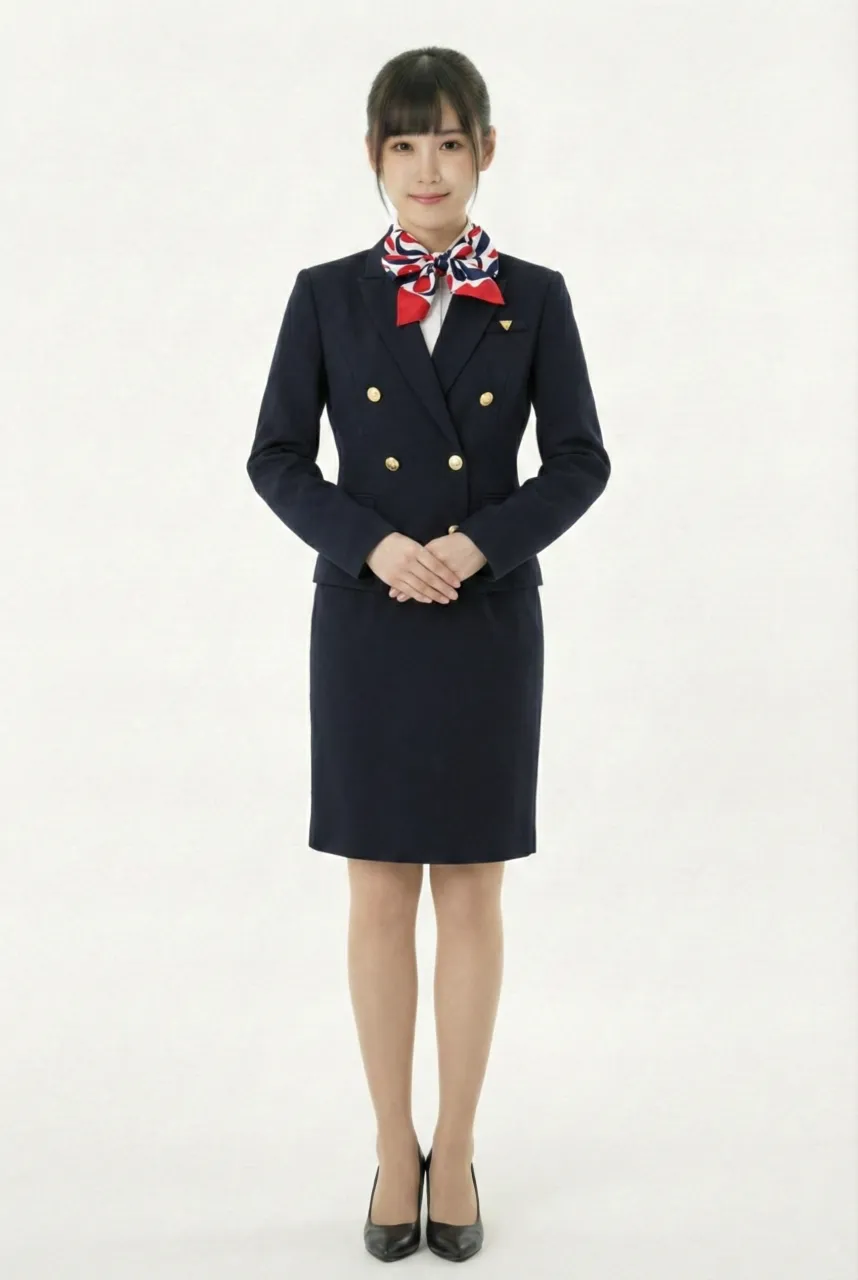
Female flight attendant
1991 ~ 2004 -
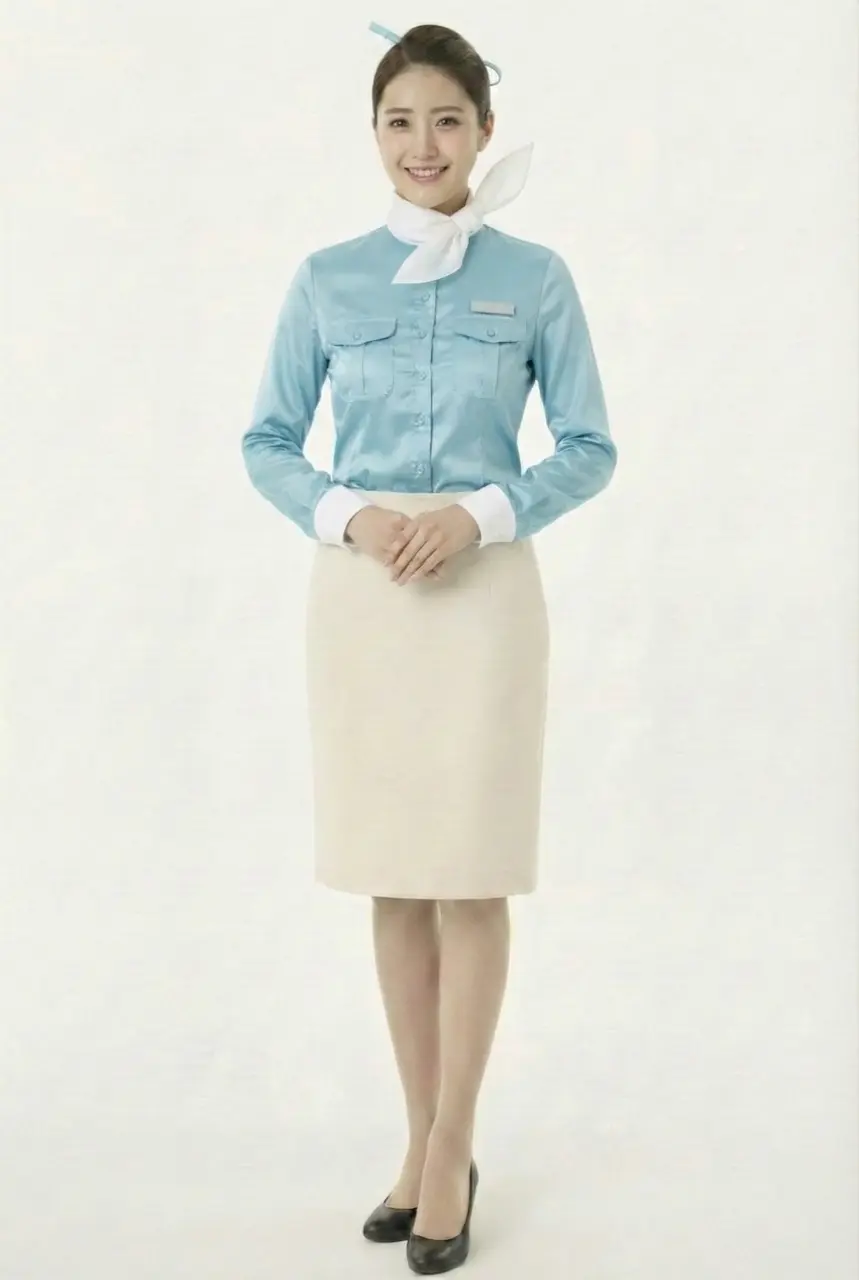
Female flight attendant
2005 ~ -
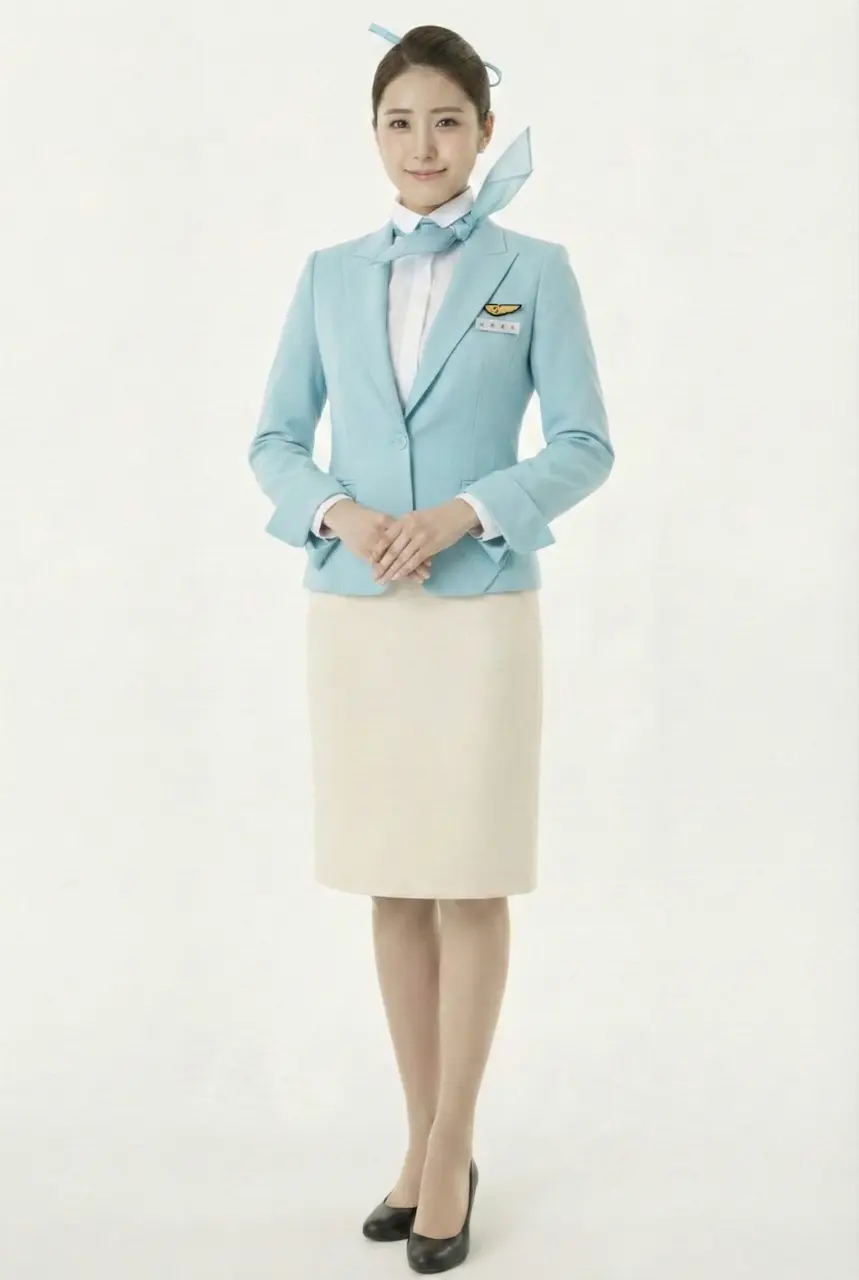
Female flight attendant wearing a jacket
2005 ~ -
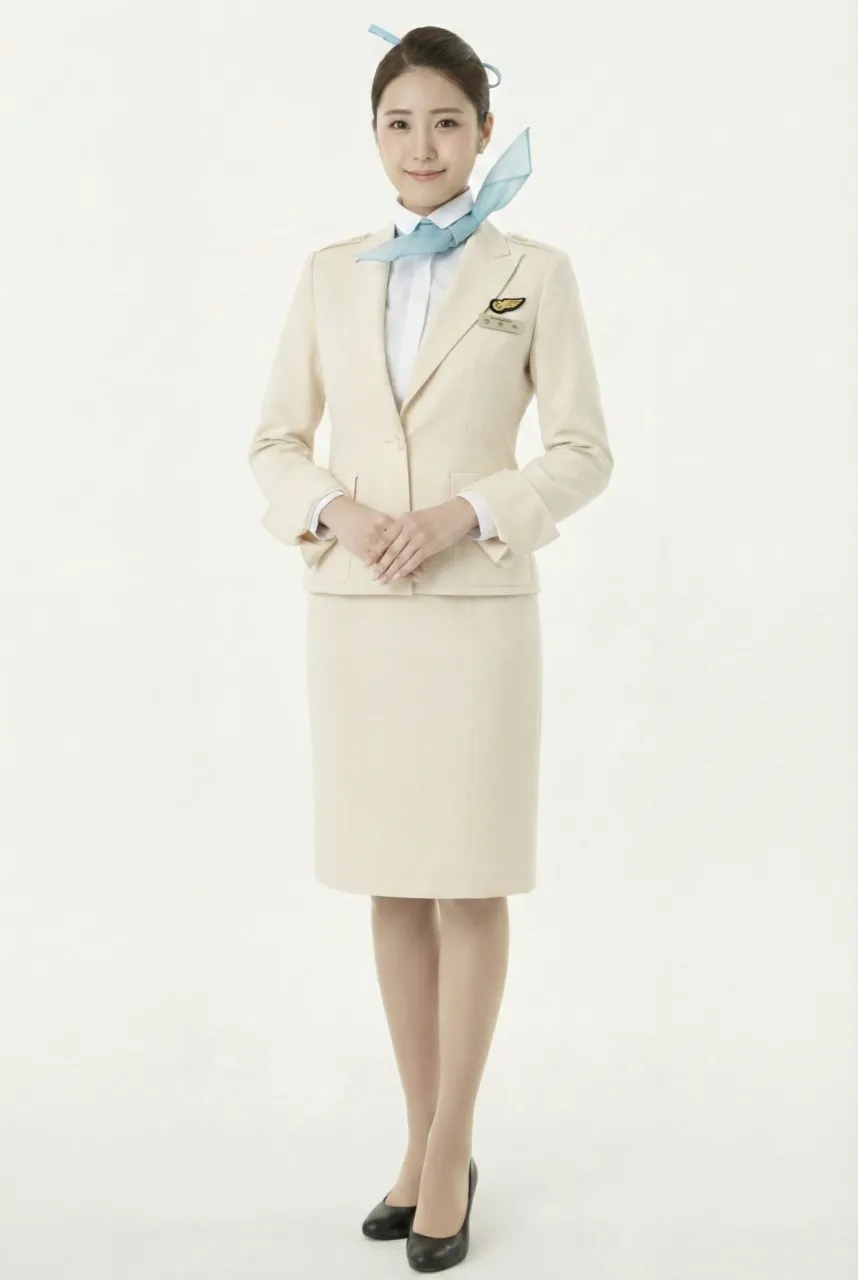
Female flight attendant wearing a jacket
2005 ~
The images displayed in this section are AI-generated illustrations and are not official materials from the original organizations or brands. They do not represent actual uniform designs, real-life wear, or official positions. The content is for informational and organizational purposes. All brand/organization names and logos mentioned are the property of their respective owners.