 Sign in with Google


Female flight attendant - Korean Air Uniform
1976 ~ 1977
Top
Bottom
Accessory
Overall
Description
This uniform reflects the design direction of the mid-1970s, a period when the airline industry was gradually moving toward greater internationalization and standardization. The overall look is based on a deep navy color scheme, with clean lines and balanced proportions that convey a strong sense of corporate uniformity, symbolizing professionalism, stability, and reliability.
The upper garment is a single-breasted navy jacket. Its tailored silhouette follows the body without emphasizing curves, resulting in a straight, conservative outline. This reflects the design philosophy of the time, when airline uniforms prioritized practicality and consistency over fashion. The jacket’s structure is simple and free of excessive decoration, allowing the visual focus to rest on the clean lines and the orderly posture of the wearer, reinforcing an image of professionalism and discipline.
At the neck, a scarf in red, white, and green serves as the most recognizable accent in the ensemble. The vivid color combination creates a strong contrast against the navy base, adding visual energy while also conveying warmth and femininity. Using a bright scarf as a brand identifier and focal point was a common design approach among many airlines during this era.
The hat is a small navy pillbox-style cap, simple in form yet highly recognizable. Paired with the airline’s emblem, it enhances the overall completeness and sense of discipline in the uniform. This type of hat was widely used in airline uniforms throughout the 1960s and 1970s, symbolizing the traditional image of professional airline service.
The lower half consists of a knee-length navy skirt with a conservative, composed silhouette. Combined with nude stockings and black high heels, the overall proportions appear neat and orderly. As a whole, this uniform does not pursue fashion trends; instead, it centers on stability, consistency, and professionalism, embodying the typical style of airline uniforms in the 1970s.
The upper garment is a single-breasted navy jacket. Its tailored silhouette follows the body without emphasizing curves, resulting in a straight, conservative outline. This reflects the design philosophy of the time, when airline uniforms prioritized practicality and consistency over fashion. The jacket’s structure is simple and free of excessive decoration, allowing the visual focus to rest on the clean lines and the orderly posture of the wearer, reinforcing an image of professionalism and discipline.
At the neck, a scarf in red, white, and green serves as the most recognizable accent in the ensemble. The vivid color combination creates a strong contrast against the navy base, adding visual energy while also conveying warmth and femininity. Using a bright scarf as a brand identifier and focal point was a common design approach among many airlines during this era.
The hat is a small navy pillbox-style cap, simple in form yet highly recognizable. Paired with the airline’s emblem, it enhances the overall completeness and sense of discipline in the uniform. This type of hat was widely used in airline uniforms throughout the 1960s and 1970s, symbolizing the traditional image of professional airline service.
The lower half consists of a knee-length navy skirt with a conservative, composed silhouette. Combined with nude stockings and black high heels, the overall proportions appear neat and orderly. As a whole, this uniform does not pursue fashion trends; instead, it centers on stability, consistency, and professionalism, embodying the typical style of airline uniforms in the 1970s.
Uniform List
-
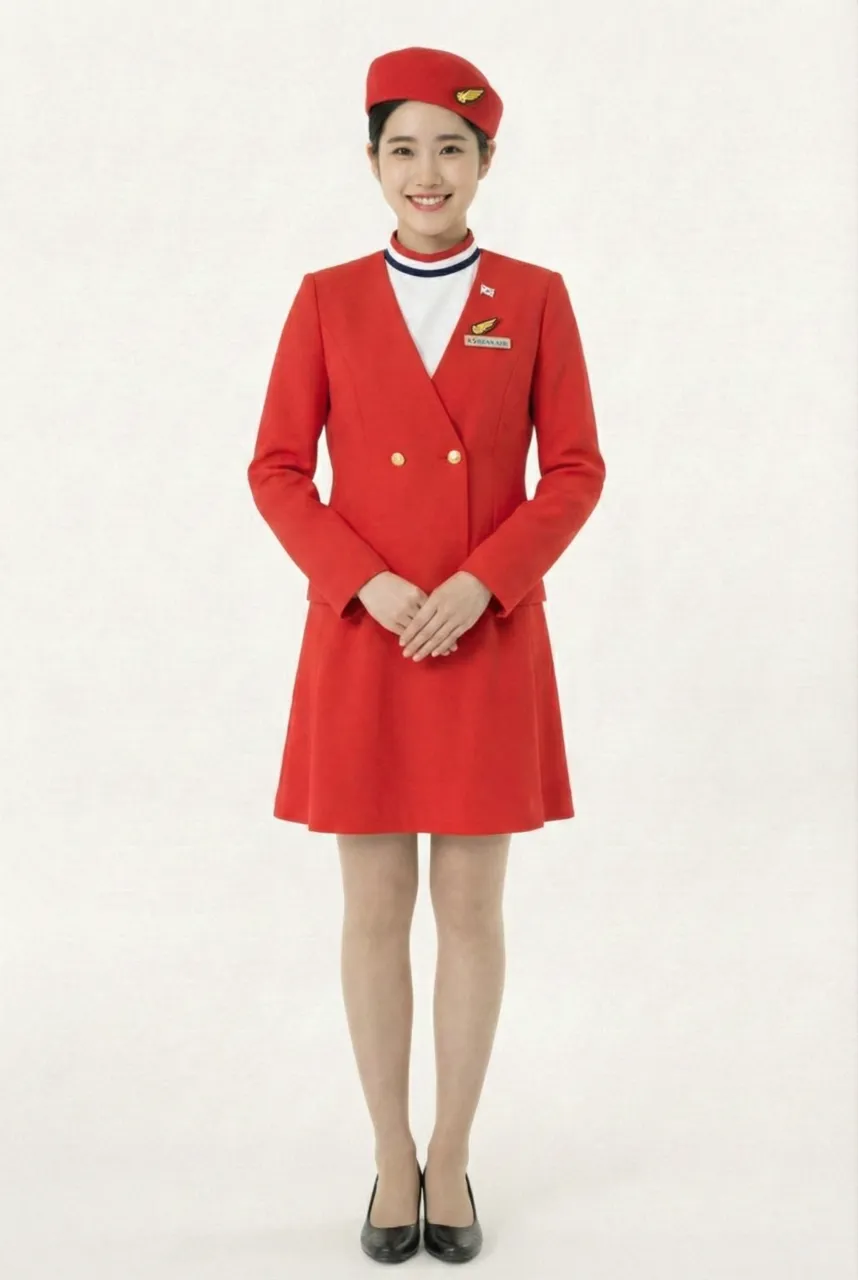
Female flight attendant
1969 ~ 1970 -
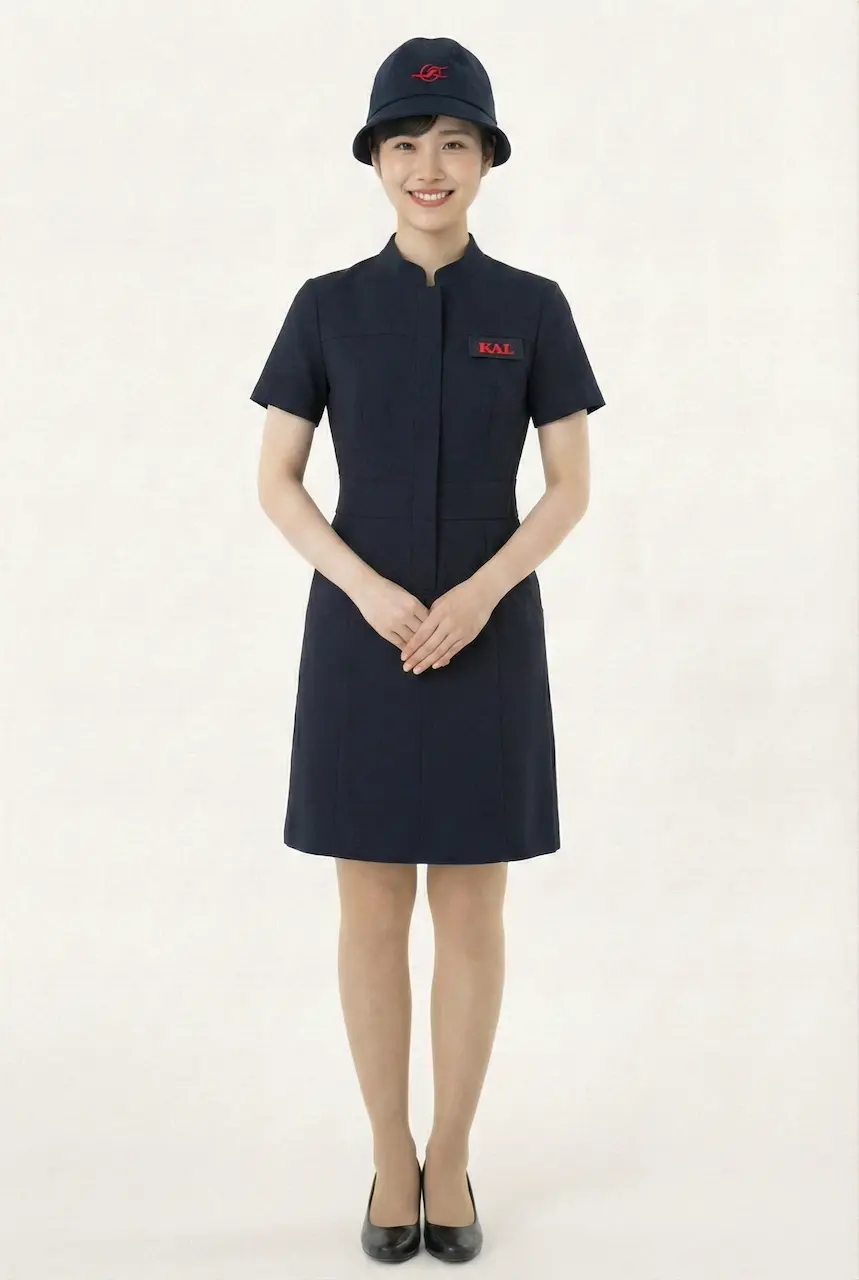
Female flight attendant
1970 ~ 1971 -
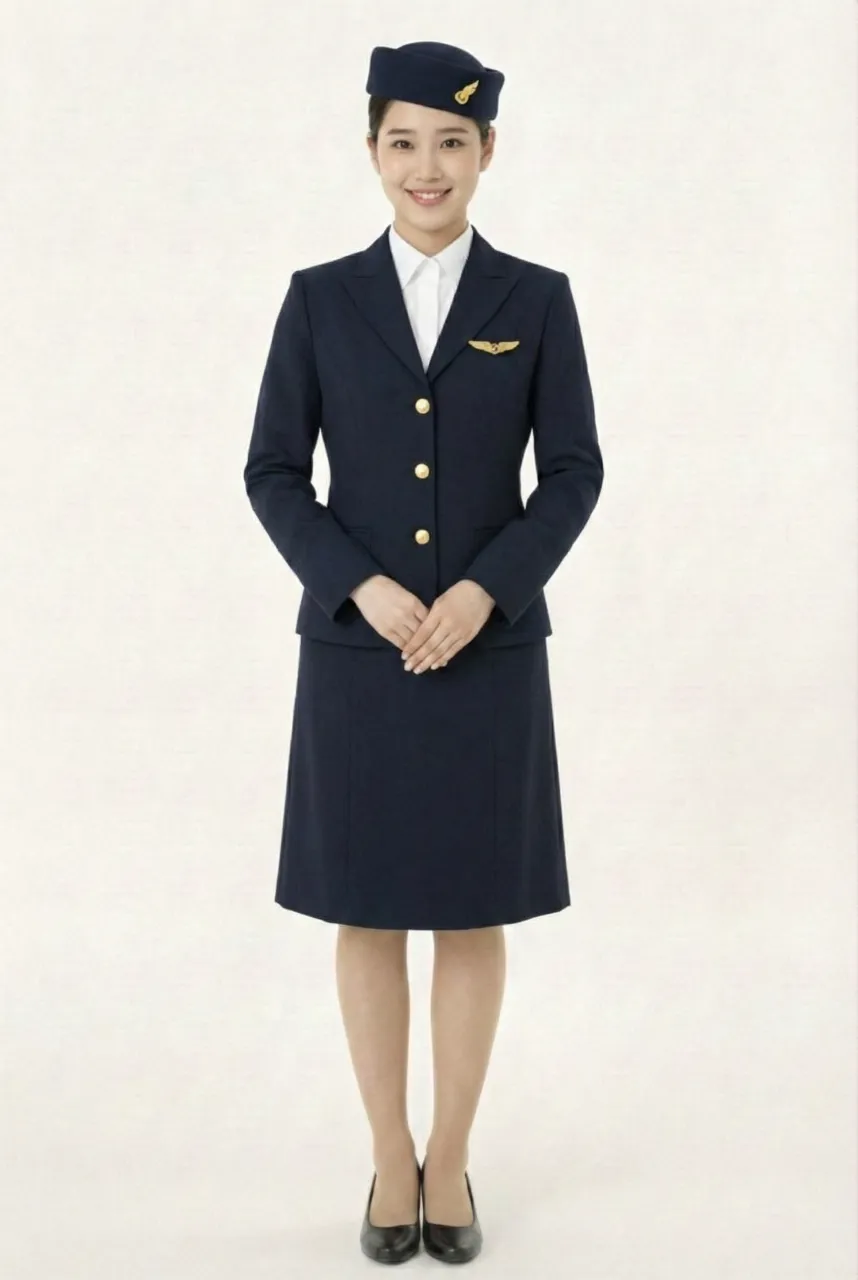
Female flight attendant
1971 ~ 1972 -
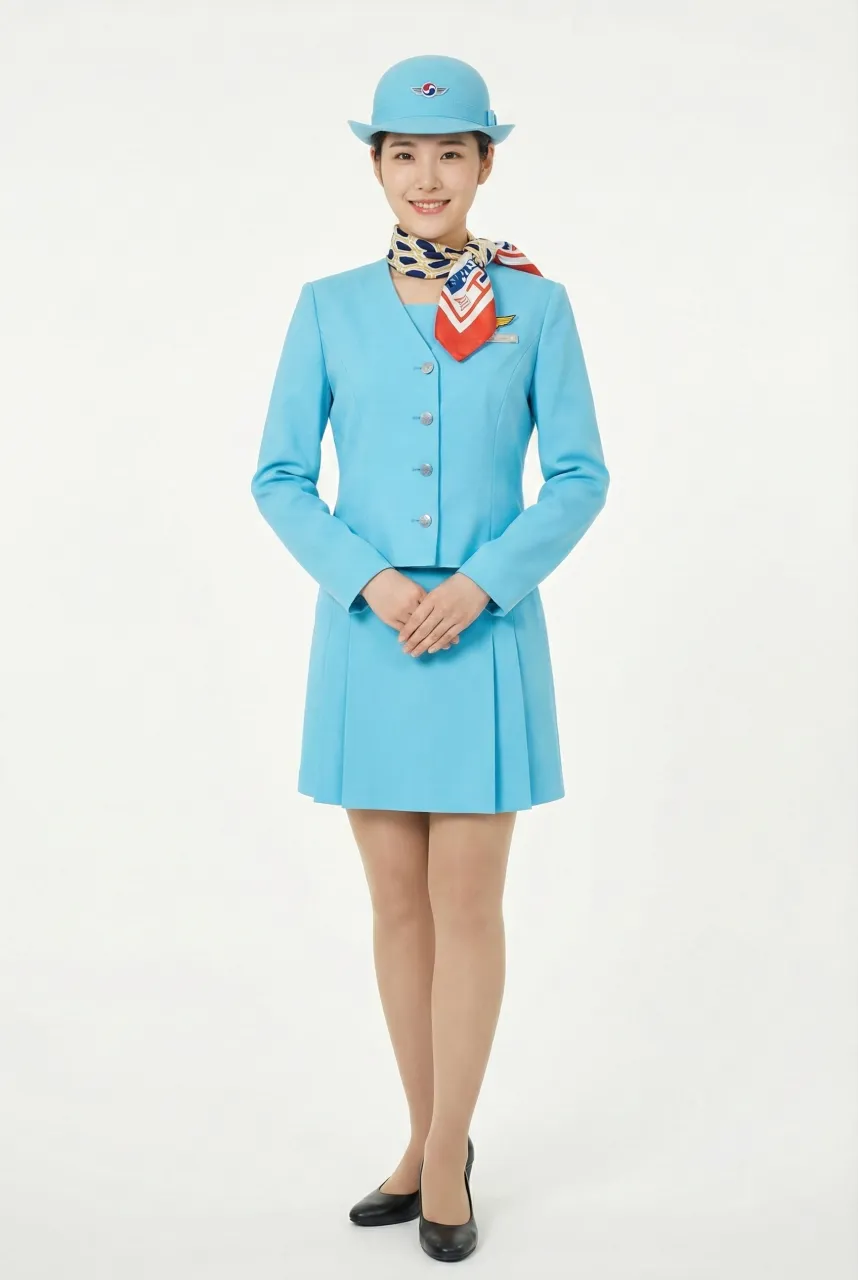
Female flight attendant
1973 ~ 1974 -
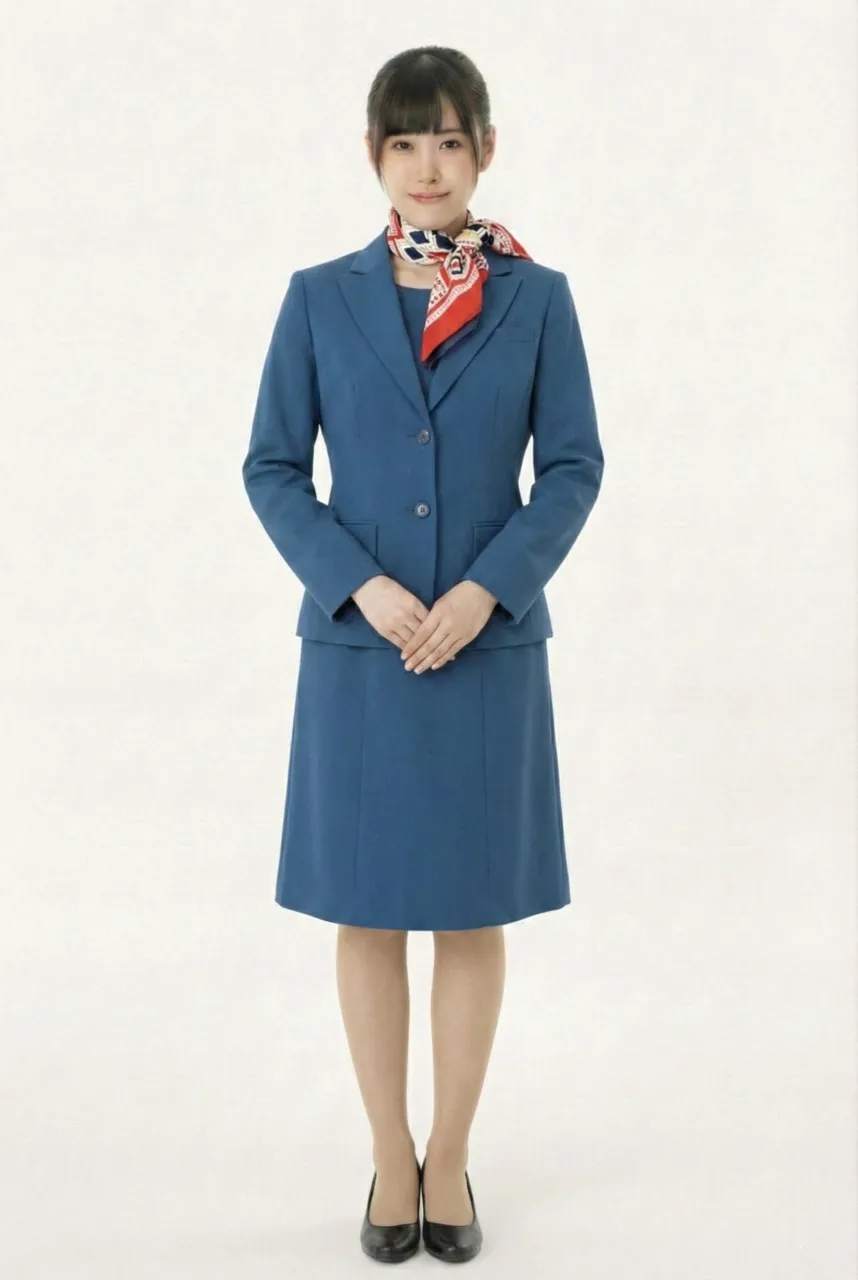
Female flight attendant
1974 ~ 1975 -
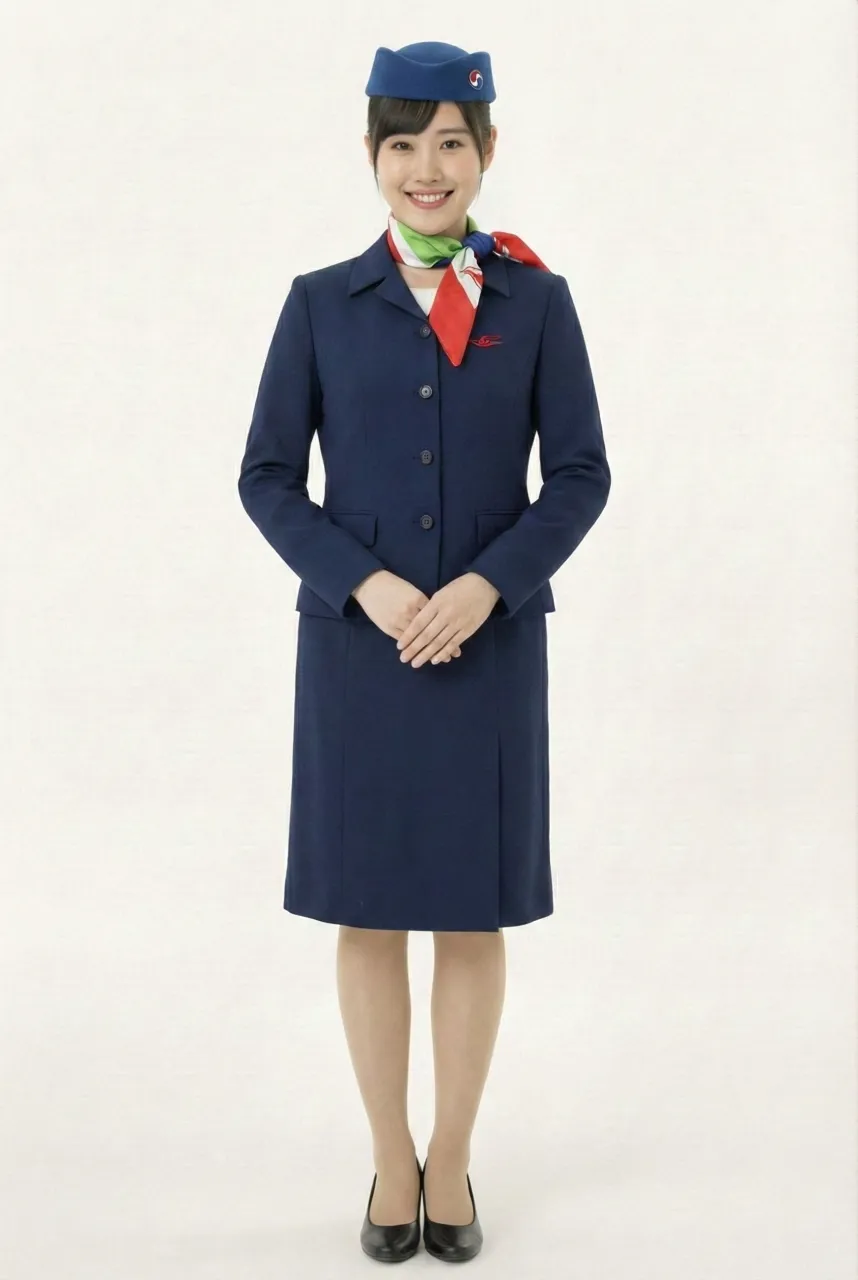
Female flight attendant
1976 ~ 1977 -
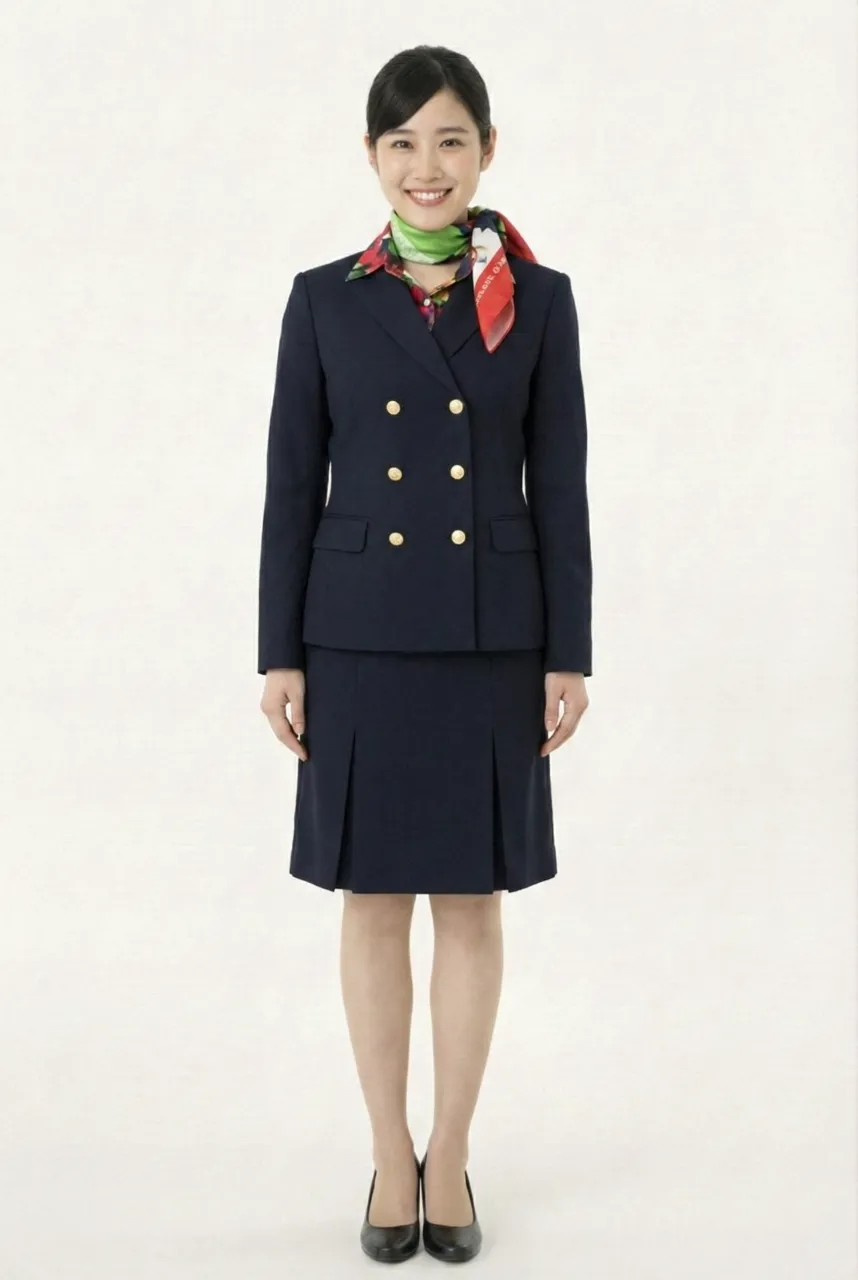
Female flight attendant
1978 ~ 1979 -
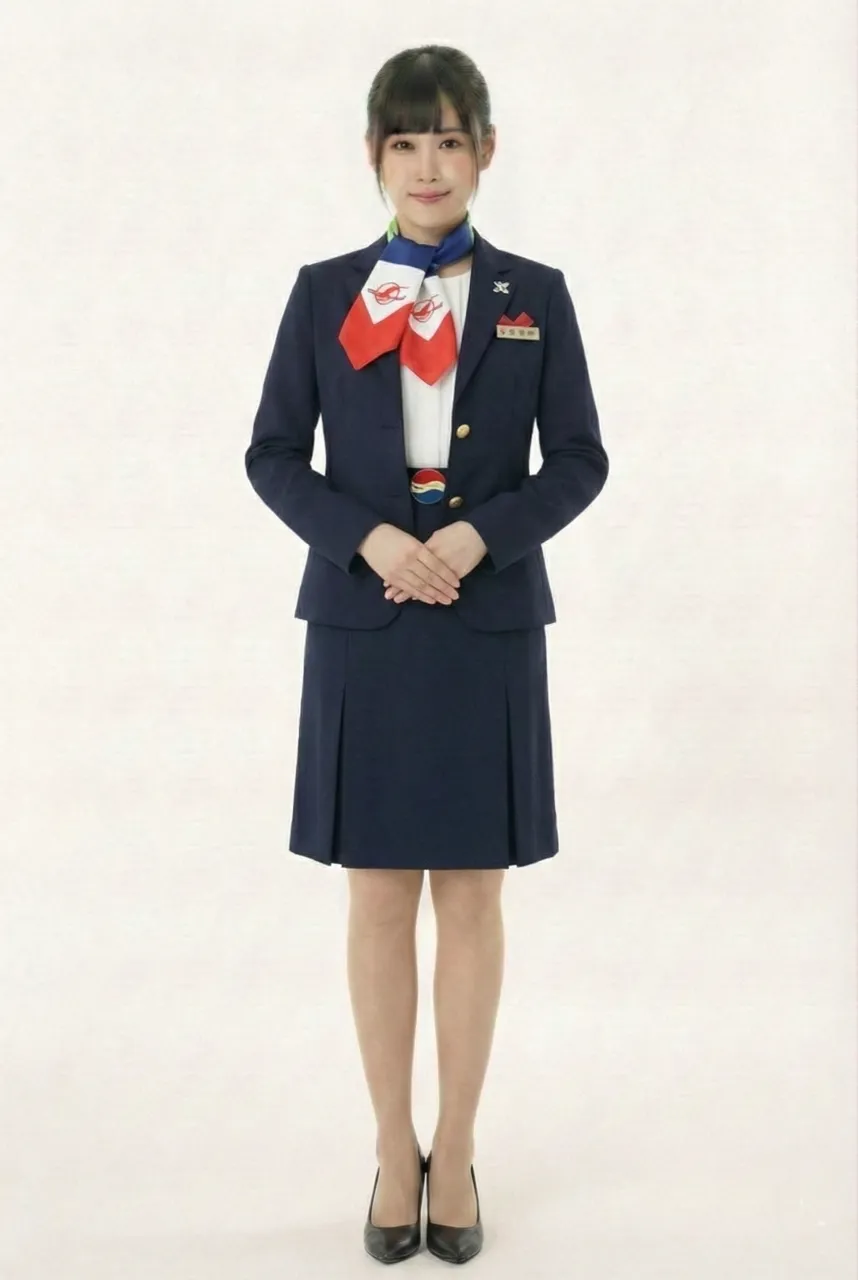
Female flight attendant
1980 ~ 1985 -
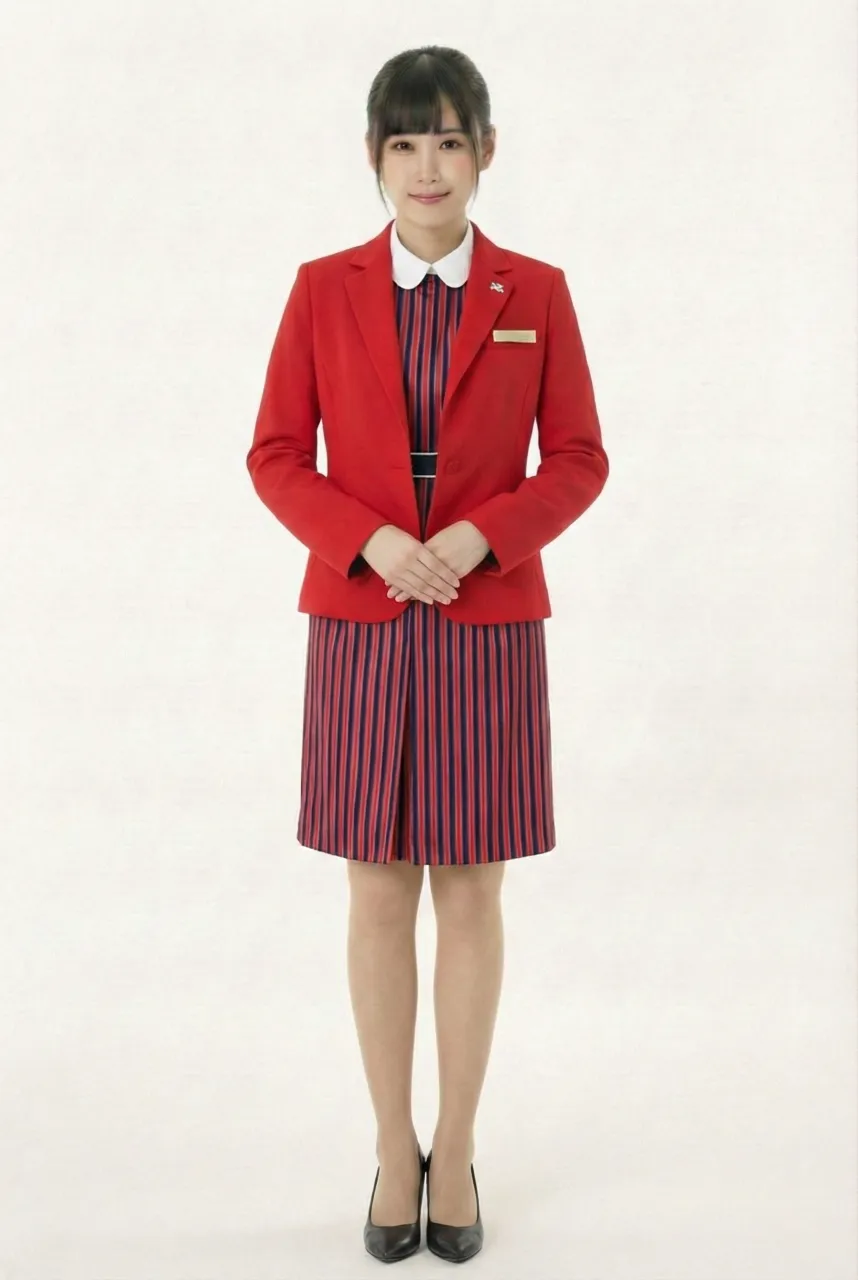
Female flight attendant
1986 ~ 1990 -
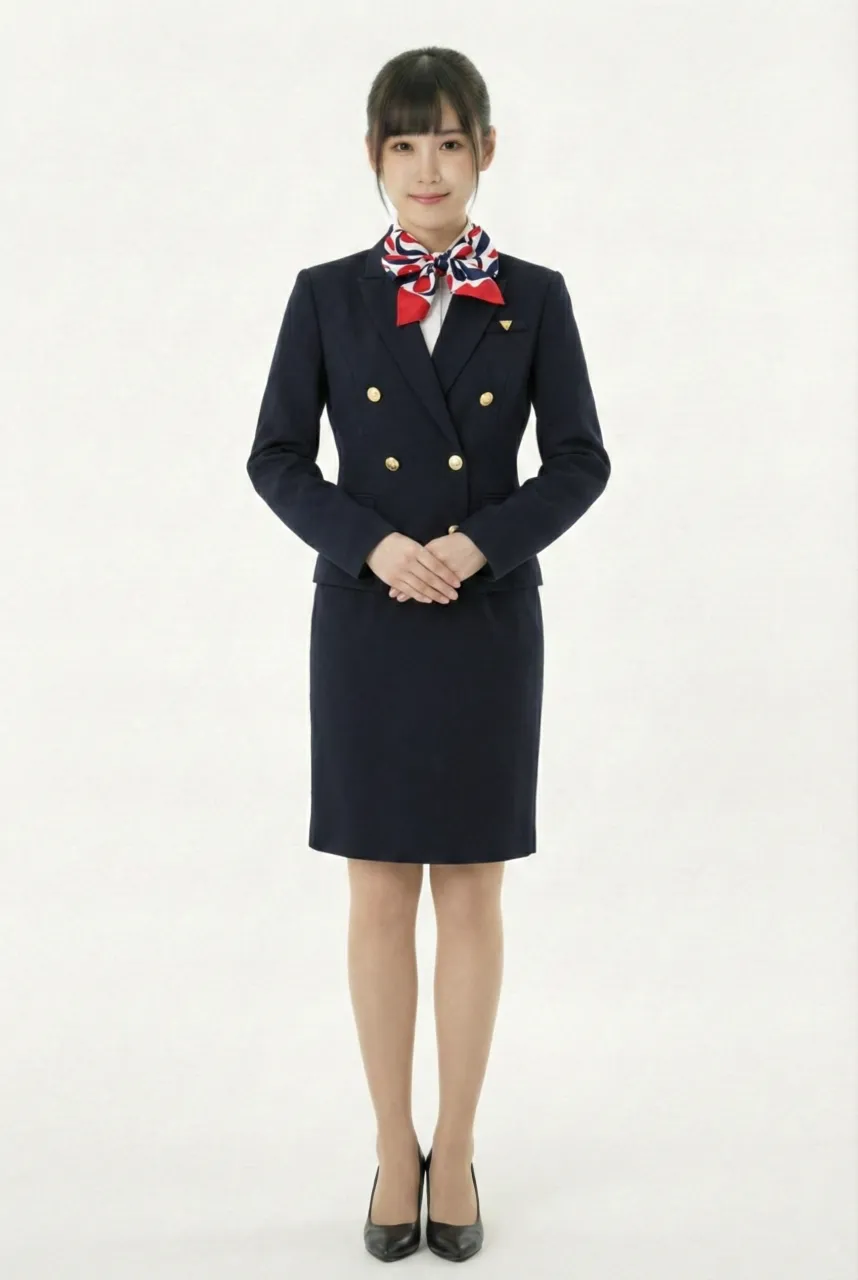
Female flight attendant
1991 ~ 2004 -
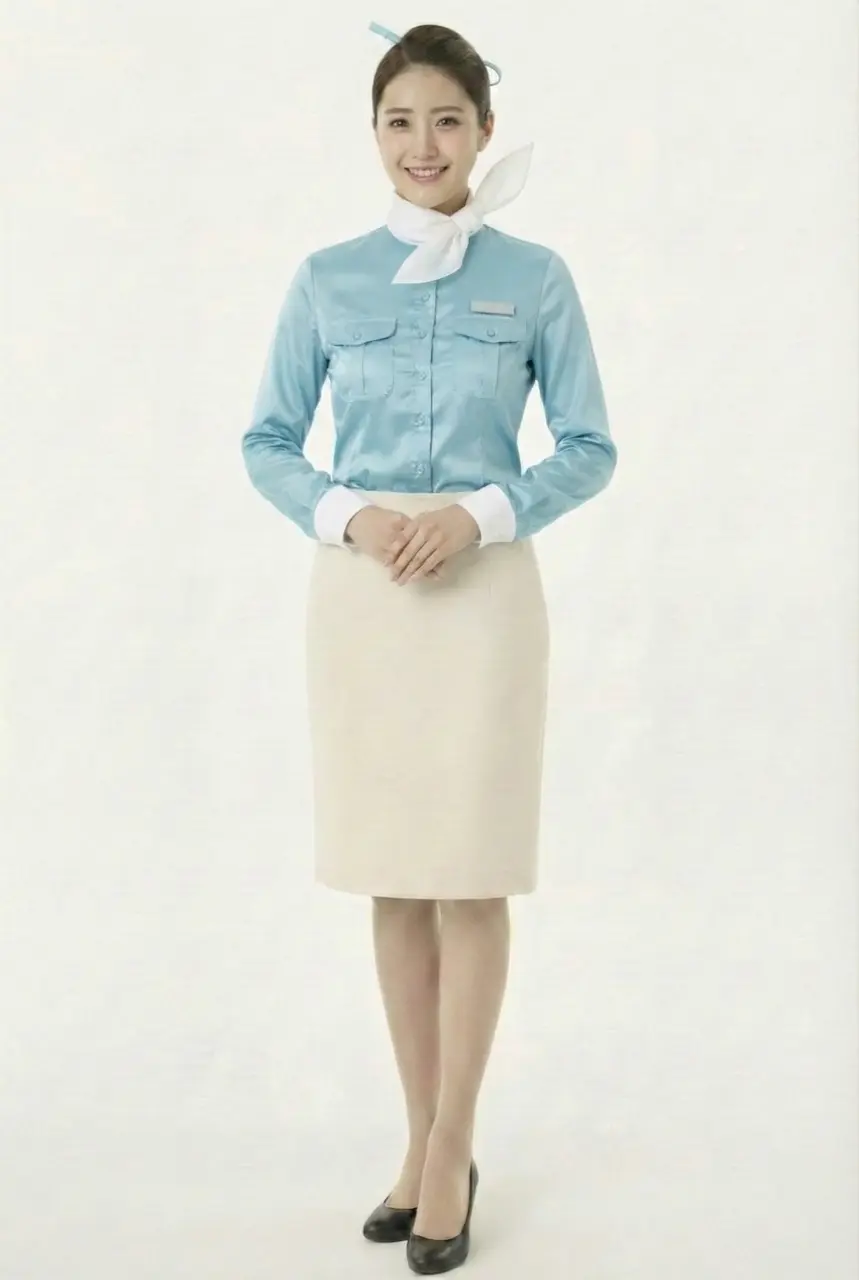
Female flight attendant
2005 ~ -
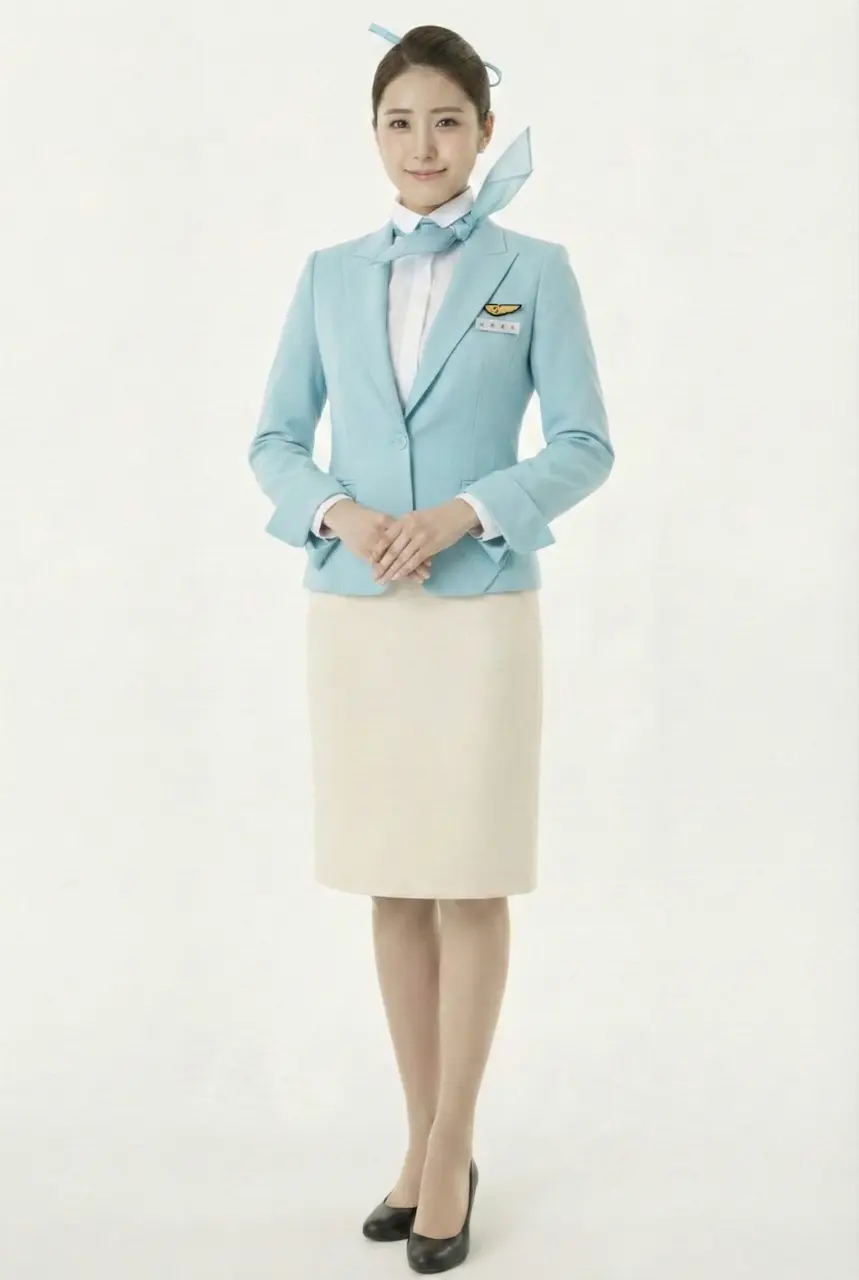
Female flight attendant wearing a jacket
2005 ~ -
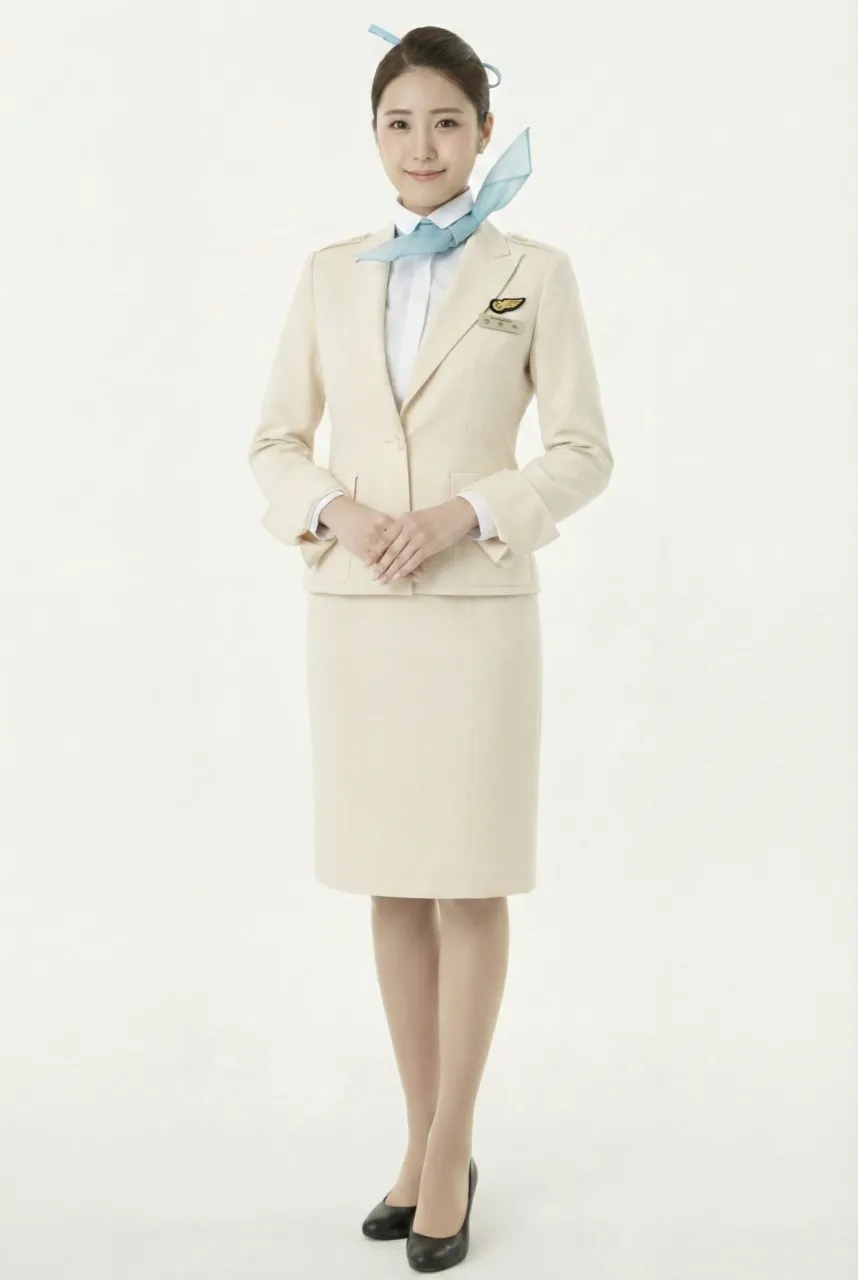
Female flight attendant wearing a jacket
2005 ~
The images displayed in this section are AI-generated illustrations and are not official materials from the original organizations or brands. They do not represent actual uniform designs, real-life wear, or official positions. The content is for informational and organizational purposes. All brand/organization names and logos mentioned are the property of their respective owners.