 Sign in with Google


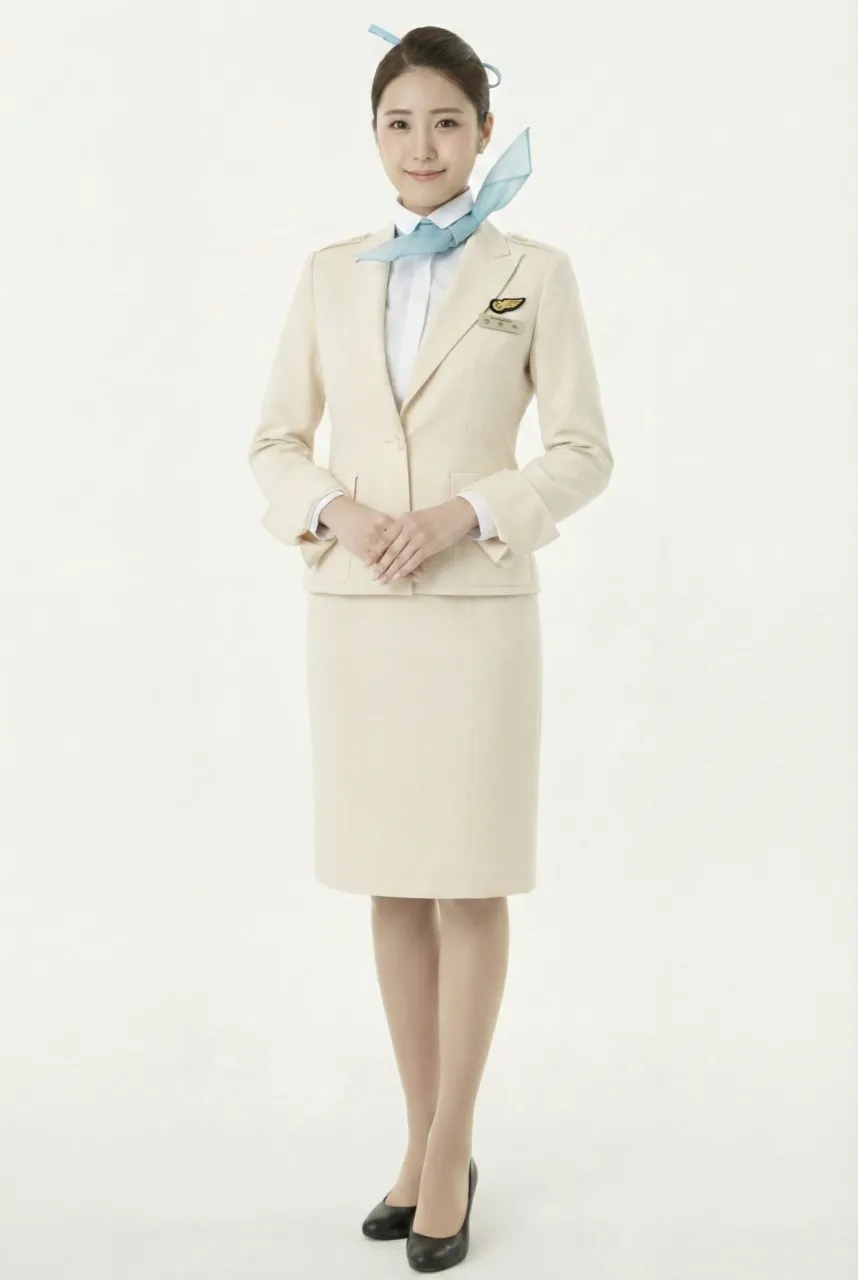
Female flight attendant - Korean Air Uniform
1980 ~ 1985
Top
Bottom
Accessory
Overall
Description
This uniform is a representative example of the late Cold War era, when Asian airlines collectively moved toward an “internationally standardized professional image.” Its overall design clearly inherits the visual language of mainstream Western airline uniforms, using deep navy blue as the dominant color to convey stability, reliability, and a highly disciplined first impression. At the same time, it reflects the historical context in which Korean Air was actively working to establish trust as a global aviation brand.
The upper garment features a fitted navy tailored jacket with clean shoulder lines and a gently defined waist, creating a straight, structured silhouette without exaggeration. This design emphasizes professionalism and the strict standards of appearance expected of cabin crew. Gold buttons and a chest emblem serve as key visual focal points, standing out against the dark base color to convey authority and formality. This approach aligns with the aviation industry’s widespread adoption of a quasi-military aesthetic during that period. A white shirt worn underneath provides clear contrast, brightening the face and reinforcing a composed yet approachable presence.
The scarf design is one of the most time-specific elements of this uniform. The red, white, and blue color combination not only reflects the internationally familiar palette commonly associated with aviation, but also strengthens brand recognition while adding visual energy and layering to an otherwise formal ensemble. The scarf is tied in a structured, firm manner at the neck, symbolizing service discipline and standardized procedures—an especially characteristic feature of Asian airline uniforms from the 1970s to the 1980s.
The skirt maintains a conservative length and a clean, straight silhouette that avoids emphasizing curves. Paired with nude stockings and black high heels, the overall proportions remain balanced and orderly, with clear visual flow. The design prioritizes the role of the wearer as a professional service provider rather than a fashion figure. Rather than pursuing trends, the uniform relies on consistency and recognizability to reinforce passenger trust in the airline.
The upper garment features a fitted navy tailored jacket with clean shoulder lines and a gently defined waist, creating a straight, structured silhouette without exaggeration. This design emphasizes professionalism and the strict standards of appearance expected of cabin crew. Gold buttons and a chest emblem serve as key visual focal points, standing out against the dark base color to convey authority and formality. This approach aligns with the aviation industry’s widespread adoption of a quasi-military aesthetic during that period. A white shirt worn underneath provides clear contrast, brightening the face and reinforcing a composed yet approachable presence.
The scarf design is one of the most time-specific elements of this uniform. The red, white, and blue color combination not only reflects the internationally familiar palette commonly associated with aviation, but also strengthens brand recognition while adding visual energy and layering to an otherwise formal ensemble. The scarf is tied in a structured, firm manner at the neck, symbolizing service discipline and standardized procedures—an especially characteristic feature of Asian airline uniforms from the 1970s to the 1980s.
The skirt maintains a conservative length and a clean, straight silhouette that avoids emphasizing curves. Paired with nude stockings and black high heels, the overall proportions remain balanced and orderly, with clear visual flow. The design prioritizes the role of the wearer as a professional service provider rather than a fashion figure. Rather than pursuing trends, the uniform relies on consistency and recognizability to reinforce passenger trust in the airline.
Uniform List
-
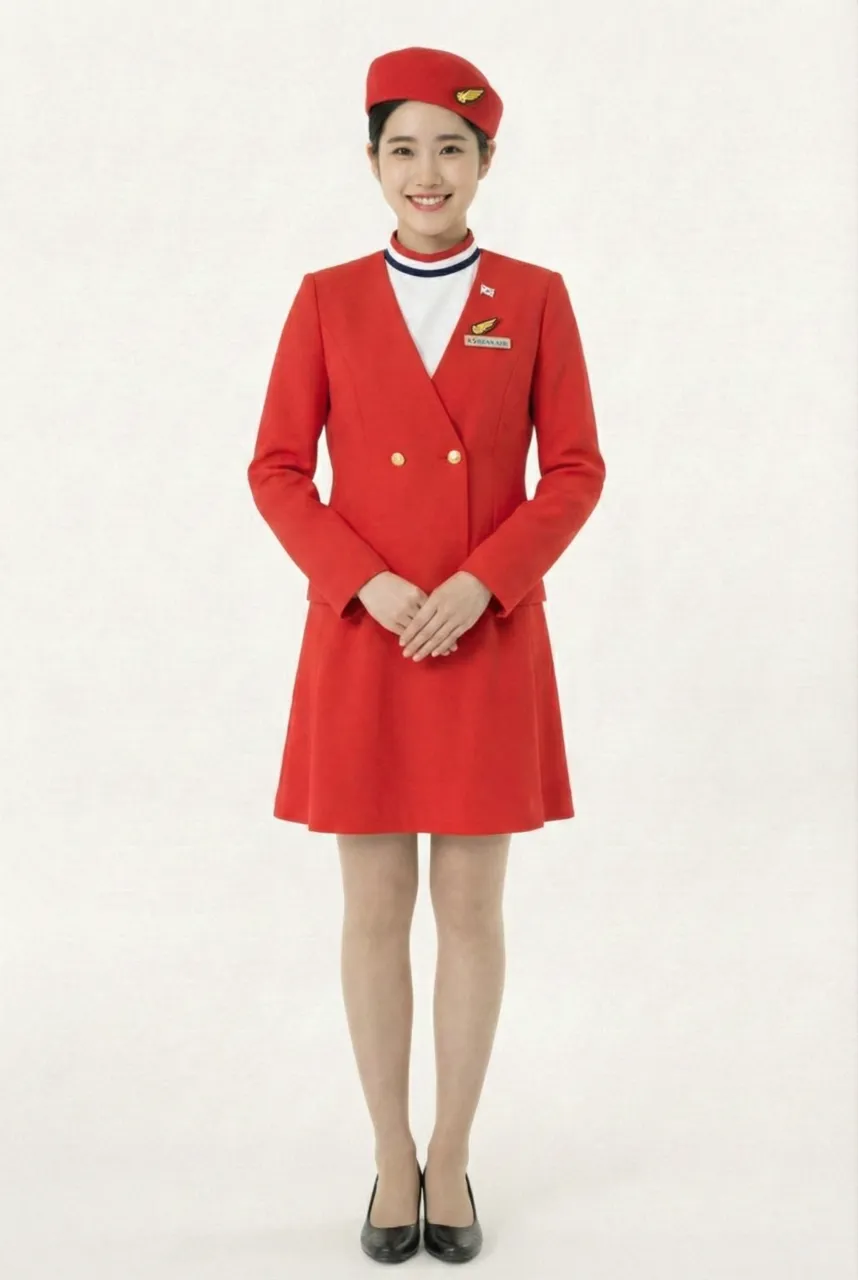
Female flight attendant
1969 ~ 1970 -
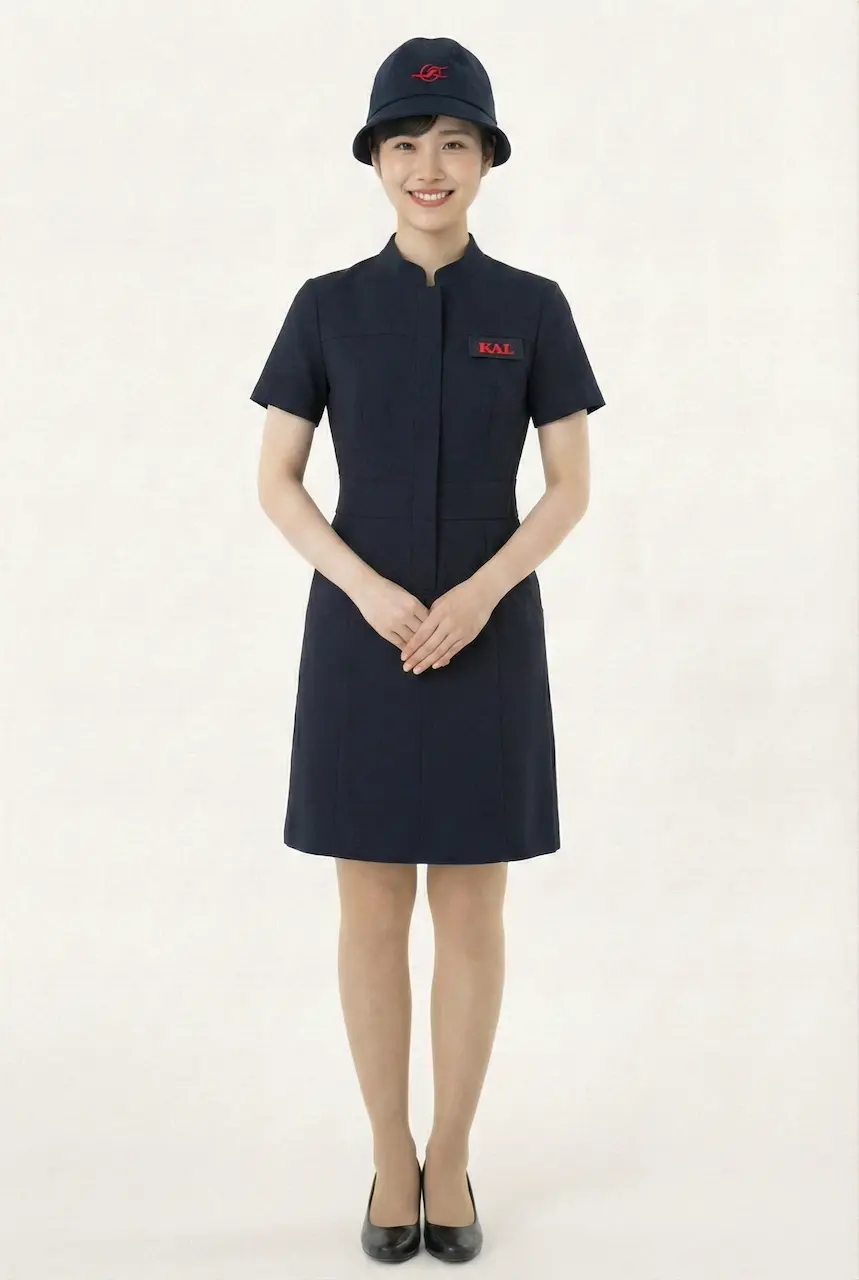
Female flight attendant
1970 ~ 1971 -
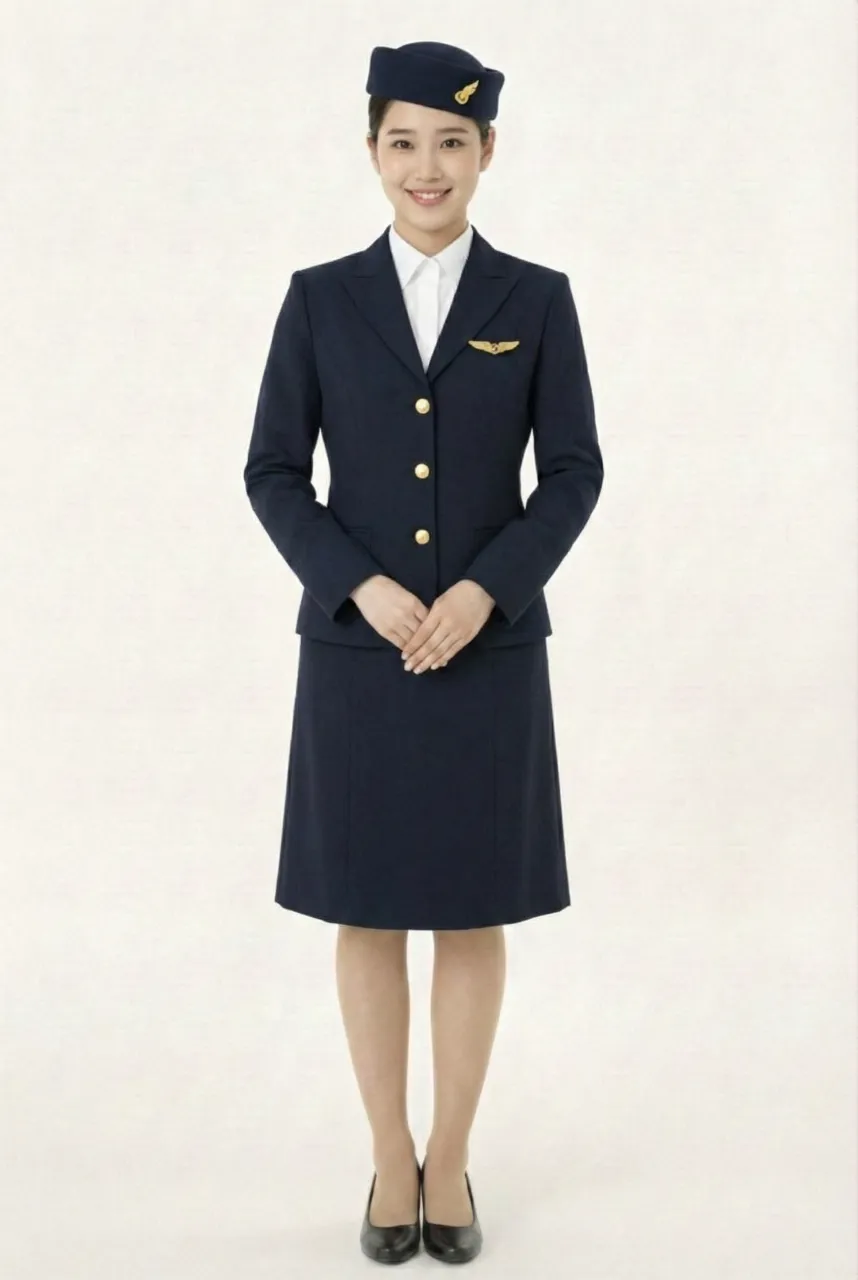
Female flight attendant
1971 ~ 1972 -
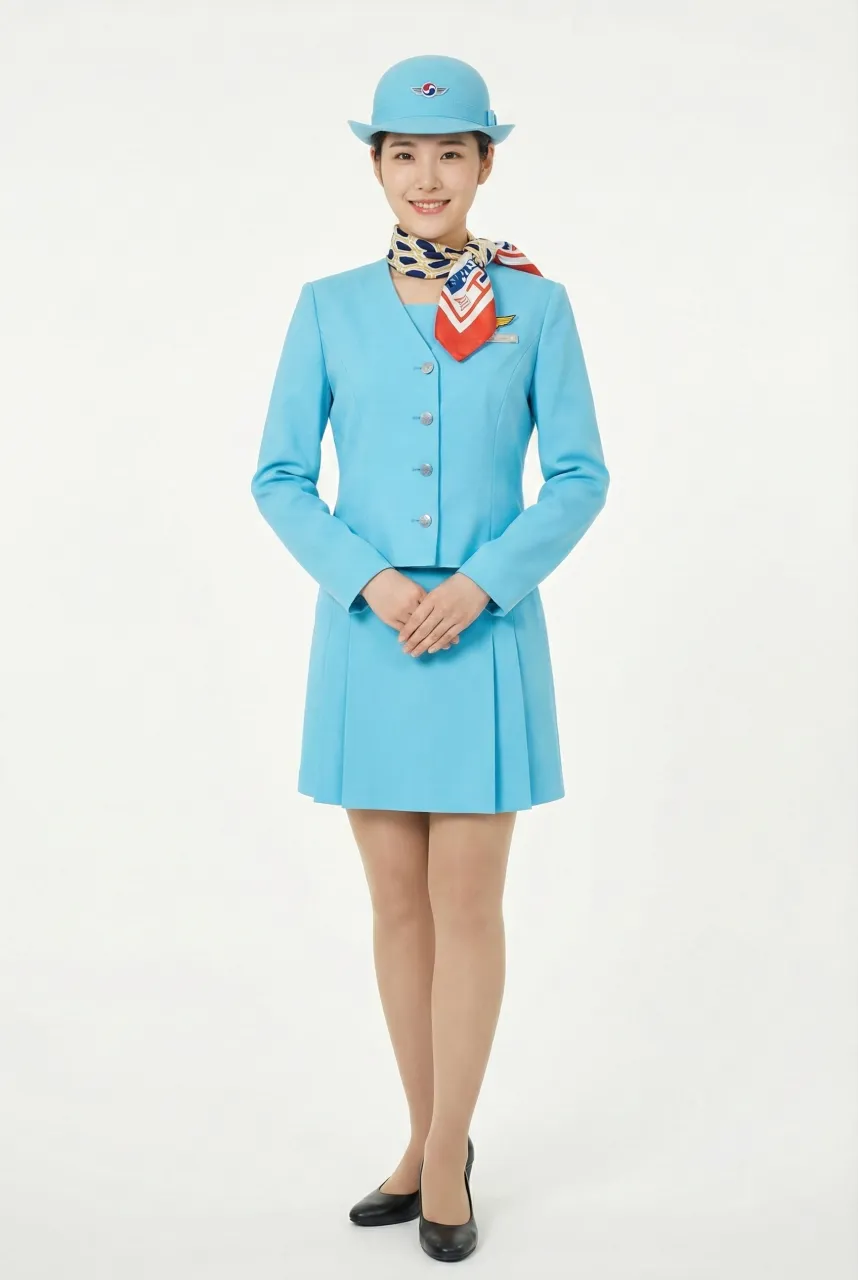
Female flight attendant
1973 ~ 1974 -
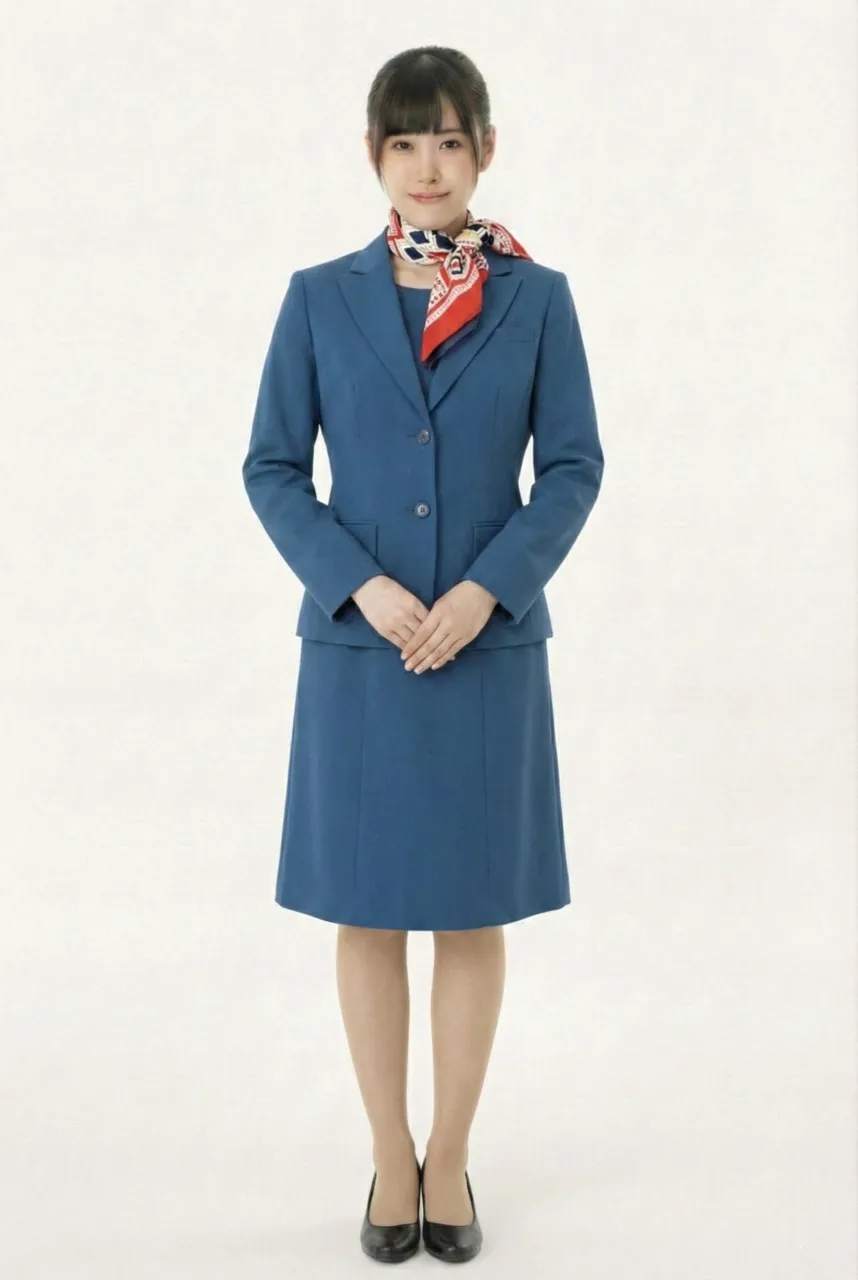
Female flight attendant
1974 ~ 1975 -
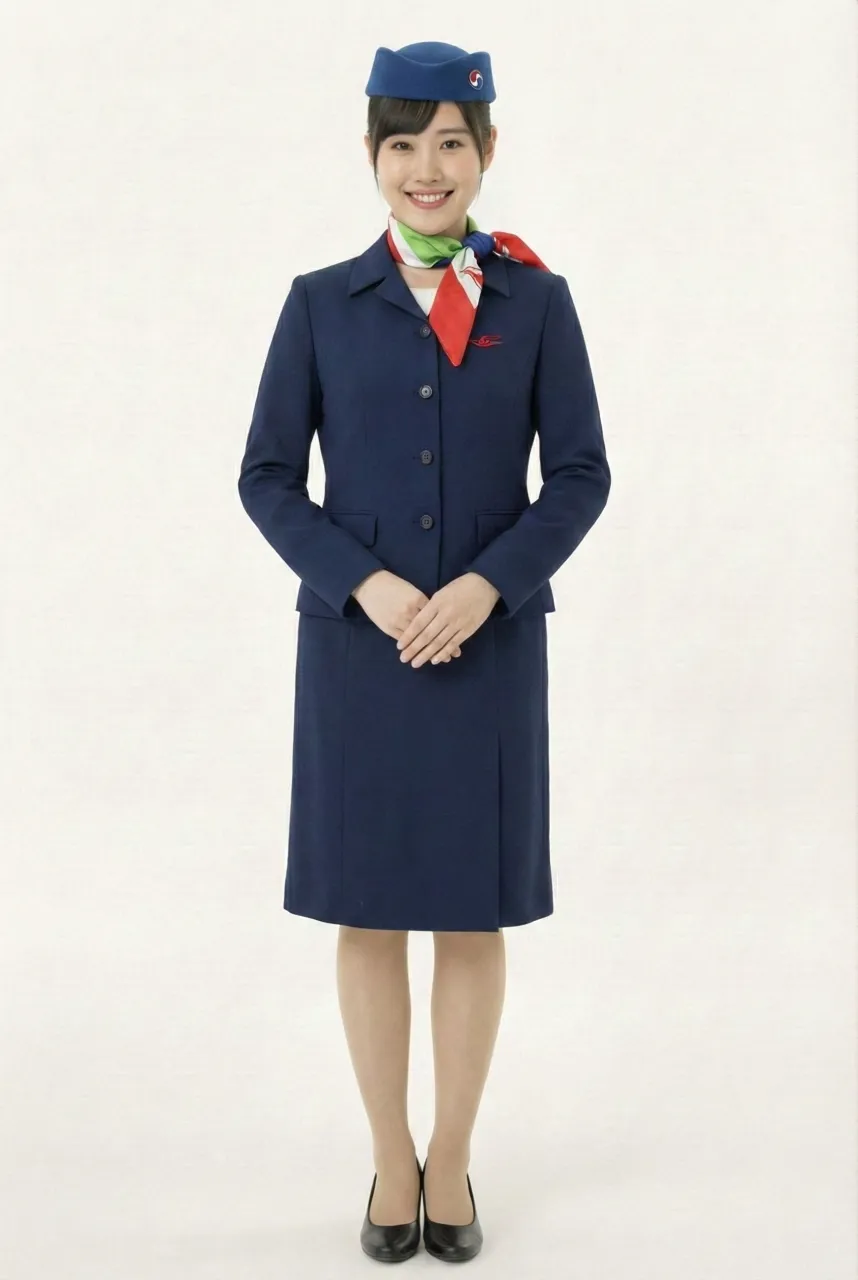
Female flight attendant
1976 ~ 1977 -
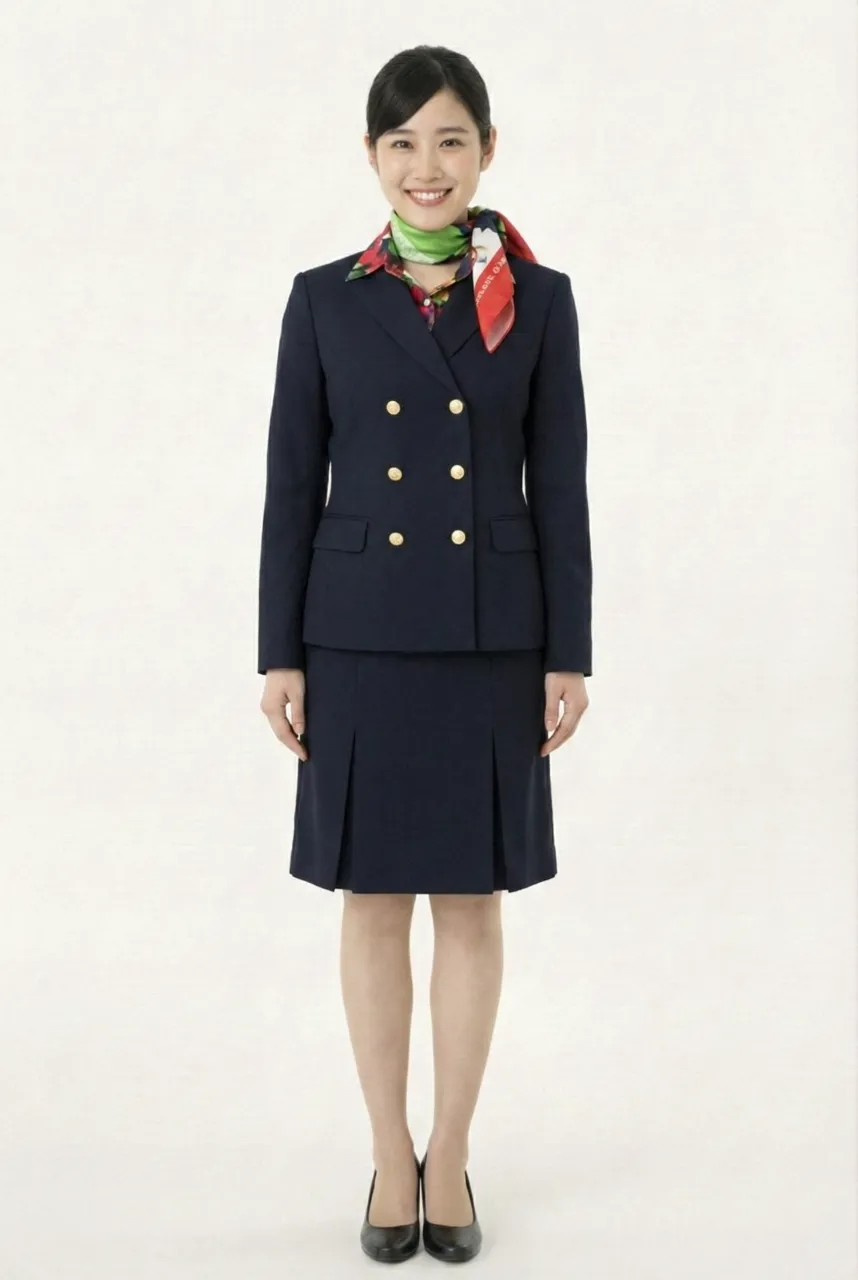
Female flight attendant
1978 ~ 1979 -
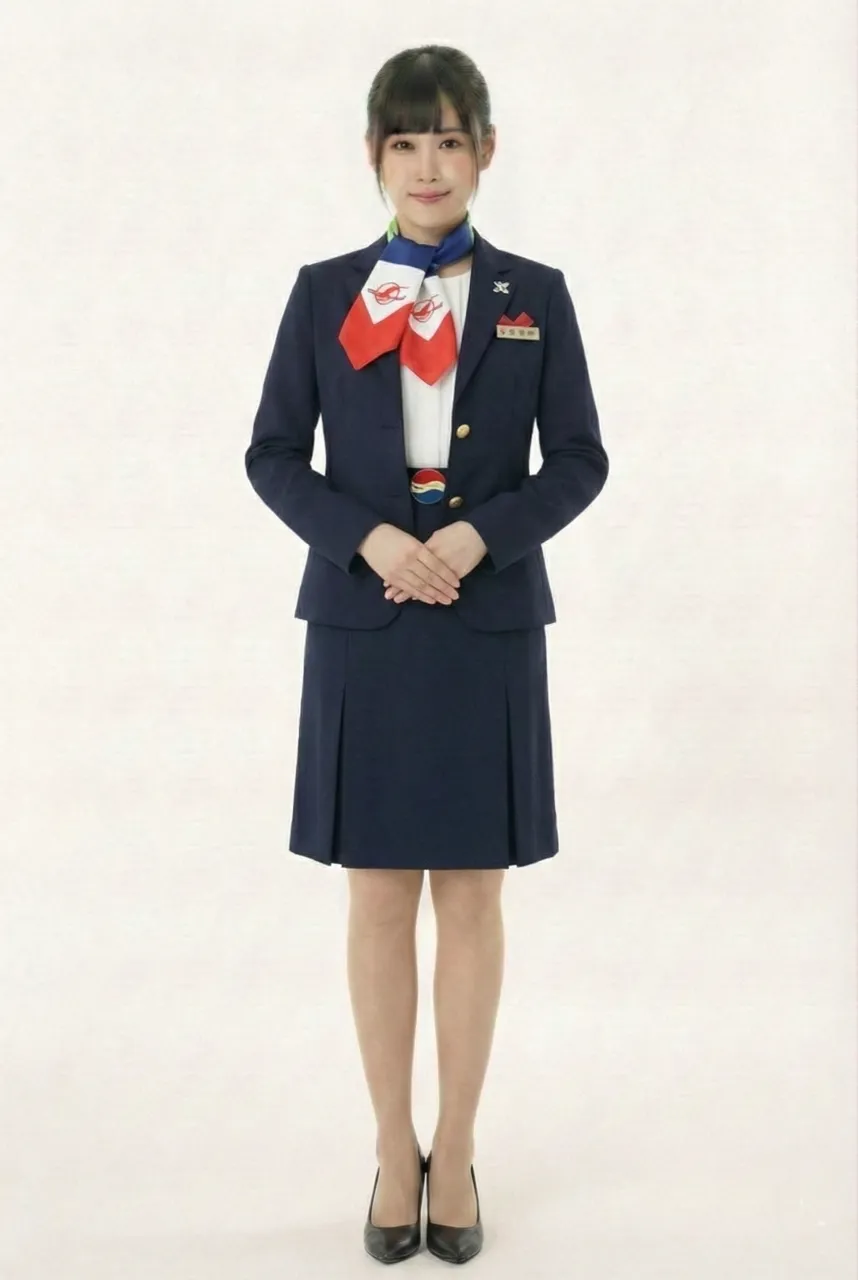
Female flight attendant
1980 ~ 1985 -
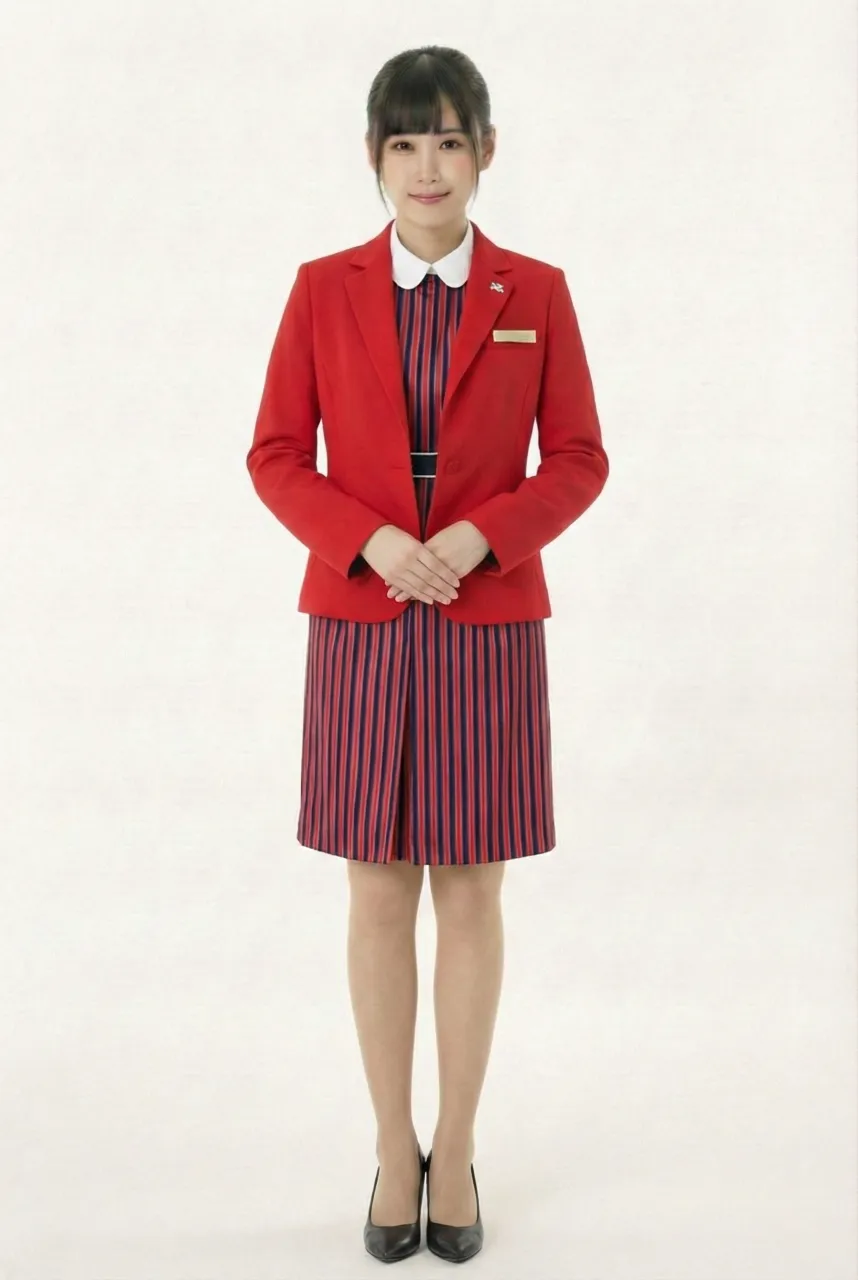
Female flight attendant
1986 ~ 1990 -
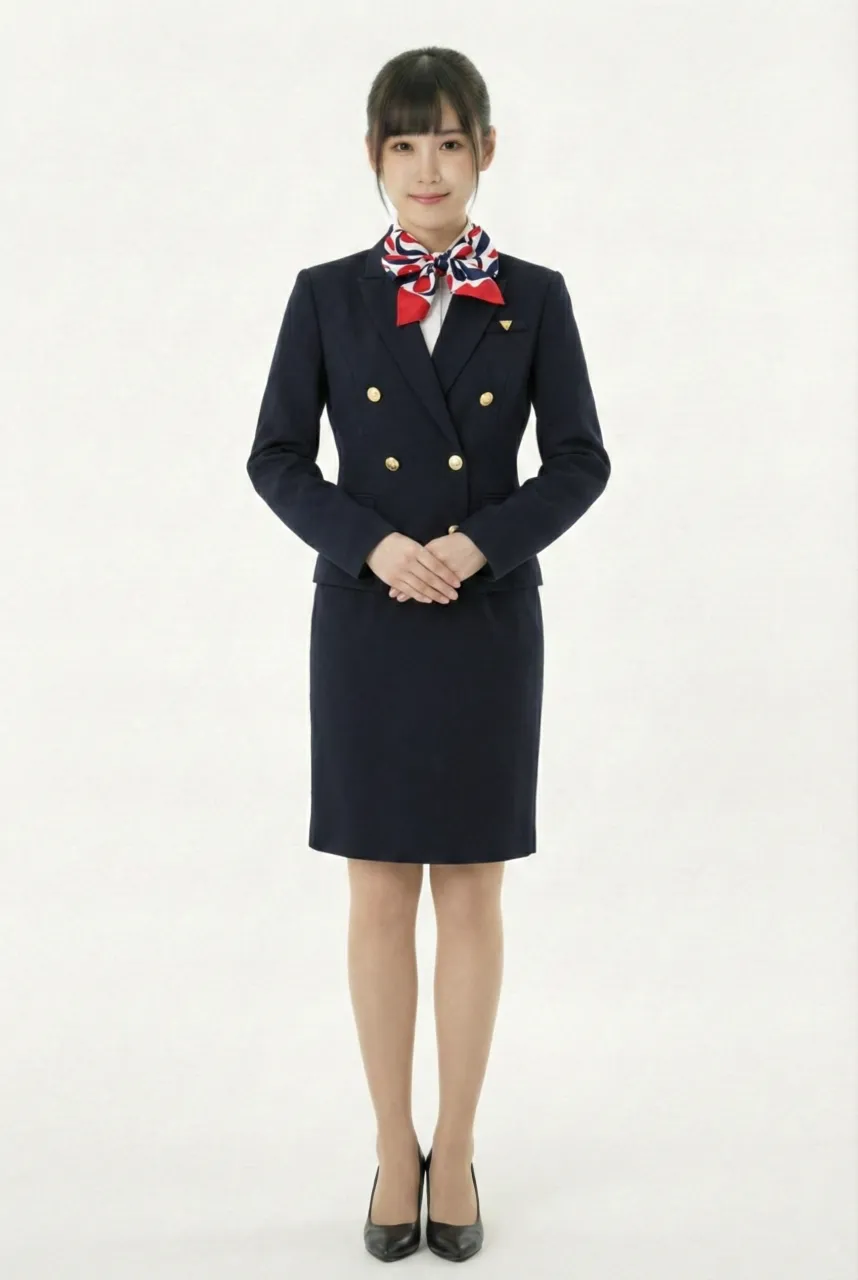
Female flight attendant
1991 ~ 2004 -
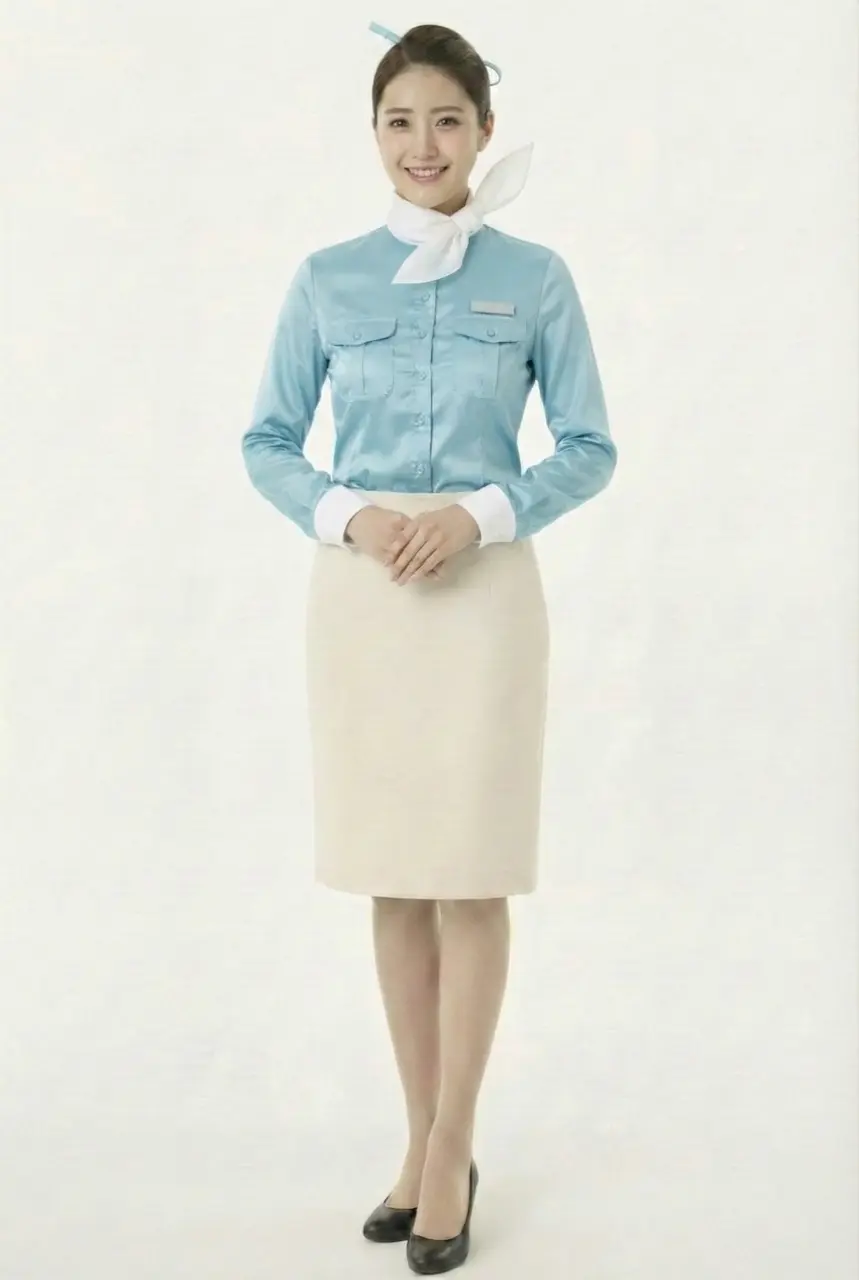
Female flight attendant
2005 ~ -
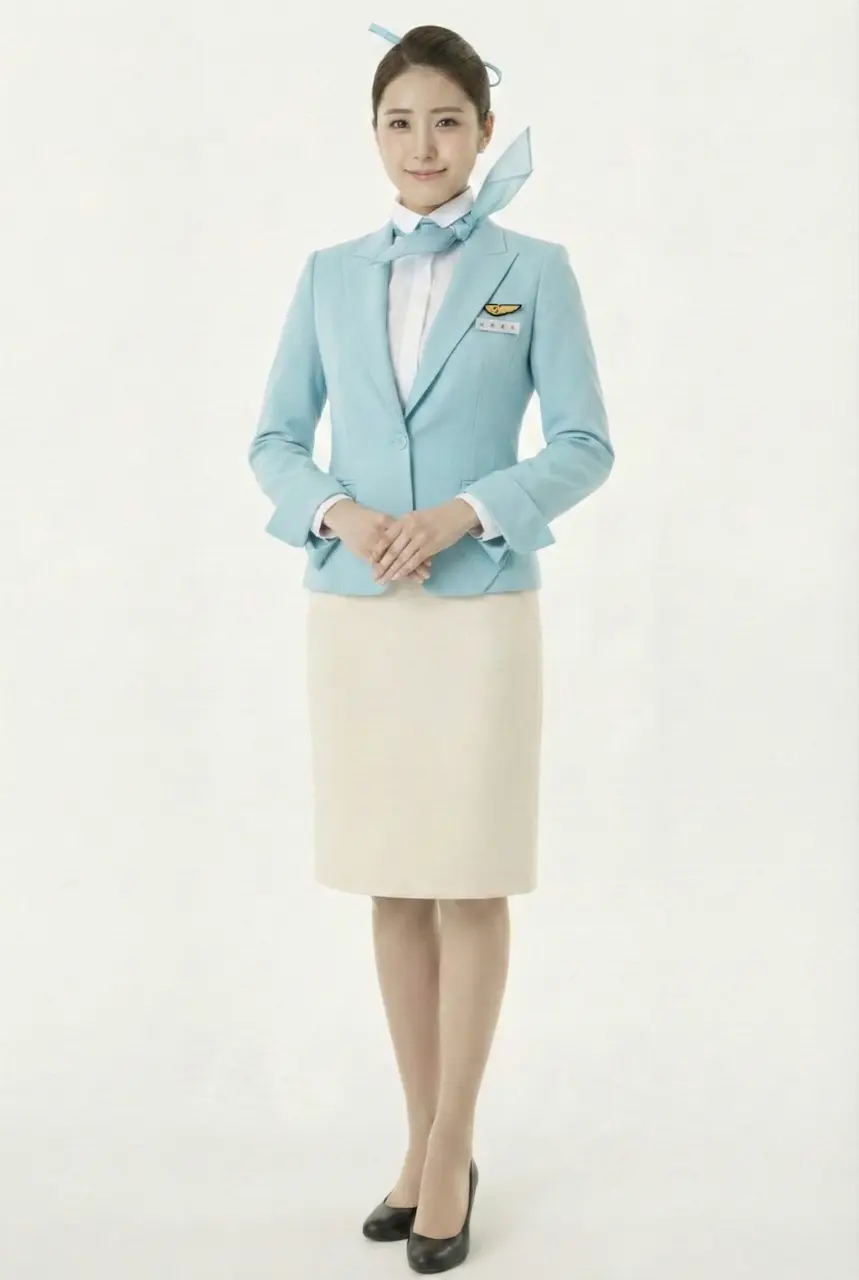
Female flight attendant wearing a jacket
2005 ~ -
Female flight attendant wearing a jacket
2005 ~
The images displayed in this section are AI-generated illustrations and are not official materials from the original organizations or brands. They do not represent actual uniform designs, real-life wear, or official positions. The content is for informational and organizational purposes. All brand/organization names and logos mentioned are the property of their respective owners.