 Sign in with Google


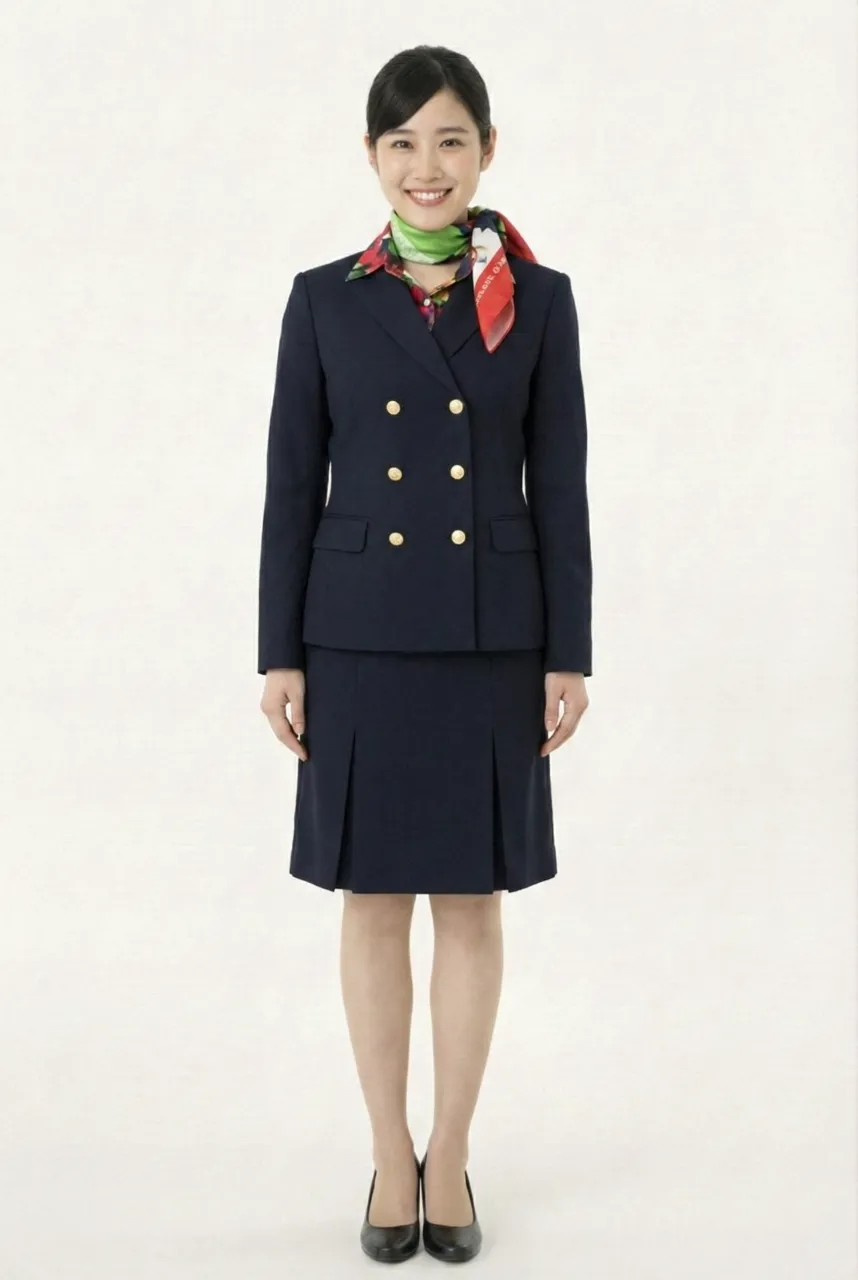
Female flight attendant - Korean Air Uniform
1978 ~ 1979
Top
Bottom
Accessory
Overall
Description
This uniform is defined by a deep navy color scheme, with a structured silhouette and clean lines that emphasize discipline and authority. It reflects an era when airline service still carried a strong quasi-military character in both image and presentation.
The jacket features a double-breasted design with gold buttons. Its straight-cut structure and clearly defined shoulder line create a stable, commanding silhouette. Double-breasted tailored jackets of this kind were widely used in global airline uniforms during the 1960s and 1970s, symbolizing professionalism, reliability, and national identity. The gold buttons form a strong contrast against the navy fabric, enhancing both recognizability and formality.
At the neck, a brightly colored printed scarf serves as the most lively element of the ensemble. The interwoven red, green, and other vivid tones introduce visual interest to the otherwise strict dark suit, making the overall image more approachable and service-oriented. This use of a bright scarf as an accent was a common design approach among many airlines of the time, intended to balance the image of discipline with a sense of warmth and hospitality.
The lower half consists of a navy knee-length skirt with a conservative, composed silhouette. Paired with nude stockings and black high heels, the overall proportions appear clean and orderly. Both the length and the line of the skirt prioritize practicality and uniformity rather than fashionable curves, reflecting the industry’s emphasis on consistency and professional service standards during that period.
The jacket features a double-breasted design with gold buttons. Its straight-cut structure and clearly defined shoulder line create a stable, commanding silhouette. Double-breasted tailored jackets of this kind were widely used in global airline uniforms during the 1960s and 1970s, symbolizing professionalism, reliability, and national identity. The gold buttons form a strong contrast against the navy fabric, enhancing both recognizability and formality.
At the neck, a brightly colored printed scarf serves as the most lively element of the ensemble. The interwoven red, green, and other vivid tones introduce visual interest to the otherwise strict dark suit, making the overall image more approachable and service-oriented. This use of a bright scarf as an accent was a common design approach among many airlines of the time, intended to balance the image of discipline with a sense of warmth and hospitality.
The lower half consists of a navy knee-length skirt with a conservative, composed silhouette. Paired with nude stockings and black high heels, the overall proportions appear clean and orderly. Both the length and the line of the skirt prioritize practicality and uniformity rather than fashionable curves, reflecting the industry’s emphasis on consistency and professional service standards during that period.
Uniform List
-
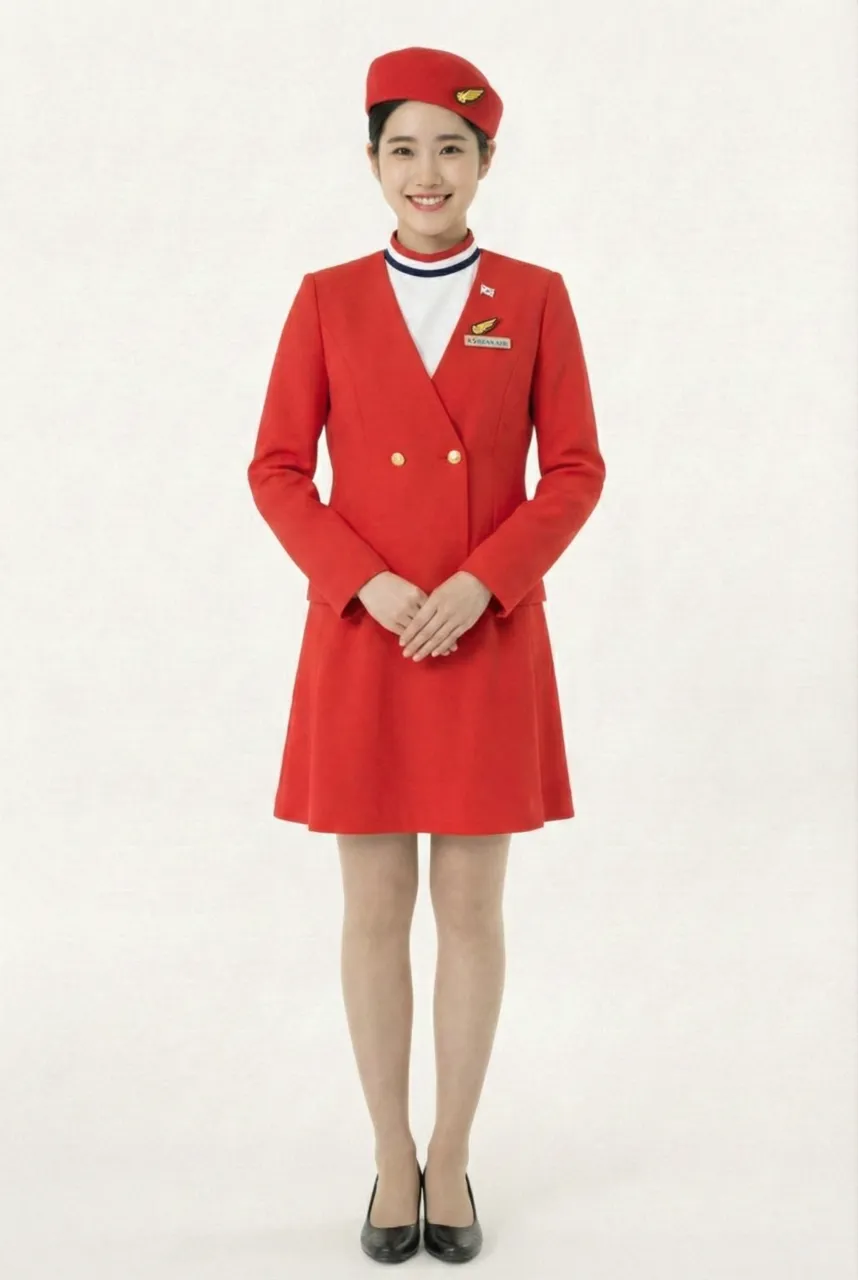
Female flight attendant
1969 ~ 1970 -
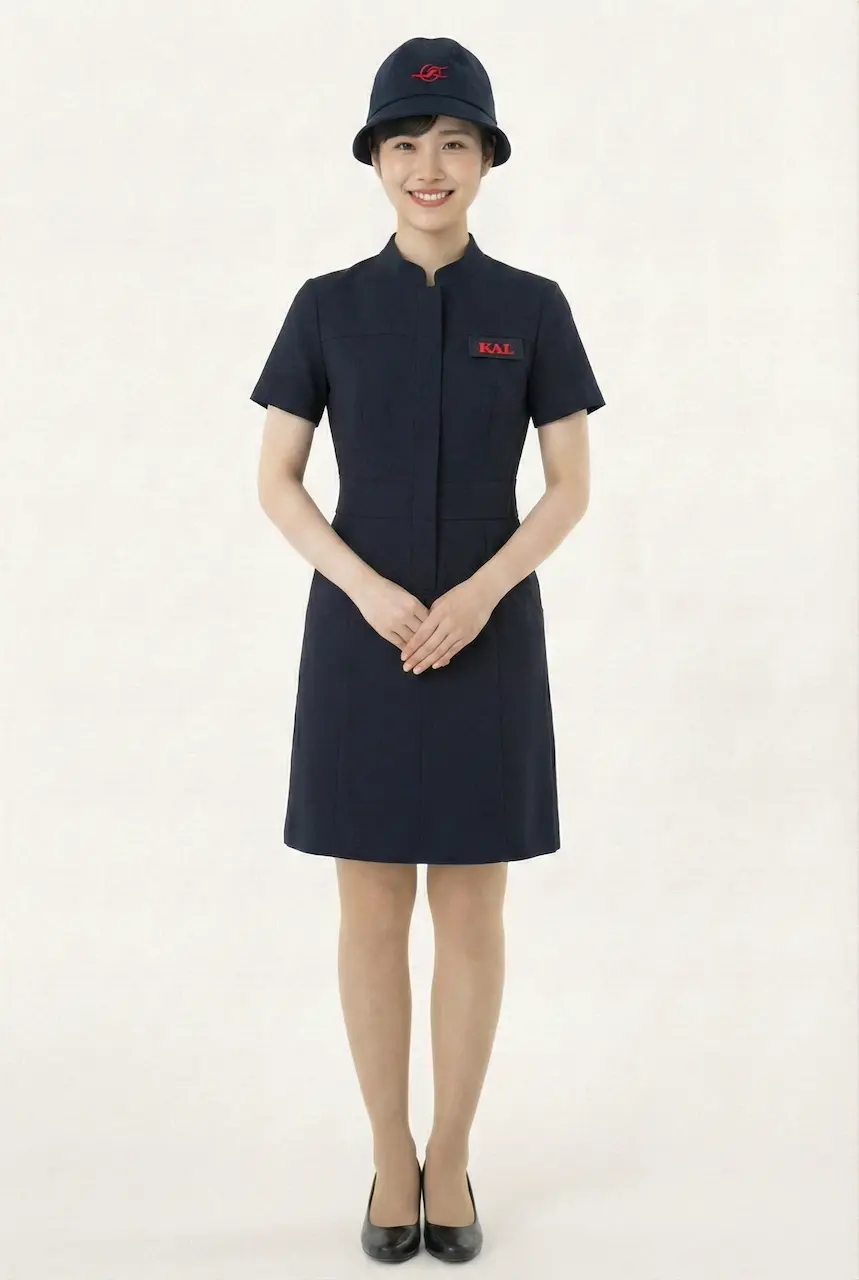
Female flight attendant
1970 ~ 1971 -
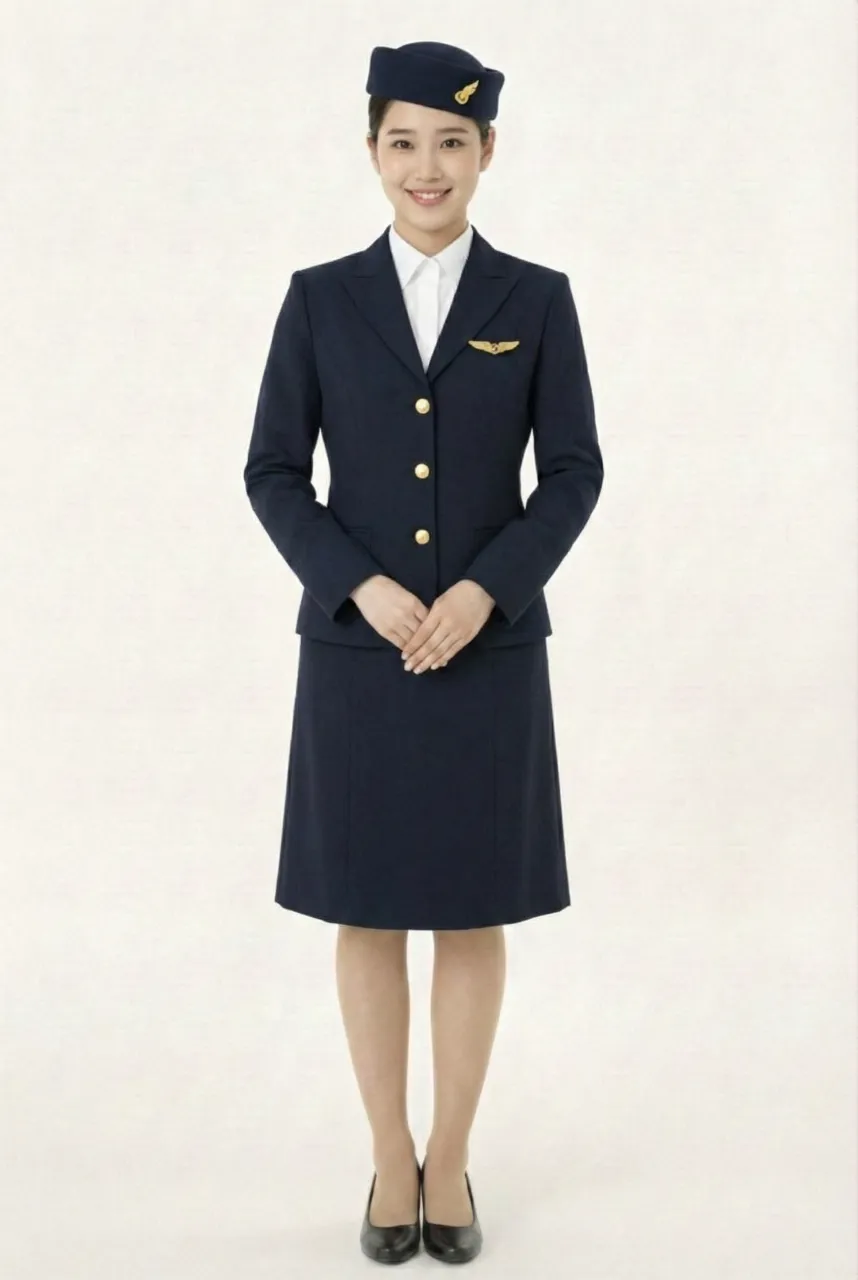
Female flight attendant
1971 ~ 1972 -
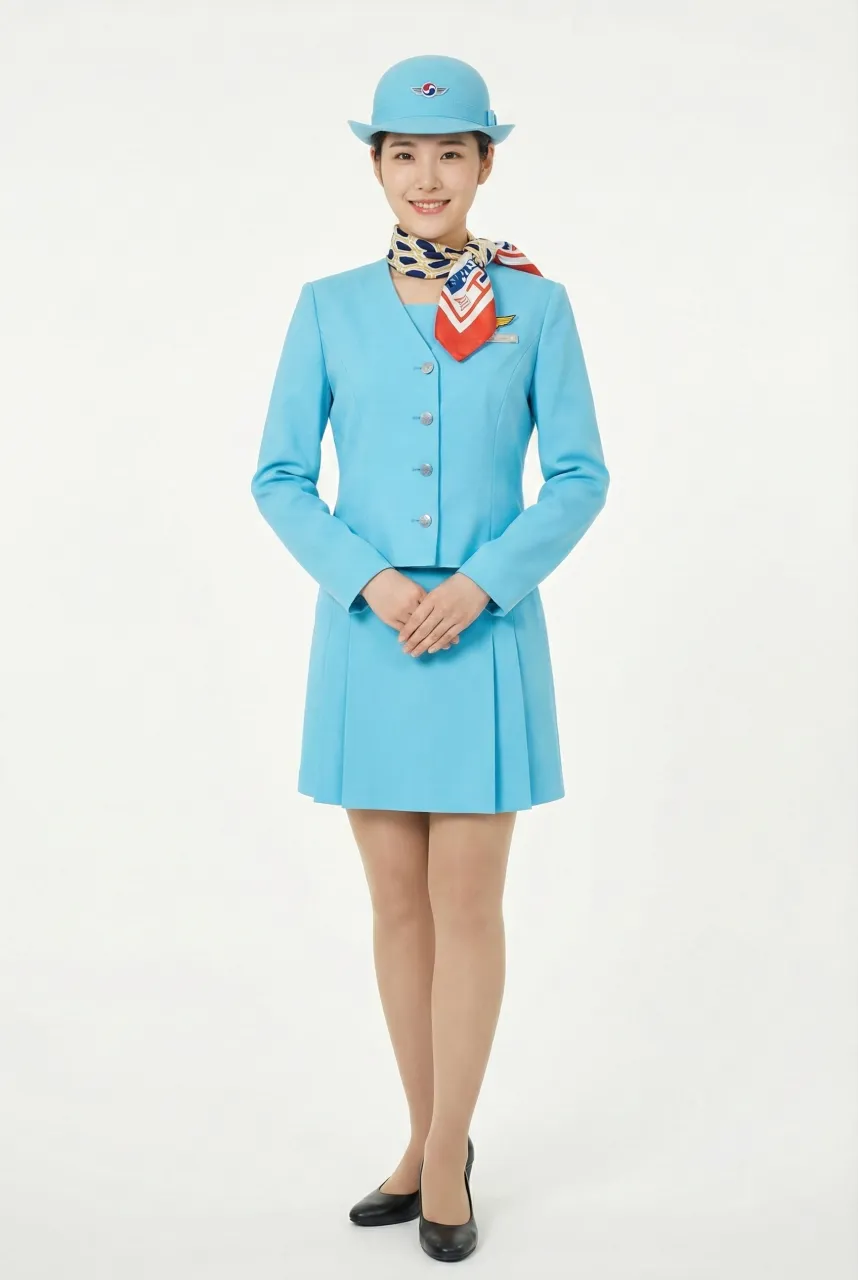
Female flight attendant
1973 ~ 1974 -
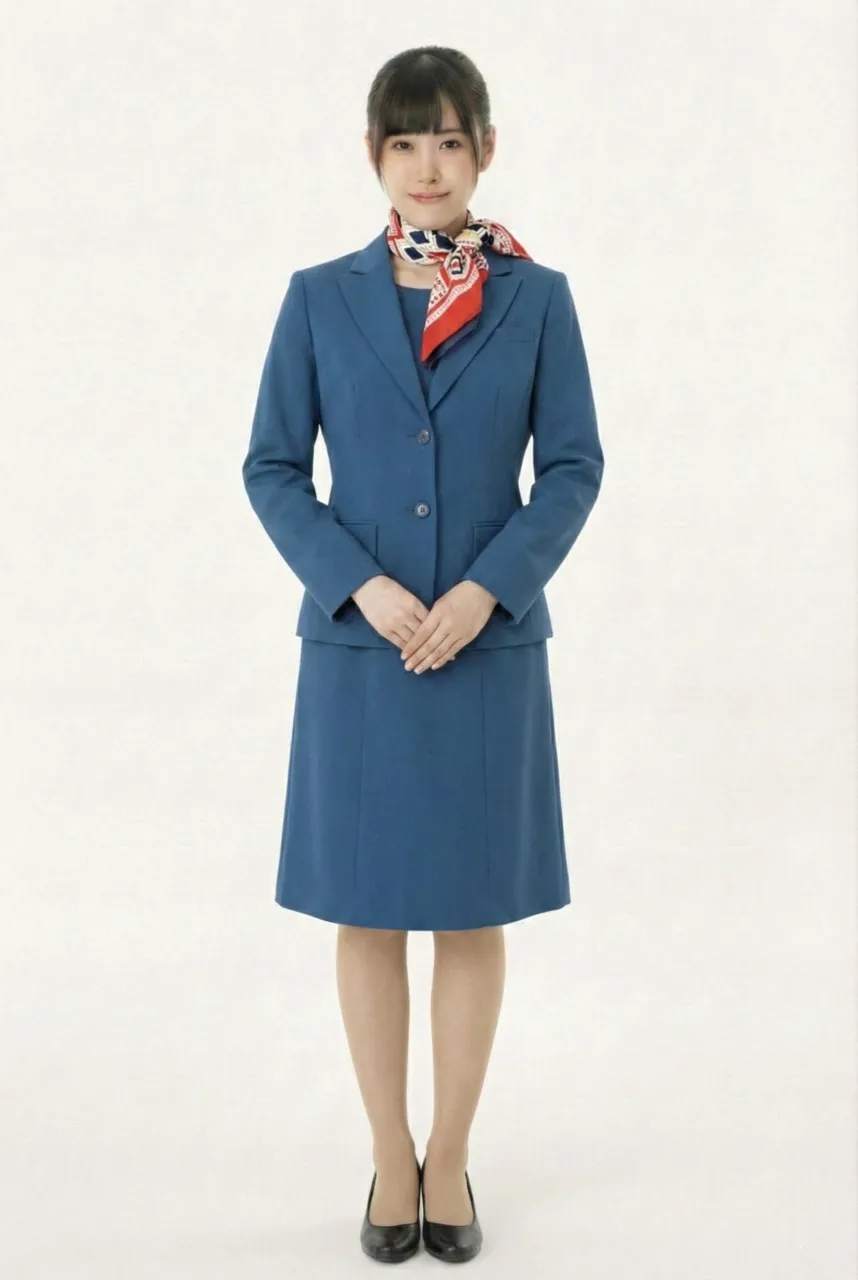
Female flight attendant
1974 ~ 1975 -
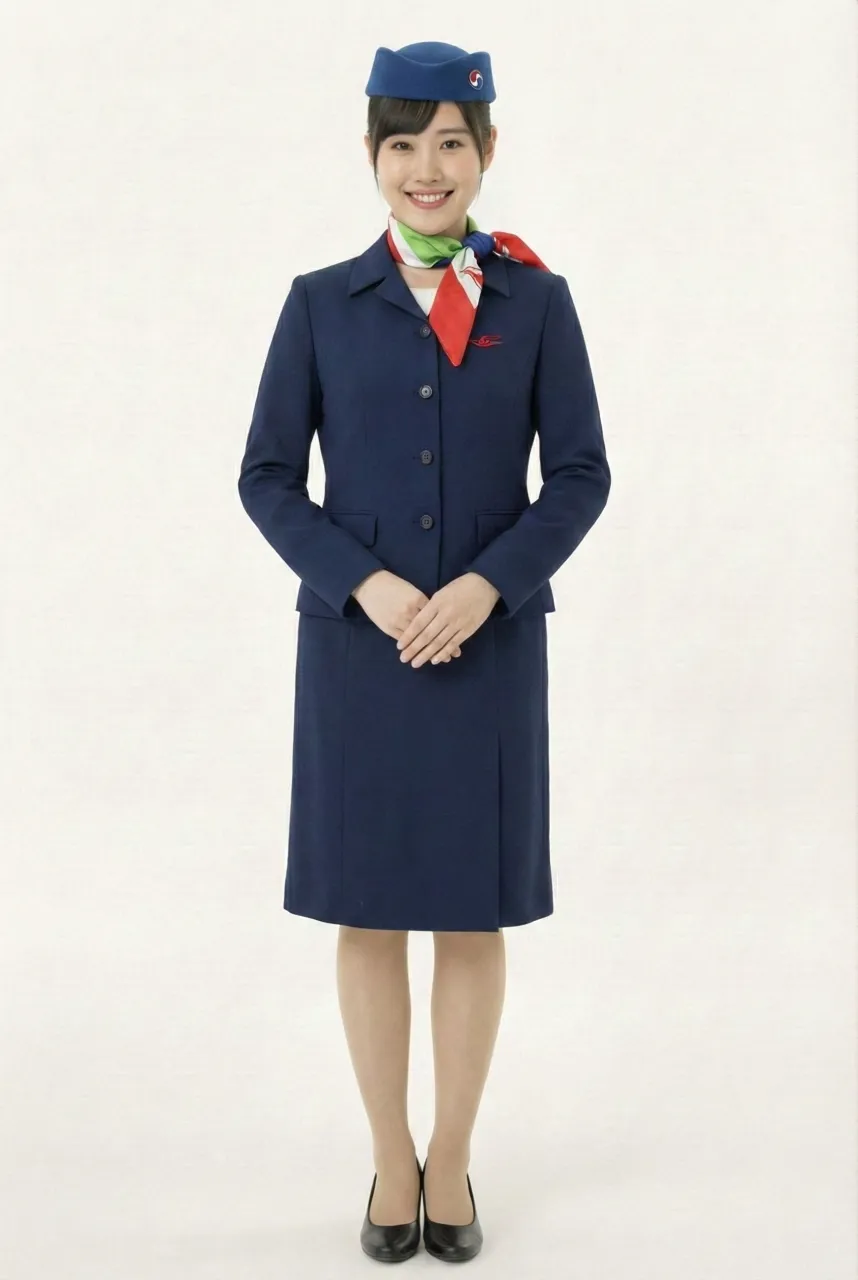
Female flight attendant
1976 ~ 1977 -
Female flight attendant
1978 ~ 1979 -
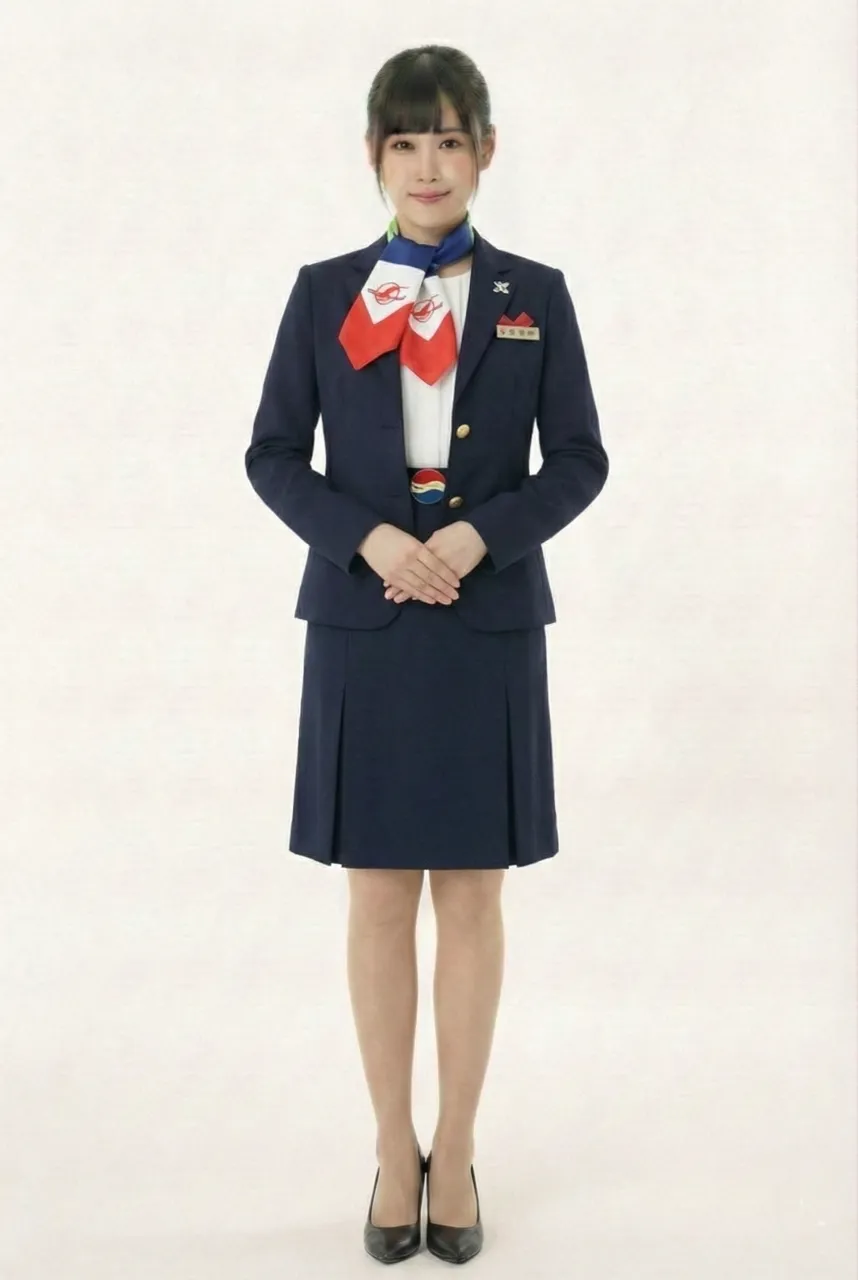
Female flight attendant
1980 ~ 1985 -
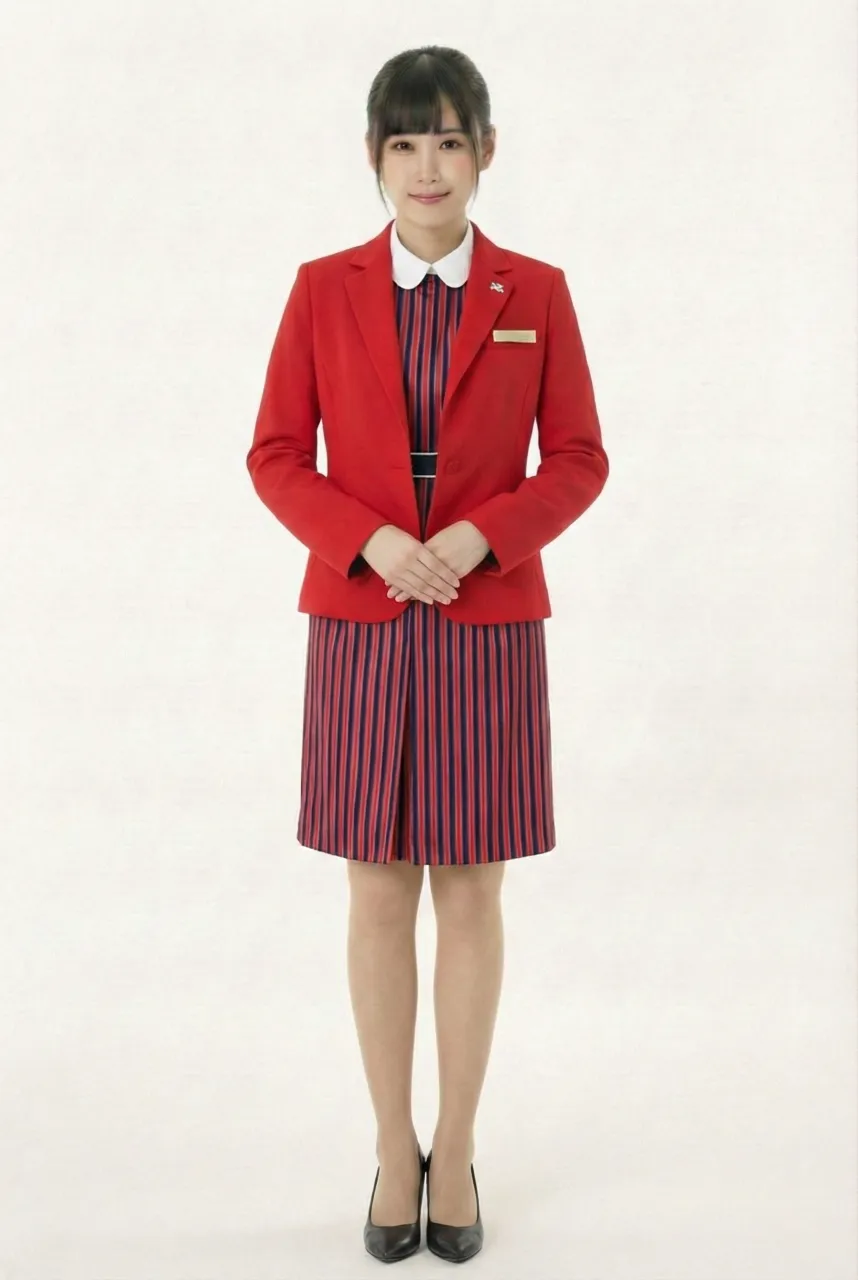
Female flight attendant
1986 ~ 1990 -
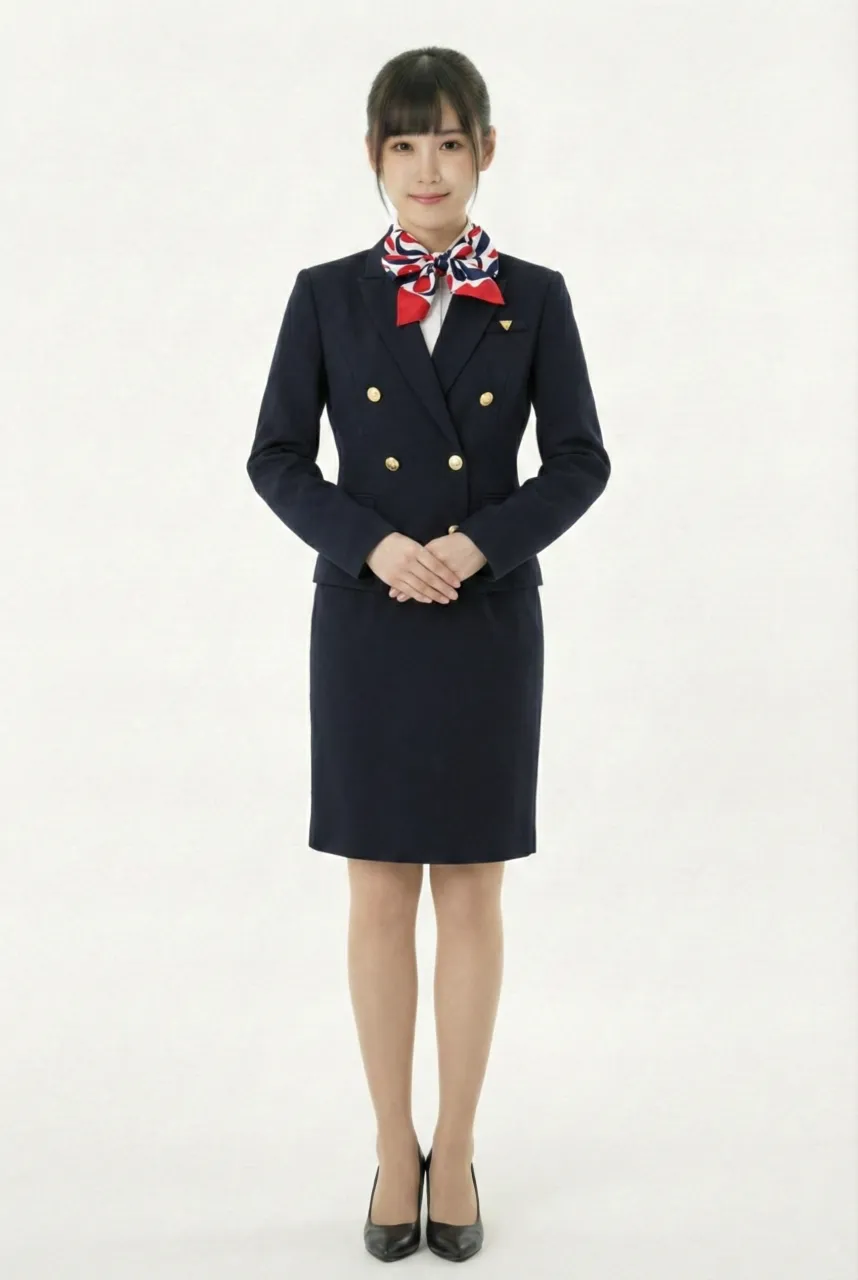
Female flight attendant
1991 ~ 2004 -
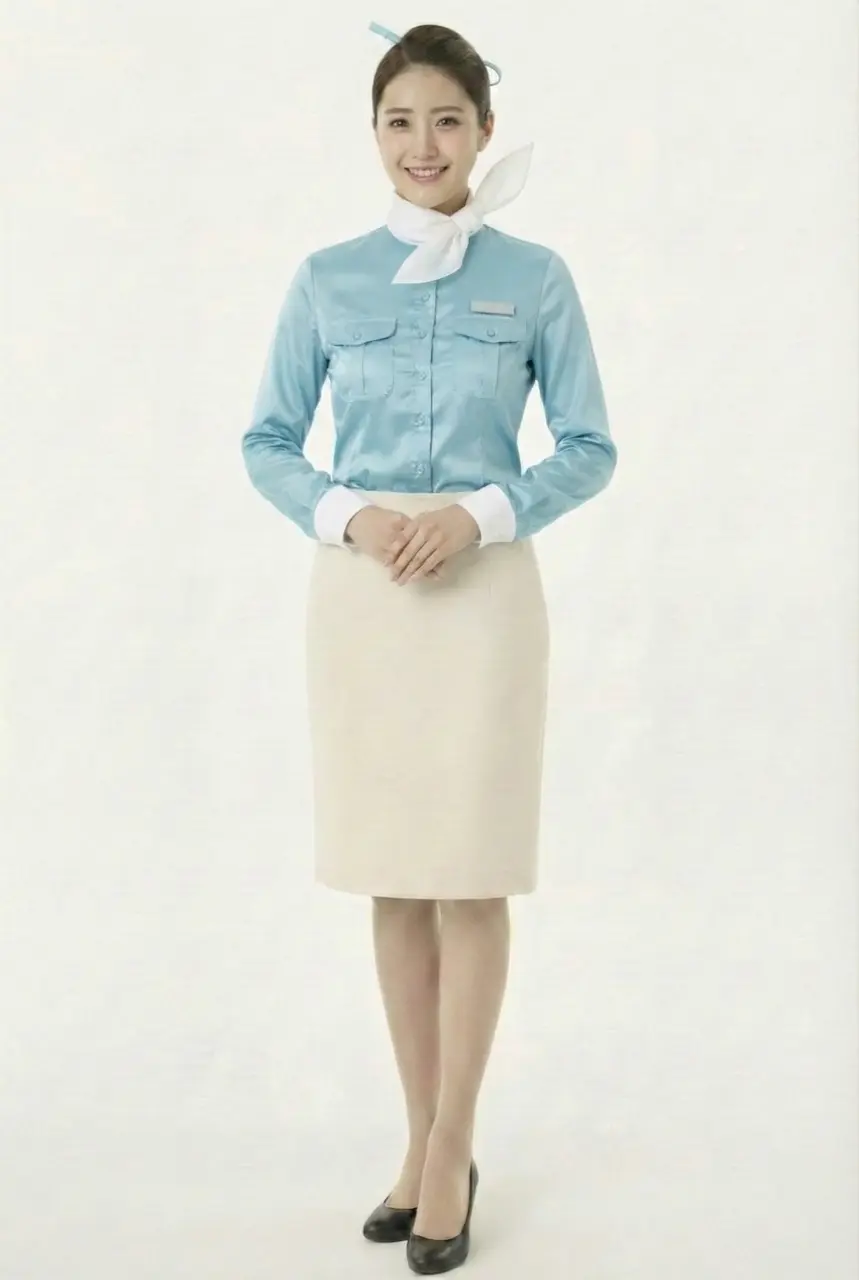
Female flight attendant
2005 ~ -
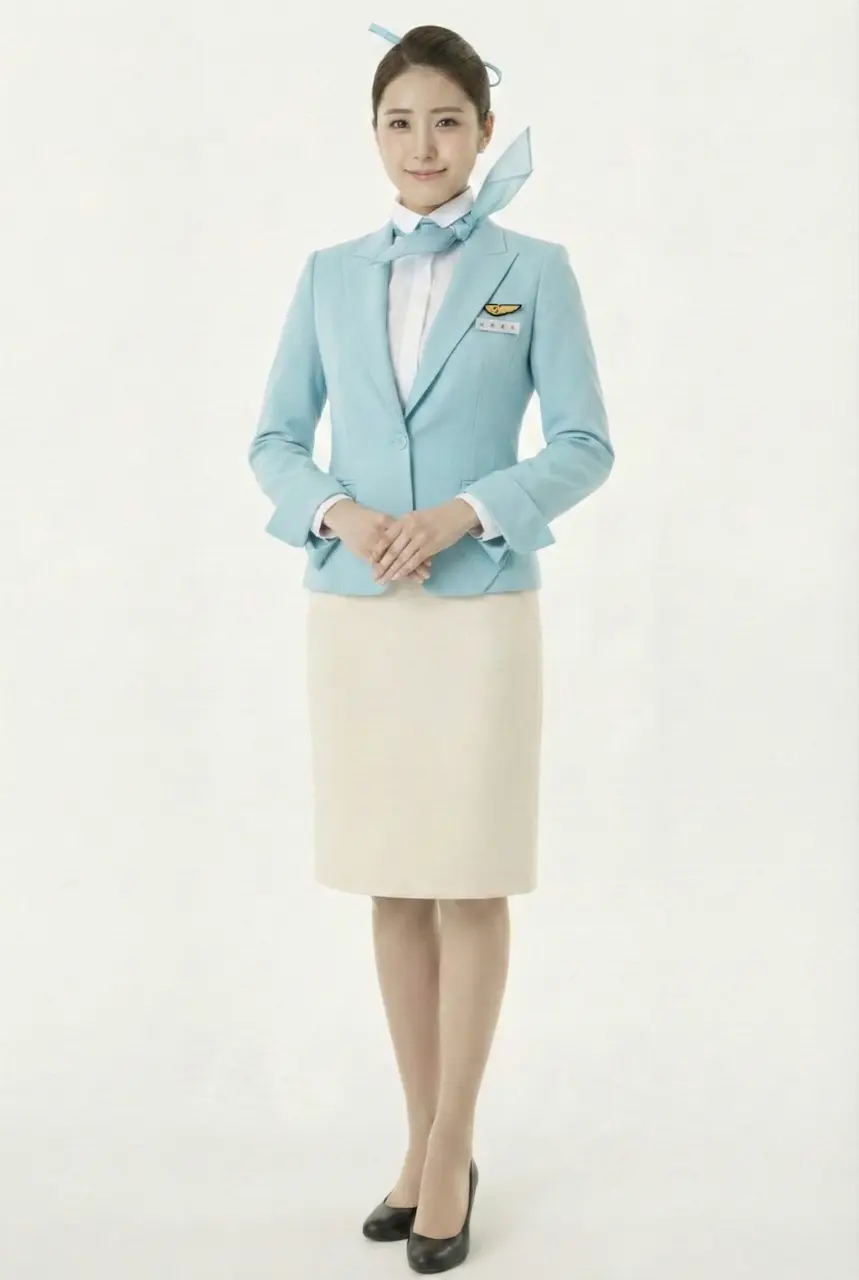
Female flight attendant wearing a jacket
2005 ~ -
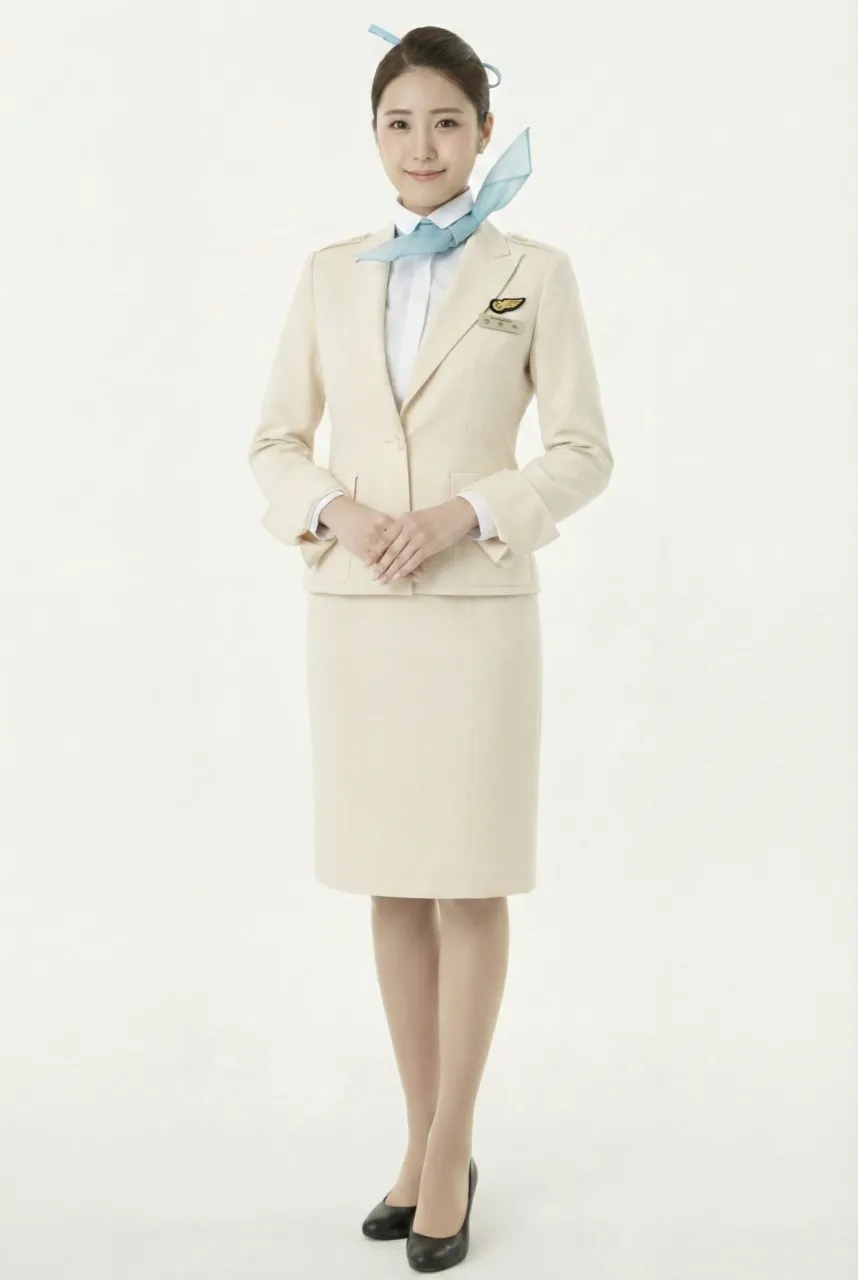
Female flight attendant wearing a jacket
2005 ~
The images displayed in this section are AI-generated illustrations and are not official materials from the original organizations or brands. They do not represent actual uniform designs, real-life wear, or official positions. The content is for informational and organizational purposes. All brand/organization names and logos mentioned are the property of their respective owners.