 Sign in with Google


Female flight attendant - Tibet Airlines Uniform
2013 ~
Current Uniform
Top
Bottom
Overall
Description
The overall design of this uniform draws its core inspiration from the airline’s corporate emblem and symbolic elements of Tibetan culture. Under the direction of Chief Designer Ding Guanyao, the design integrates ethnic cultural imagery with modern aviation uniform aesthetics, resulting in a visual language that combines strong cultural identity with an international service image.
Conceptually, the series is inspired by Tibet Airlines’ logo and the highly representative cultural symbol of Tibetan tradition—the five-colored prayer flags. In Tibetan culture, prayer flags symbolize blessings, peace, and safe journeys. These meanings are translated into the uniform through the use of multicolored stripe elements as key visual highlights, allowing the design to function not only as decoration but also as a carrier of cultural symbolism, thereby strengthening the connection between brand identity and regional heritage.
The overall styling features a layered composition consisting of a blue vest-style outer garment paired with a white inner top and a multicolored patchwork skirt. Blue serves as the primary visual tone, echoing the calm and rational connotations of “China Blue” while symbolizing professionalism, reliability, and a spirit of exploration associated with the aviation industry. Meanwhile, the multicolored stripe patchwork on the skirt, scarf, and cuffs directly reflects the color language of the five-colored prayer flags, creating a vivid focal point rich in cultural meaning.
In terms of detailing, the colorful diagonal patterns on the neck scarf, cuffs, and skirt are highly symbolic. They introduce a sense of movement and visual rhythm while metaphorically representing blessings being carried by the wind. This patchwork approach embodies the designer’s concept of “coexistence of ethnic and international aesthetics,” enabling the uniform to retain distinct Tibetan cultural characteristics while meeting the modern aviation industry’s expectations for fashion and professionalism.
From a tailoring perspective, the vest-style outer structure is clean and streamlined, paired with a fitted straight skirt that conveys a poised, elegant, and mobile professional image. The overall lines follow a modern minimalist uniform style, deliberately avoiding excessive ornamentation so that cultural elements are concentrated in key visual areas. This ensures that cabin crew maintain a clear, professional, and culturally recognizable presence within the cabin environment.
Conceptually, the series is inspired by Tibet Airlines’ logo and the highly representative cultural symbol of Tibetan tradition—the five-colored prayer flags. In Tibetan culture, prayer flags symbolize blessings, peace, and safe journeys. These meanings are translated into the uniform through the use of multicolored stripe elements as key visual highlights, allowing the design to function not only as decoration but also as a carrier of cultural symbolism, thereby strengthening the connection between brand identity and regional heritage.
The overall styling features a layered composition consisting of a blue vest-style outer garment paired with a white inner top and a multicolored patchwork skirt. Blue serves as the primary visual tone, echoing the calm and rational connotations of “China Blue” while symbolizing professionalism, reliability, and a spirit of exploration associated with the aviation industry. Meanwhile, the multicolored stripe patchwork on the skirt, scarf, and cuffs directly reflects the color language of the five-colored prayer flags, creating a vivid focal point rich in cultural meaning.
In terms of detailing, the colorful diagonal patterns on the neck scarf, cuffs, and skirt are highly symbolic. They introduce a sense of movement and visual rhythm while metaphorically representing blessings being carried by the wind. This patchwork approach embodies the designer’s concept of “coexistence of ethnic and international aesthetics,” enabling the uniform to retain distinct Tibetan cultural characteristics while meeting the modern aviation industry’s expectations for fashion and professionalism.
From a tailoring perspective, the vest-style outer structure is clean and streamlined, paired with a fitted straight skirt that conveys a poised, elegant, and mobile professional image. The overall lines follow a modern minimalist uniform style, deliberately avoiding excessive ornamentation so that cultural elements are concentrated in key visual areas. This ensures that cabin crew maintain a clear, professional, and culturally recognizable presence within the cabin environment.
Uniform List
-
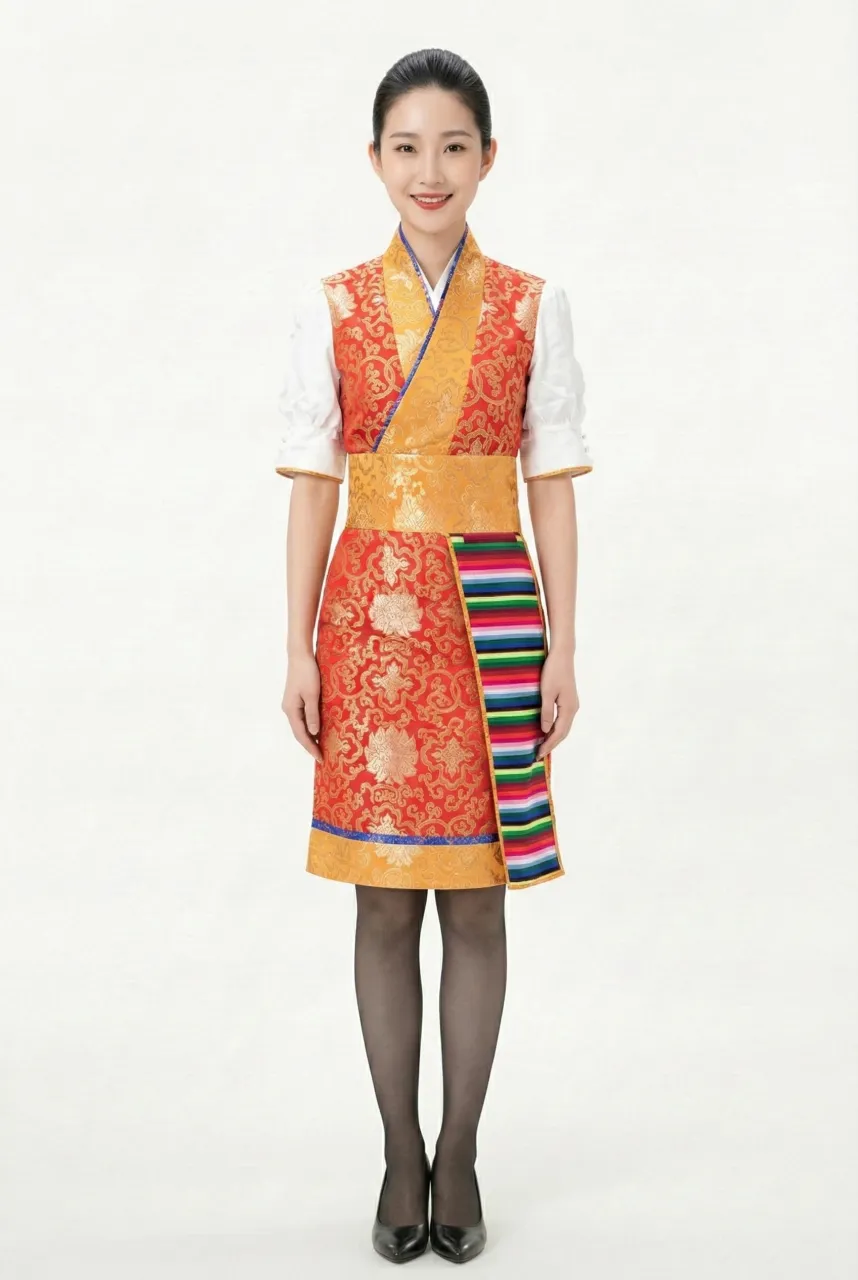
Female flight attendant
2013 ~ -
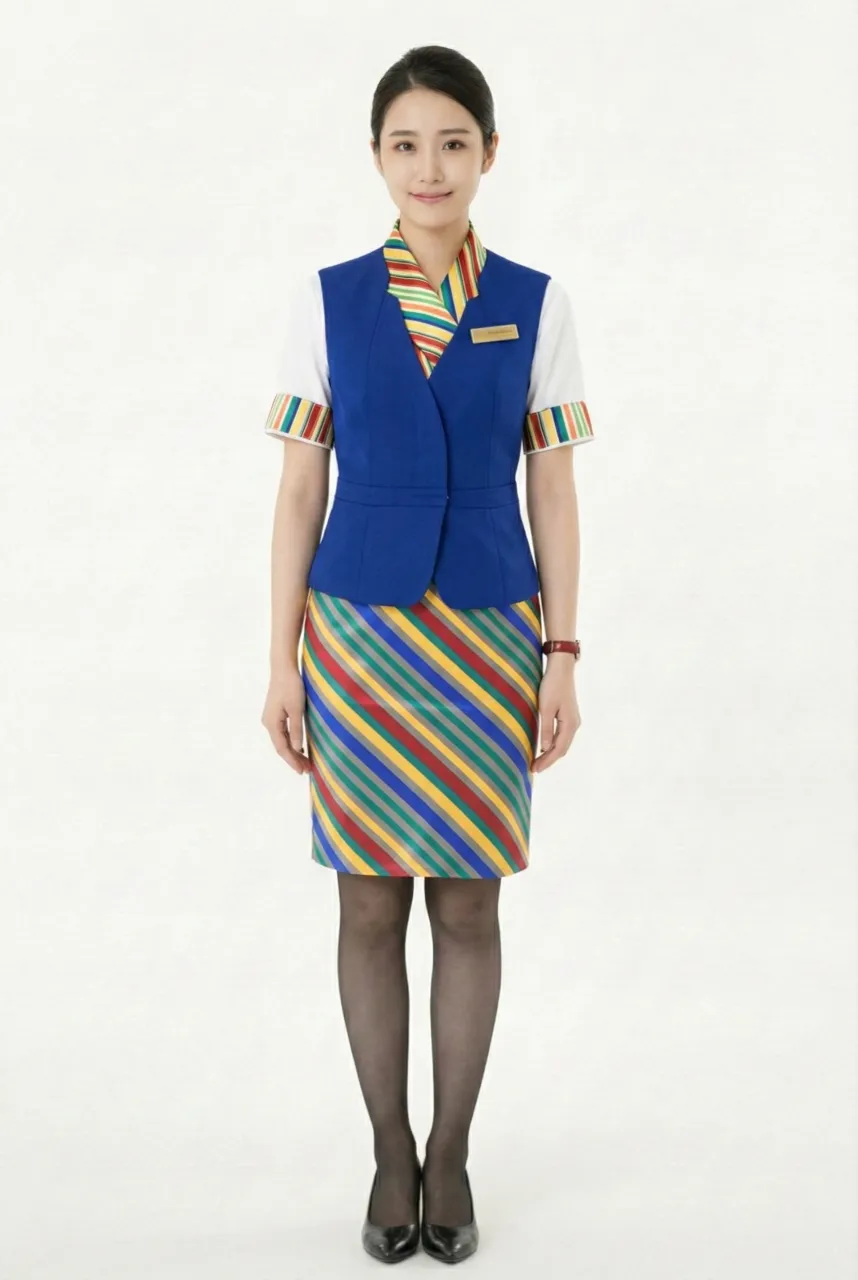
Female flight attendant
2013 ~ -
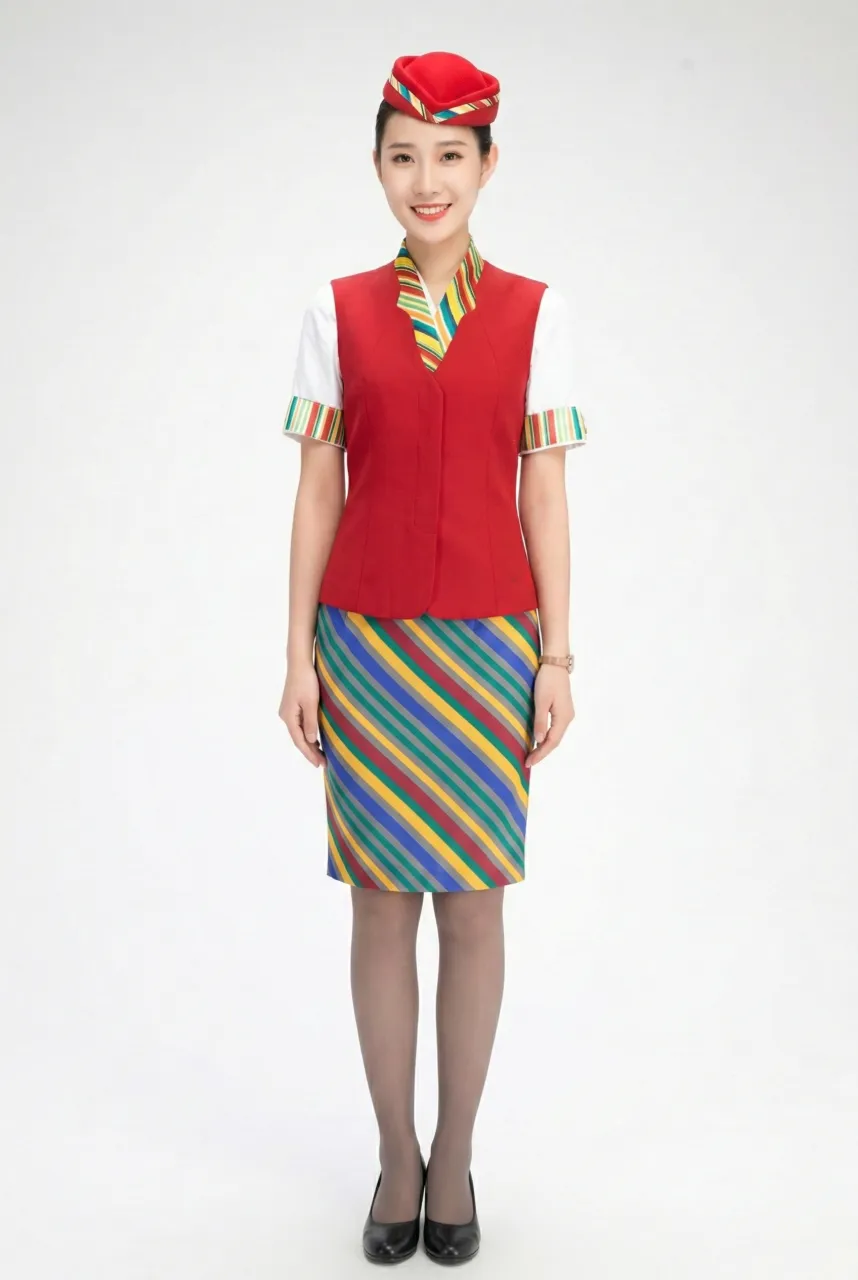
Female flight attendant
2013 ~
The images displayed in this section are AI-generated illustrations and are not official materials from the original organizations or brands. They do not represent actual uniform designs, real-life wear, or official positions. The content is for informational and organizational purposes. All brand/organization names and logos mentioned are the property of their respective owners.